The Earthquake That Shook a City and an Idea
On All Saints’ Day in 1755, a massive earthquake, tsunami, and firestorm leveled Lisbon within hours, and the catastrophe reshaped European philosophy and helped give rise to modern seismology.
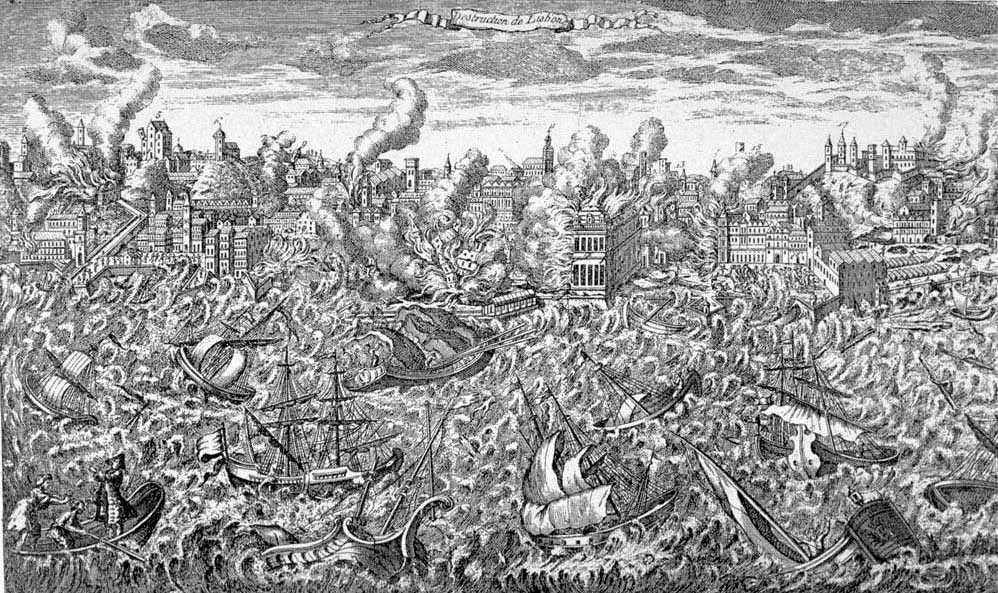
On the morning of November 1, 1755, as worshippers filled Lisbon’s churches for All Saints’ Day, a massive earthquake struck off Portugal’s Atlantic coast, estimated today at magnitude 7.7 or higher. Violent shaking collapsed buildings within minutes, a tsunami then flooded the harbor and downtown, and fires that burned for days destroyed most of what remained standing.
The disaster killed tens of thousands of people and destroyed an estimated 85 percent of Lisbon’s buildings, making it one of the deadliest earthquakes in European history and forcing a kingdom to rebuild its capital almost from nothing.
Lisbon’s catastrophe turned disaster into data. Portugal’s government surveyed every parish on how the ground had shaken and the sea had moved, while thinkers across Europe used the wreckage to question whether catastrophe needed a theological explanation at all, a shift toward evidence-based inquiry that still shapes how societies study disasters today.
People Behind the Story

As Portugal’s chief minister, he organized the emergency response and then sent a questionnaire to every parish asking how long the ground had shaken, how the sea had behaved, and how many had died, producing one of the first large-scale, evidence-based earthquake surveys.

The French philosopher used the disaster to challenge the era’s belief that catastrophe must serve a benevolent divine plan, first in a poem on the Lisbon disaster and later, more famously, in his satirical novel Candide.
Key Moments
Around 9:40 a.m., the earthquake strikes; a tsunami floods Lisbon’s harbor about 40 minutes later, followed by fires that burn for days.
English clergyman and scientist John Michell publishes a paper arguing that earthquakes travel as waves through the ground and locating the Lisbon quake’s source beneath the Atlantic, work later credited as a founding text of seismology.
A magnitude 7.8 earthquake west of the Strait of Gibraltar, in the same Azores–Gibraltar seismic zone, becomes the largest to strike Portugal since 1755, a reminder that the fault beneath Lisbon never went quiet.
Did you know? Pombal’s 1755 earthquake questionnaire, sent to every parish in Portugal, is considered one of the first large-scale, evidence-based disaster surveys in European history, more than two centuries before seismology existed as a field.