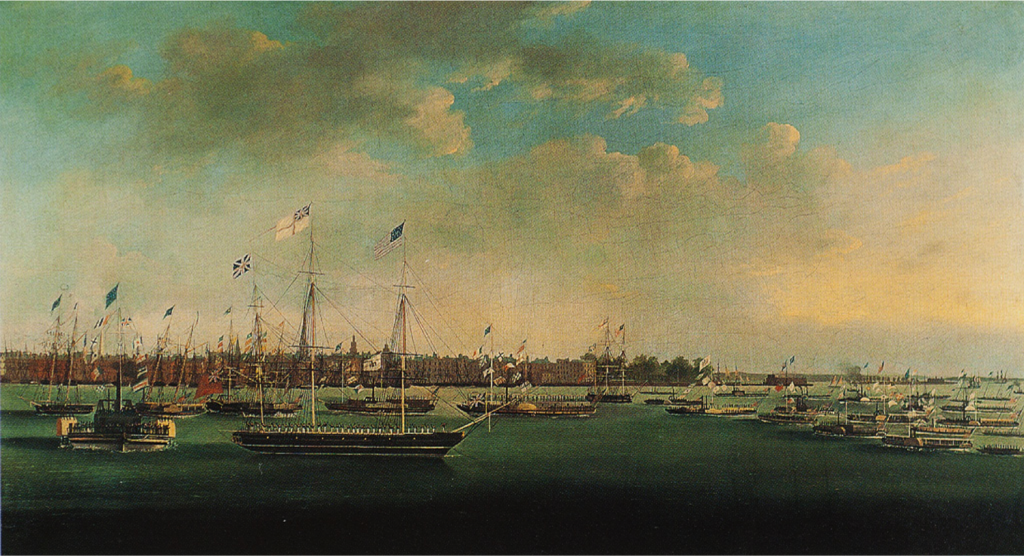
The Erie Canal Connects a Nation
A 363-mile waterway dug mostly by hand opened the American interior to the world and made New York the nation’s gateway, cutting a month’s journey to ten days.
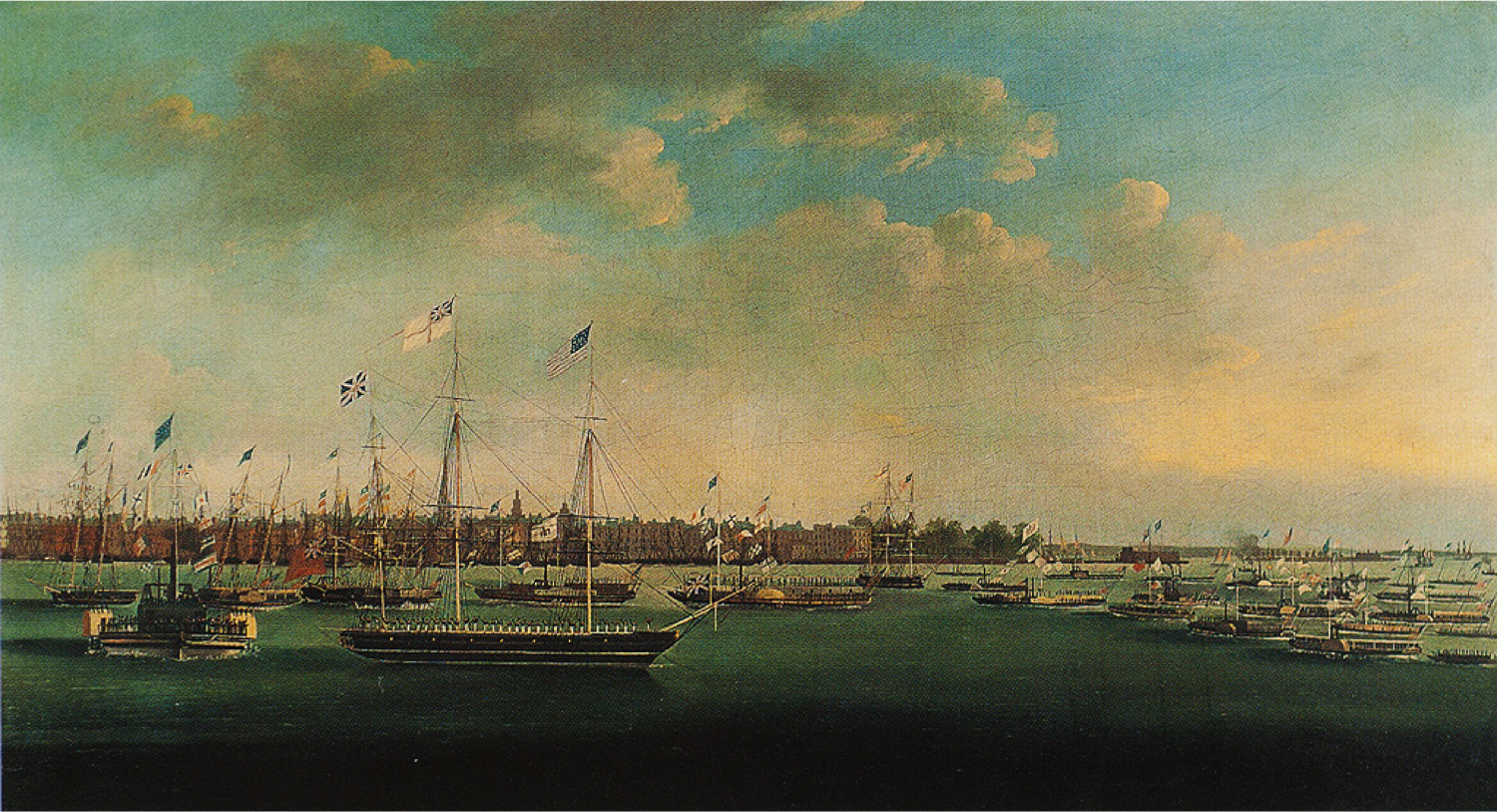
On October 26, 1825, the Erie Canal opened in full: a hand-dug channel stretching 363 miles from Buffalo on Lake Erie to Albany on the Hudson River, completed after eight years of digging through forest, swamp, and rock. Governor DeWitt Clinton boarded the packet boat Seneca Chief at Buffalo that morning, carrying two casks of Lake Erie water bound for New York City.
The canal cut freight rates along the route by roughly 90 percent and travel time from about thirty days to ten, according to historians studying its impact. It turned New York City into the nation’s commercial gateway, pulled settlement and trade toward the Great Lakes, and helped found towns across the newly opened Midwest.
A single public works project, dug largely by hand with borrowed money, redrew a continent’s economic map faster than any war or treaty of its era, a pattern repeated later by the railroad, the interstate highway, and the internet.
People Behind the Story
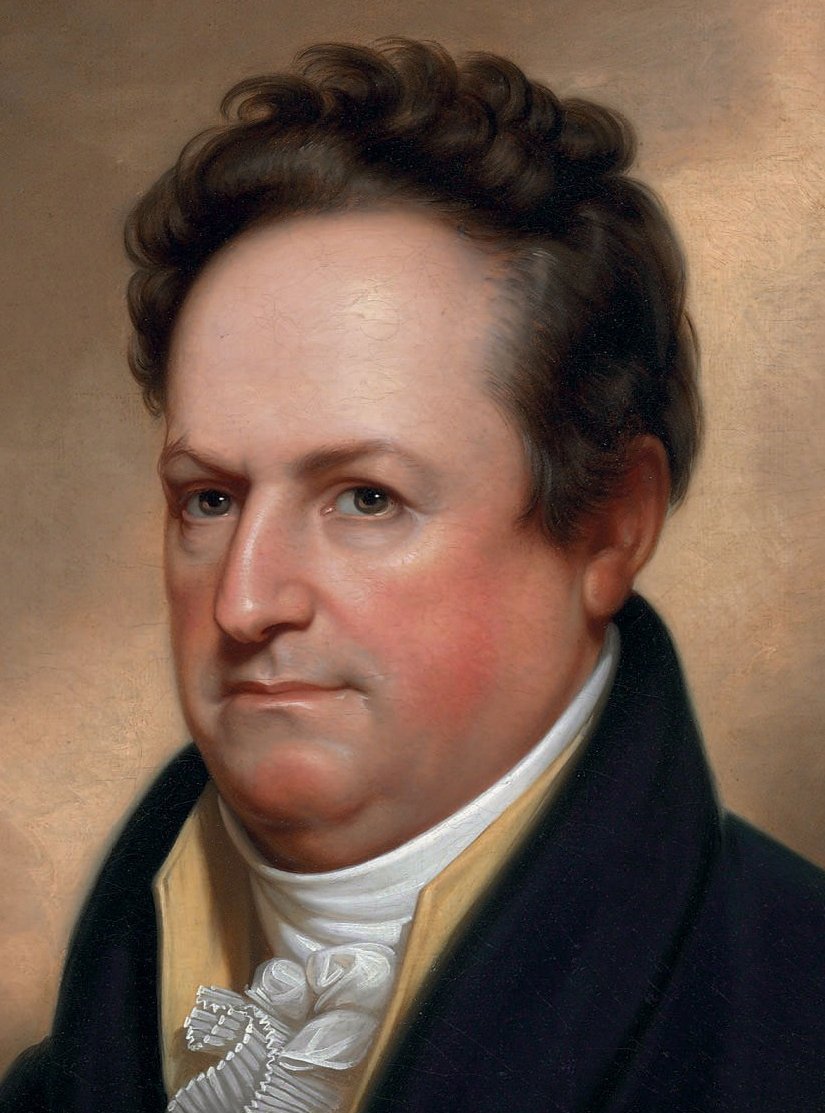
Persuaded a skeptical New York legislature to commit seven million dollars to a canal critics mocked as “Clinton’s Folly” and “Clinton’s Ditch,” then rode the first boat from Buffalo to New York Harbor when the project finally proved them wrong.
Key Moments
Formal construction begins at Rome, New York, launching eight years of digging through forest, swamp, and rock.
The Erie Canal opens in full. Clinton departs Buffalo aboard the packet boat Seneca Chief, carrying two casks of Lake Erie water bound for the Atlantic.
Clinton completes the “Wedding of the Waters,” emptying Lake Erie water into New York Harbor to symbolize the new link between the Great Lakes and the Atlantic.
The New York State Barge Canal enlarges the original route into the deeper, wider waterway still used today.
Did you know? Detractors nicknamed the project “Clinton’s Folly” years before it proved them wrong. The settlement boom it triggered founded hundreds of towns across the newly opened Midwest, several of which, including Clinton, Illinois, and DeWitt, Iowa, still carry the name.