Opera is a form of theatrical performance in which the entire drama, or nearly all of it, is sung rather than spoken, combining music, singing, acting, and often elaborate staging, costumes, and orchestral accompaniment into a single large-scale art form. It emerged in Italy at the end of the sixteenth century from efforts to revive what scholars believed was the combined music and drama of ancient Greek theater, and it has remained one of the most resource-intensive and prestige-laden forms of live performance ever since.
The birth of opera in Florence
Opera was invented in Florence in the 1590s by a small circle of intellectuals, scholars, and amateur musicians, including a group known as the Camerata, who met informally to study ancient Greek drama and experiment with combining spoken drama, song, and instrumental music in new ways. A rival circle backed by the patron Jacopo Corsi produced what is usually considered the first opera, Dafne, in 1598, though the music for that work has since been lost. The earliest opera to survive intact is Jacopo Peri’s Euridice, which premiered in Florence in 1600 as part of festivities marking the wedding of Maria de’ Medici and King Henry IV of France, linking opera’s birth directly to the kind of lavish court spectacle wealthy patrons were eager to fund.
Monteverdi and L’Orfeo
Claudio Monteverdi’s L’Orfeo, which premiered in Mantua in 1607, is often described as opera’s first truly important masterwork rather than merely an early example of the new form. Monteverdi expanded the size and expressive range of the orchestra accompanying the singers and broadened the emotional depth the music could convey, including a notable “walking” bass line in one scene that musically mirrors the character’s movement on stage. L’Orfeo remains part of the regularly performed operatic repertoire today, making Monteverdi’s works the earliest operas still staged by companies in the twenty-first century, a distinction that separates them from the even older but now rarely performed works by Peri and Caccini.
From court spectacle to public institution
Early operas were staged almost exclusively for court and state occasions, performed for the wealthy patrons, nobility, and church officials who funded them rather than for a paying general public. That changed in 1637, when Venice opened the first public opera house, allowing ordinary paying audiences rather than only invited court guests to attend performances, a shift that transformed opera from an occasional courtly entertainment into a regular commercial art form. Venice’s public opera scene grew rapidly in the following decades, with roughly 400 operatic productions staged in the city by 1700, and the form spread from there to Paris, Vienna, and other major European cities, each developing its own operatic traditions and star singers.
Papal patronage and opera’s golden age
Opera’s spread through the seventeenth century was accelerated by powerful patrons beyond its original Florentine and Mantuan courts; after 1623, nephews of Pope Urban VIII funded and commissioned new operatic works in Rome, helping establish the form as a serious artistic pursuit worthy of the Church’s own elite patronage rather than only secular court entertainment. By the eighteenth and nineteenth centuries, opera had entered what is often considered its golden age, with Wolfgang Amadeus Mozart blending comic and serious elements with unprecedented musical sophistication in works such as The Marriage of Figaro, and nineteenth-century Italian composers Giuseppe Verdi and later Giacomo Puccini writing emotionally direct, melodically driven operas, including Verdi’s La Traviata and Puccini’s La Boheme, that remain among the most frequently performed works in the operatic repertoire worldwide today.
Comic and serious opera
Opera developed two broad traditions that existed side by side for much of its history: opera seria, meaning serious opera, which typically dramatized noble, mythological, or historical subjects in an elevated style, and opera buffa, comic opera, which drew on everyday characters and situations for humor and often moved at a faster musical and dramatic pace. This distinction gradually blurred over the eighteenth and nineteenth centuries as composers increasingly mixed comic and serious elements within single works, reflecting a broader trend toward more psychologically complex and dramatically flexible storytelling within the operatic form.
Key elements of an opera production
A typical opera combines a libretto, the text or script that is sung, with a musical score composed to set that text, performed by singers accompanied by an orchestra and staged with sets, costumes, and lighting much like a conventional theatrical production. Singers specialize in particular vocal ranges and styles, including soprano, mezzo-soprano, tenor, and bass roles among others, and operatic singing technique, developed to project clearly over a full orchestra without electronic amplification, differs substantially from the vocal techniques used in most other musical styles. Recitative, a sung style that mimics the rhythm and pacing of ordinary speech, typically carries the plot forward between arias, the more melodically developed, often emotionally climactic solo songs that showcase a singer’s technical and expressive range.
Opera’s spread and major traditions
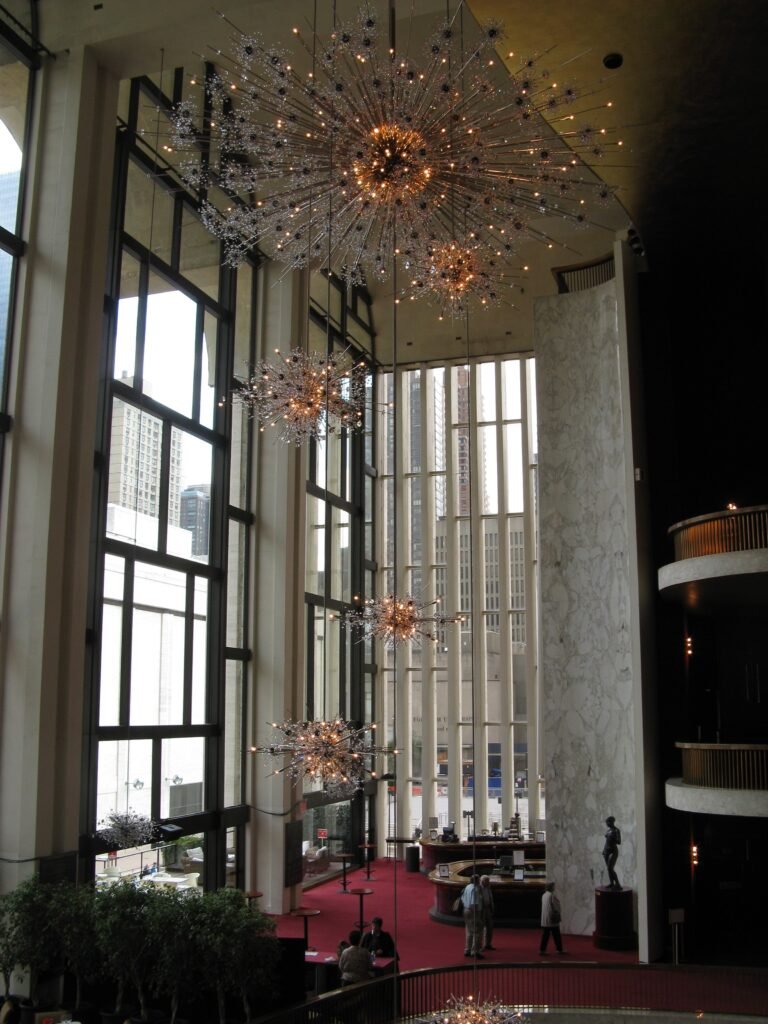
As opera spread beyond Italy, distinct national traditions developed their own characteristic styles, subject matter, and musical conventions, including French opera’s historical emphasis on dance and spectacle, German opera’s eventual development under composers such as Richard Wagner into large-scale, continuously flowing musical dramas rather than a series of separate numbers, and Italian opera’s continued emphasis on vocal virtuosity and melody through the nineteenth-century bel canto tradition and beyond. Opera houses themselves became significant architectural and civic landmarks in major cities, from Milan’s La Scala to New York’s Metropolitan Opera House, reflecting the genre’s historical status as a prestigious, often state-supported cultural institution rather than purely commercial entertainment.
FAQs
What was the very first opera ever performed? Dafne, staged in Florence in 1598, is generally considered the first opera, though its music has been lost; Jacopo Peri’s Euridice from 1600 is the earliest opera to survive completely intact.
Why is Monteverdi’s L’Orfeo considered more historically important than earlier operas? Monteverdi significantly expanded the orchestra’s size and expressive capability and broadened opera’s emotional range beyond its earliest, more experimental examples, and L’Orfeo remains part of the regularly performed repertoire today, unlike the even earlier works by Peri and Caccini.
Key facts
- Invented in Florence in the 1590s; Dafne (1598) is the first opera, now lost
- Jacopo Peri's Euridice (1600) is the earliest surviving opera
- Monteverdi's L'Orfeo (1607, Mantua) is the oldest still regularly performed
- Venice opened the first public opera house in 1637
Related concepts
Quick checkWhat was the very first opera ever performed?Show answer
Dafne, staged in Florence in 1598, though its music is lost; Peri's Euridice (1600) is the earliest surviving opera.
Sources
- NPR. Talk Like An Opera Geek: The Birth Of Opera. https://www.npr.org/sections/deceptivecadence/2012/02/22/147256237
Editorially reviewed by Specialty Digest Editorial TeamLast reviewed November 1, 2026Researched and drafted with AI assistanceReport an issue