An aria is a self-contained vocal solo within a larger work, typically an opera, cantata, or oratorio, that showcases a single singer’s voice and emotional expression, usually set apart from the surrounding sung dialogue by a distinct melodic and rhythmic character. Arias give performers room to display vocal technique and dramatic feeling in a way
Aria Read More »
A self-contained vocal solo within an opera, cantata, or oratorio that showcases a singer's voice and emotion.
Ballet is a formal, highly codified style of theatrical dance that developed out of Renaissance Italian court entertainment before being systematically formalized in seventeenth-century France, producing a precise technical vocabulary and performance tradition that continues to shape concert dance worldwide. Formalization under Louis XIV King Louis XIV of France established the Academie Royale de Danse
Ballet Read More »
A formal, highly codified style of theatrical dance formalized in 17th-century France.
In simple terms Counterpoint is the technique of combining two or more independent melodic lines in music so that they sound good both on their own and together. [1] Rather than one melody with supporting chords underneath it, counterpoint treats each line as its own voice with its own melodic shape. How it works A
Counterpoint Read More »
Counterpoint is the technique of combining two or more independent melodic lines in music so that each line works on its own and the lines work together.
Harmony, in music, is the way different musical notes sound when combined simultaneously, and the study of how those combinations, called chords, relate to and move between one another over the course of a piece. Alongside melody and rhythm, harmony is one of music’s three fundamental building blocks, and the particular harmonic language a piece
Harmony (music) Read More »
How musical notes sounding together, as chords, relate and move; one of music's three fundamental building blocks alongside melody and rhythm.
In simple terms Jazz is a genre of music that originated among African American communities in the United States, particularly in New Orleans, around the turn of the 20th century, built on improvisation, syncopated rhythm, and a distinctive treatment of harmony drawn partly from blues music. [1] How it works Improvisation, performers inventing melodic lines
Jazz Read More »
Jazz is a genre of music that originated among African American communities in the United States around the turn of the 20th century, built on improvisation, syncopated rhythm, and blues-derived harmony.
A libretto is the text, including both the words to be sung and any accompanying stage directions, written for an opera, operetta, oratorio, cantata, or musical, distinct from both a simple plot summary and the composer’s musical score that ultimately sets that text to music. Libretto versus score Although a printed score contains the libretto’s
Libretto Read More »
The text, words and stage directions, written for an opera, operetta, oratorio, or musical.
Opera is a form of theatrical performance in which the entire drama, or nearly all of it, is sung rather than spoken, combining music, singing, acting, and often elaborate staging, costumes, and orchestral accompaniment into a single large-scale art form. It emerged in Italy at the end of the sixteenth century from efforts to revive
Opera Read More »
A fully-sung theatrical form invented in 1590s Florence, with Monteverdi's 1607 L'Orfeo its earliest masterwork still performed today.
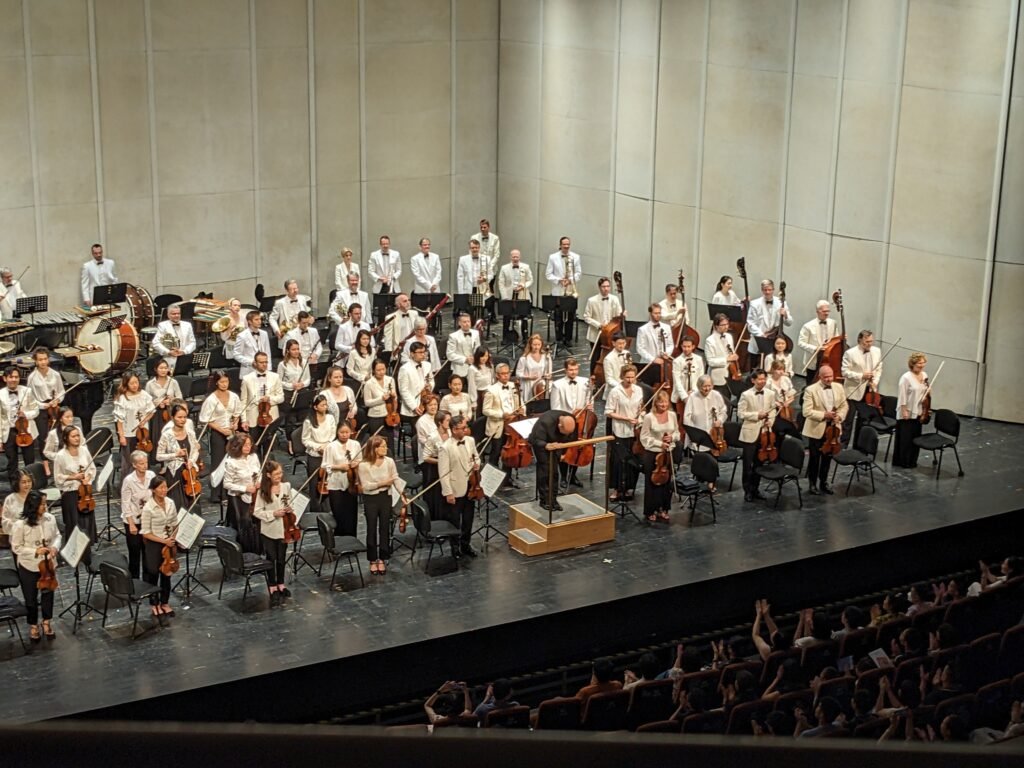
An orchestra is a large ensemble of musicians, typically combining string, woodwind, brass, and percussion sections, who perform complex compositions together, usually under the direction of a conductor. A full symphony orchestra can include close to one hundred musicians, making careful coordination essential to keeping such a large group playing precisely together. Origins Modern orchestras
Orchestra Read More »
A large ensemble of string, woodwind, brass and percussion musicians performing together, usually under a conductor.
Sonata form, also called sonata-allegro form, is a musical structure used to organize a single movement, most often the first movement, of a larger work such as a sonata, symphony, or string quartet. Built around the thematic and harmonic organization of tonal material, it became the dominant framework for serious instrumental composition during the Classical
Sonata form Read More »
A musical structure of exposition, development and recapitulation used to organize a movement, most often a first movement.
A symphony is an extended multi-movement composition for orchestra, typically lasting between twenty and forty-five minutes and usually built from three or four distinct movements that vary in tempo and character. The word derives from the Greek symphonia, meaning roughly ‘agreement or concord of sound,’ and its meaning shifted considerably over the centuries before settling
Symphony Read More »
An extended multi-movement orchestral composition, typically built from three or four movements of varying tempo.