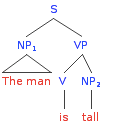
Syntax is the branch of linguistics that studies the rules governing how words combine to form well-formed phrases and sentences within a language. Where other areas of linguistics examine the sounds of speech or the meaning of words, syntax is specifically concerned with structure and order: which arrangements of words a language’s speakers accept as grammatical, and which arrangements, despite using exactly the same words, they reject as simply wrong.
Every speaker of a language has internalized a working knowledge of its syntax, usually without ever studying it formally. A native English speaker immediately recognizes that “the cat sat on the mat” is a grammatical sentence, while “mat the on sat cat the” is not, even though both strings contain identical words. This intuitive judgment reflects syntactic rules operating below conscious awareness, and much of the work of syntactic theory involves making those implicit rules explicit and systematic.
Syntax Compared to Morphology and Semantics
Syntax is often confused with neighboring areas of linguistics, so distinguishing it clearly matters. Morphology studies the internal structure of individual words, such as how a root like “walk” combines with the suffix “-ed” to form “walked,” marking past tense within a single word. Syntax, by contrast, operates one level up, governing how already-formed words combine into larger units: phrases, clauses, and sentences. Semantics, meanwhile, concerns meaning rather than structure, asking what a sentence actually communicates rather than how its words are arranged. A sentence can be syntactically well-formed but semantically strange, as in the famous linguistic example “colorless green ideas sleep furiously,” which follows standard English word order perfectly while making little literal sense.
These levels interact constantly in real language use, a relationship linguists call morphosyntax, since in many languages word endings that mark case, number, or grammatical agreement directly affect how words can be legally ordered within a sentence. Studying syntax in isolation from morphology and semantics is a useful analytical simplification, but actual language processing draws on all three simultaneously.
Phrase Structure and Generative Grammar
Modern syntactic theory owes much of its framework to the linguist Noam Chomsky, who proposed that sentences are built from underlying phrase-structure rules that combine smaller units, such as noun phrases and verb phrases, into larger ones, ultimately producing a complete sentence. In this generative approach, a finite set of rules can in principle generate an infinite number of possible grammatical sentences, which helps explain how speakers can produce and understand entirely new sentences they have never encountered before, rather than simply memorizing fixed phrases.
Chomsky’s framework also introduced the idea of transformations, operations that can rearrange an underlying sentence structure to produce related surface forms, such as converting a statement into a question or an active sentence into a passive one, while preserving an underlying structural relationship between them. Later syntactic theories have revised and debated many details of this approach, but the broader idea that sentences have both a surface form and an underlying structural organization remains highly influential across linguistics.
Why Syntax Creates Ambiguity
Because meaning depends partly on structure, the same string of words can sometimes be parsed in more than one syntactically valid way, producing genuine ambiguity. The classic example “I saw the man with the telescope” can mean either that the speaker used a telescope to see the man, or that the man happened to be holding a telescope, depending on how the phrase “with the telescope” attaches within the sentence’s structure. Resolving such ambiguities, whether by a human listener using context or by a computer program parsing text, requires analyzing the sentence’s possible syntactic structures, which is why syntax remains central not just to linguistic theory but to practical fields like natural language processing.
Word Order Across Languages
Languages differ substantially in their default word order, and syntax is the lens through which linguists classify and compare these patterns. English typically follows a subject-verb-object order, as in “the dog chased the ball,” while Japanese typically places the verb last, following a subject-object-verb pattern, and some languages, including Irish and Welsh, place the verb before the subject. These differences are not arbitrary stylistic preferences but reflect deeper, systematic structural rules that shape how speakers of each language build sentences automatically, often without any conscious sense that other orderings are even possible.
Word order also interacts closely with how a language marks grammatical roles. Languages with rich case marking on nouns, where endings indicate whether a noun is a subject, object, or something else, often allow more flexible word order, since the case endings themselves signal each word’s grammatical role regardless of its position in the sentence. Languages with little or no case marking, like English, tend to rely much more heavily on strict word order to convey the same information, which is part of why systematically altering word order in English, unlike in some other languages, tends to immediately produce an ungrammatical or confusing sentence.
FAQs
What does syntax study, as distinct from morphology?
Syntax studies how already-formed words combine into phrases and sentences, governing word order and structure, while morphology studies the internal structure of individual words themselves.
What is generative grammar?
A theoretical framework, associated with Noam Chomsky, proposing that sentences are built from a finite set of underlying phrase-structure rules capable of generating an infinite number of grammatical sentences.
Can a sentence be grammatically correct but meaningless?
Yes. A sentence can follow all the structural rules of syntax while still being semantically strange or nonsensical, showing that grammaticality and meaning are governed by separate, though related, linguistic systems.
Why do some sentences have more than one possible meaning?
Because the same sequence of words can sometimes be structurally parsed in more than one valid way, a phenomenon called syntactic ambiguity, which depends on how different parts of the sentence are understood to connect to one another.
Quick checkWhat does syntax study, as distinct from morphology?Show answer
Syntax studies how already-formed words combine into phrases and sentences, while morphology studies the internal structure of individual words.
Editorially reviewed by Specialty Digest Editorial TeamLast reviewed November 2, 2026Researched and drafted with AI assistanceReport an issue