A novel is an extended work of prose fiction, typically long enough to allow sustained development of character, plot, and setting in a way shorter forms, such as the short story, cannot easily achieve. While there is no strict word count that separates a novel from other prose fiction, the term generally applies to book-length narratives, usually tens of thousands of words or more, built around a sustained story rather than a single episode or incident.
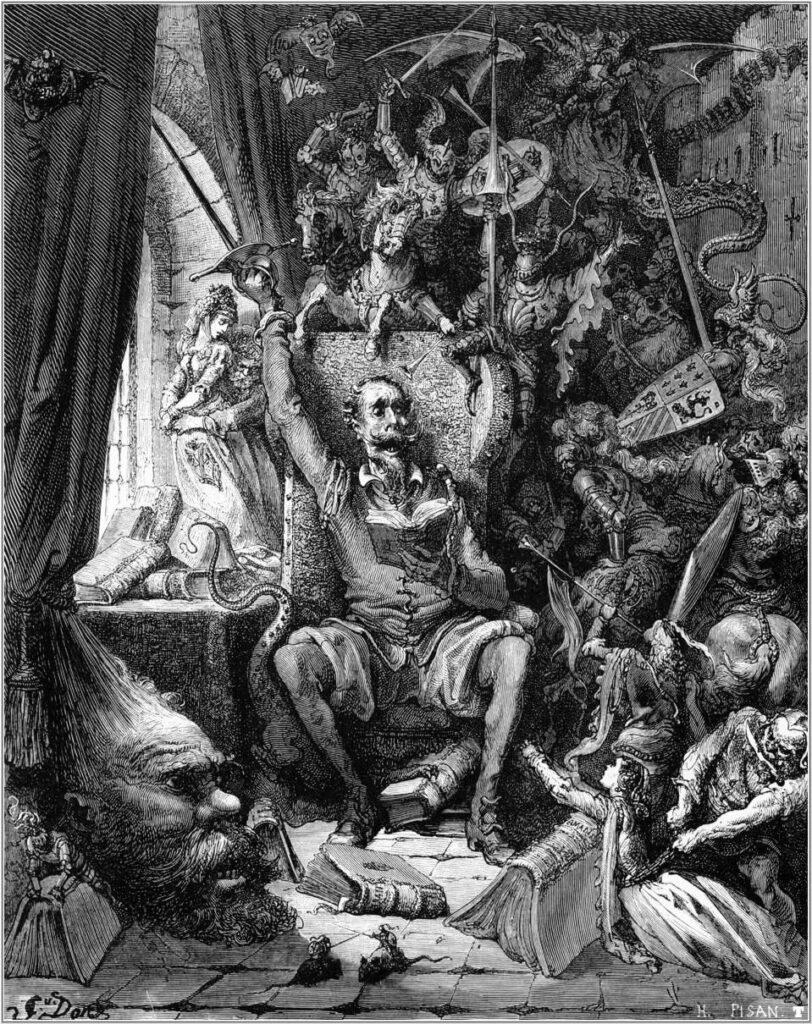
Prose fiction of considerable length exists in many literary traditions well before the term “novel” became standard in Europe. Japan’s The Tale of Genji, written around the year 1000, is often cited as one of the world’s earliest long prose narratives with developed characters and psychological depth. In the European tradition, Miguel de Cervantes’s Don Quixote, published in two parts in 1605 and 1615, is frequently identified as a foundational early novel, notable for its self-aware narrative structure and its blending of adventure, satire, and realistic characterization in ways that influenced later writers.
The Novel’s Rise in Europe
The novel became a dominant literary form in eighteenth-century Europe, closely tied to the growth of print culture, rising literacy rates, and an expanding middle-class readership with both the leisure time and disposable income to buy books. Writers such as Daniel Defoe, Samuel Richardson, and Henry Fielding produced influential early English novels that experimented with realistic detail, first-person narration, and sustained psychological interiority, establishing conventions that later novelists would build on, challenge, or deliberately break.
Over the nineteenth century, the novel diversified into numerous subgenres and movements. Realist novelists aimed to depict everyday life and social conditions with careful accuracy and detail, often addressing class, economic hardship, or moral complexity directly. Gothic novels explored atmosphere, horror, and the supernatural. The bildungsroman traced a protagonist’s psychological and moral development from youth into maturity. These forms were not mutually exclusive, and many influential novels combined elements of several traditions within a single work.
Structure and Point of View
A novel’s structure typically organizes its content around plot, the sequence of events that drive the story forward, and character development, how the people within that story change, or fail to change, over its course. Point of view shapes how readers experience that content: a first-person narrator relates events through a single character’s perspective and limited knowledge, a third-person limited narrator follows one character closely while remaining grammatically outside their head, and a third-person omniscient narrator can access the thoughts, motivations, and knowledge of multiple characters or even comment on events from outside the story entirely.
Twentieth-century modernist novelists, including Virginia Woolf and James Joyce, experimented aggressively with these conventions, developing techniques like stream of consciousness, which attempts to represent the flow of a character’s thoughts and sensory impressions directly, often with little regard for conventional grammar, chronology, or plot structure. These experiments expanded what a novel could formally attempt, influencing later literary fiction well beyond the specific techniques any individual modernist writer pioneered.
Why the Novel Became So Dominant
Part of the novel’s enduring appeal lies in its sheer flexibility. Unlike more formally constrained literary traditions, the novel imposes few fixed rules on length, structure, subject matter, or style, which has allowed it to absorb influences from journalism, drama, poetry, and later film and television, while continuing to adapt to new cultural contexts and reading technologies, from serialized newspaper publication in the nineteenth century to digital and audiobook formats today. This adaptability is a major reason the novel remains the dominant long-form literary genre worldwide, even as the specific markets, formats, and reading habits surrounding it continue to change.
The Novel as a Social Mirror
Critics and scholars have long valued the novel for its capacity to explore social conditions and individual psychology in sustained detail unavailable to shorter forms. A novel can follow a character across years or decades, tracking how their circumstances, relationships, and inner life change in response to historical events, economic pressure, or personal choice, giving readers a depth of insight into both an individual life and the wider society surrounding it. This capacity has made the novel a favored vehicle for social commentary, from nineteenth-century realist fiction addressing poverty and class inequality to contemporary novels grappling with migration, identity, and political upheaval.
The form’s length also allows it to sustain multiple interwoven plotlines and a large cast of characters, techniques that would overwhelm a short story’s compressed scope. Many novels use this capacity to juxtapose different characters’ perspectives on the same events, revealing how a single historical moment or social situation looks entirely different depending on who is experiencing it, a technique that has become especially common in literary fiction addressing complex historical or political subjects.
FAQs
What distinguishes a novel from a short story?
Length and depth. A novel is long-form prose fiction that allows extended development of plot and character, while a short story is far more compact and typically focused on a single incident or limited span of time.
What is often cited as an early landmark novel in the European tradition?
Miguel de Cervantes’s Don Quixote, published in 1605 and 1615, noted for its self-aware narrative structure and blending of adventure, satire, and realistic characterization.
What is stream of consciousness?
A narrative technique, associated with modernist writers like Virginia Woolf and James Joyce, that attempts to represent a character’s flow of thoughts and sensory impressions directly, often departing from conventional grammar or chronology.
Why has the novel remained such a dominant literary form?
Its flexibility. The novel imposes few fixed rules on length, structure, or subject matter, allowing it to absorb influences from other art forms and adapt to new cultural contexts and reading technologies over time.
In the news
Quick checkWhat distinguishes a novel from a short story?Show answer
Length and depth: a novel is long-form prose fiction allowing extended character and plot development, while a short story is far more compact and focused.
Editorially reviewed by Specialty Digest Editorial TeamLast reviewed November 2, 2026Researched and drafted with AI assistanceReport an issue