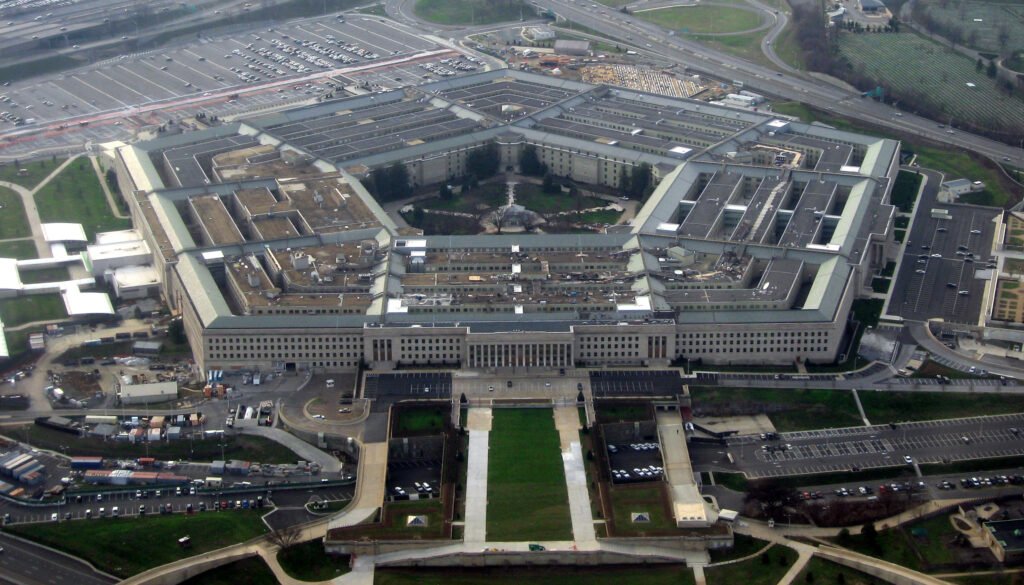
National security is the protection a state provides for its citizens, territory, economy, and core institutions against threats that could undermine their safety or survival. Governments across the political spectrum treat ensuring national security as among their most fundamental duties, but what counts as a genuine security threat has expanded enormously over time, moving well beyond the traditional focus on repelling military attack to encompass terrorism, organized crime, economic disruption, energy dependence, environmental degradation, and cyberattacks on critical infrastructure.
Traditional military dimensions
The oldest and most familiar dimension of national security concerns defending a state’s borders and population against military aggression, whether from a rival state’s armed forces or from terrorist violence. Most countries focus primarily on territorial defense, maintaining armed forces sized and equipped to deter or repel an attack on their own soil, while a smaller number of major powers, including the United States, the United Kingdom, France, and Russia, invest heavily in forces capable of projecting military power well beyond their own borders. The ancient Roman maxim si vis pacem, para bellum, meaning if you want peace, prepare for war, captures the enduring logic behind maintaining substantial military readiness even during periods without any active conflict.
Expanding beyond the military
Economic security has become recognized as a precondition for every other form of national security, since a state’s capacity to fund its military, maintain critical infrastructure, and respond to emergencies ultimately depends on the strength of its underlying economy. Environmental or ecological security addresses how problems such as resource scarcity, extreme weather, and long-term climate change can themselves generate instability, drive mass migration, and in some cases contribute to armed conflict over increasingly scarce resources such as fresh water or arable farmland, effects that can unfold gradually over decades rather than erupting as a sudden crisis. Human and political security, a broader and more contested category, emphasizes the well-being, political inclusion, and basic rights of individual citizens, treating threats to social cohesion and government legitimacy as security concerns in their own right rather than purely domestic political matters.
Institutional development
The modern institutional framework for national security in the United States traces directly to the National Security Act of 1947, which created the forerunner of the Department of Defense, established the National Security Council to coordinate security policy across the government, and created the Central Intelligence Agency, all while deliberately leaving the term national security itself undefined in the statute, a choice that gave the concept considerable flexibility in later decades, letting successive administrations apply it to whichever threats seemed most pressing at the time. Similar coordinating bodies, including national security councils and dedicated national security advisers, now exist in many other countries, including India, Ukraine, Russia, and, since 2010, the United Kingdom, reflecting a broad international consensus that security policy requires dedicated institutions capable of integrating military, diplomatic, economic, and intelligence considerations into a single coherent strategy rather than leaving each area to a separate ministry acting largely on its own.
Tools and institutions
States pursue national security through a combination of policy instruments, including armed forces, intelligence services, diplomacy, economic policy, and increasingly, dedicated cyber capabilities aimed at defending critical infrastructure such as power grids and financial systems from digital attack. Specialized agencies protect physical infrastructure specifically, such as the United States Federal Protective Service, which guards federal buildings, while regional and international bodies play a growing coordinating role, as seen in the European Union’s Frontex agency for external border security and Europol for coordinating action against transnational crime across member states with very different national security traditions of their own.
Criticisms and controversies
Critics have long warned that invoking national security can serve as a justification for actions that would otherwise draw far more scrutiny, including domestic surveillance programs, restrictions on civil liberties, and in extreme cases, outright authoritarian rule, as seen when military governments in Brazil and Argentina invoked a doctrine of national security to justify suppressing domestic political dissent during the mid-to-late 20th century. Debates over programs such as the United States PATRIOT Act and the National Security Agency’s surveillance activities illustrate the recurring tension between expanding government power in the name of security and protecting the individual freedoms that security policy is ultimately supposed to safeguard, a tension that shows no sign of resolving as new technologies create new categories of both threat and potential government overreach.
FAQs
What did the US National Security Act of 1947 create?
It created the forerunner of the Department of Defense, the National Security Council, and the Central Intelligence Agency, while leaving the term national security itself undefined.
How has the definition of national security expanded over time?
It has grown from a narrow focus on military defense to include economic security, environmental security, and human and political security, among other expanded dimensions.
What does si vis pacem, para bellum mean?
An ancient Roman maxim meaning if you want peace, prepare for war, often cited to justify maintaining substantial military readiness even in peacetime.
Why do critics worry about the concept of national security?
Because it has sometimes been invoked to justify domestic surveillance, restrictions on civil liberties, or authoritarian rule with less scrutiny than such actions would otherwise receive.
What is the difference between territorial defense and power projection?
Territorial defense focuses on protecting a state’s own borders, while power projection means maintaining forces capable of operating well beyond those borders, something only a small number of major powers invest in heavily.
Key facts
- US National Security Act of 1947 created the NSC, CIA, and precursor to the Department of Defense
- Has expanded from military defense to economic, environmental, and human security dimensions
- Si vis pacem, para bellum ('if you want peace, prepare for war') is a classic justification for military readiness
- Critics warn the concept has been used to justify surveillance and authoritarian rule
Quick checkWhat did the US National Security Act of 1947 create?Show answer
It created the forerunner of the Department of Defense, the National Security Council, and the CIA.
Sources
- Wikipedia: National Security
Editorially reviewed by Specialty Digest Editorial TeamLast reviewed November 2, 2026Researched and drafted with AI assistanceReport an issue