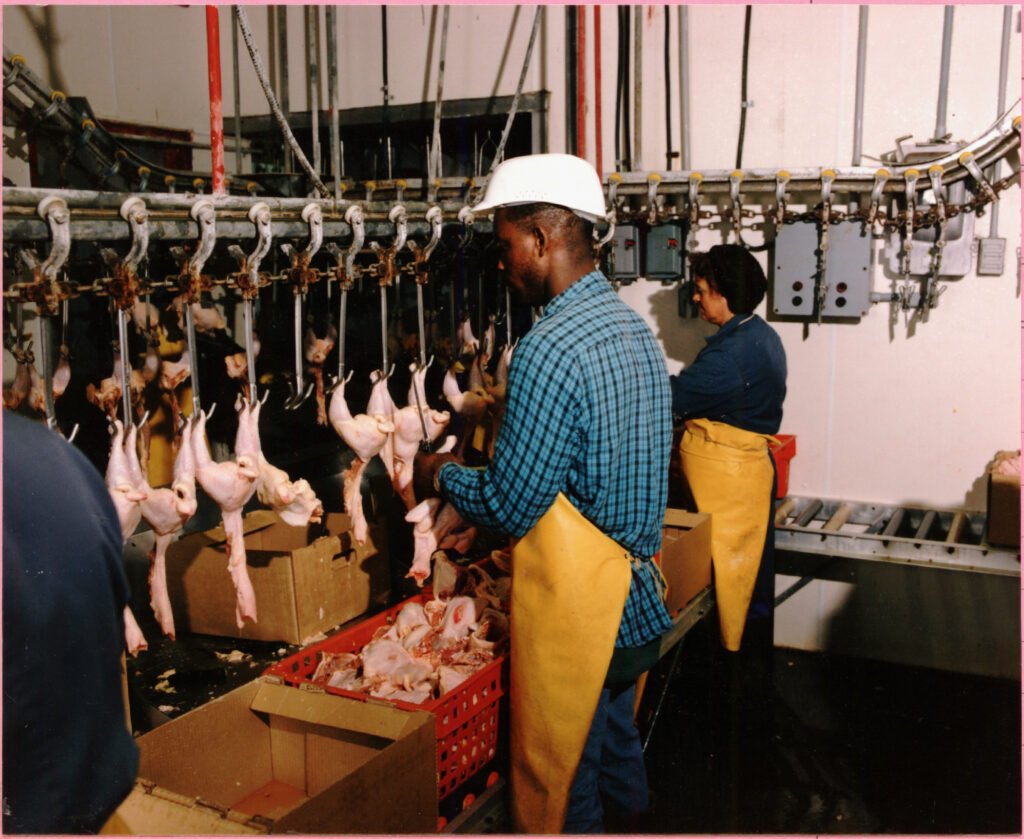
Cross-contamination is the unintended transfer of harmful bacteria, allergens, or other substances from one food, surface, or object to another, representing one of the most common causes of foodborne illness in both commercial kitchens and home cooking. It can occur directly, through physical contact between contaminated and clean items, or indirectly, through a shared surface, utensil, or unwashed hands.
Common Pathways
Raw meat, poultry, and seafood are frequent sources of cross-contamination, since juices from these products can carry bacteria like Salmonella or Campylobacter onto cutting boards, knives, and countertops that later contact ready-to-eat foods. Allergen cross-contamination occurs when a trace amount of an allergen, such as peanut residue, transfers to a food that does not naturally contain it, posing serious risk to allergic individuals even when the transferred amount is too small to be visible or detectable by taste.
Prevention in Commercial Kitchens
Professional kitchens use color-coded cutting boards and utensils to visually separate raw meat preparation from produce and ready-to-eat food handling, reducing the chance of accidental cross-use. Strict handwashing protocols between handling different food types, and designated preparation areas or equipment for allergen-free orders, are standard practices in kitchens serious about food safety, with many jurisdictions requiring documented cross-contamination prevention procedures as part of food service licensing.
Home Kitchen Practices
Public health guidance for home cooks emphasizes using separate cutting boards for raw meat and produce, washing hands and surfaces thoroughly after handling raw proteins, and storing raw meat on the lowest refrigerator shelf to prevent drips from contaminating other food below. Grocery shopping habits also matter, since placing raw meat in a separate bag from produce during transport reduces the risk of contamination before food even reaches the kitchen.
Training and Workplace Culture
Reducing cross-contamination depends heavily on consistent staff training and workplace culture, since even well-designed procedures and equipment fail if employees do not understand why a given step matters or feel rushed into skipping it during busy periods. Many food safety consultants emphasize that visible leadership commitment to food safety procedures, rather than written policy alone, is the strongest predictor of whether cross-contamination prevention practices are actually followed consistently on a busy kitchen line.
Allergen-Specific Protocols
Restaurants serving customers with severe food allergies increasingly adopt dedicated allergen protocols beyond general cross-contamination prevention, including designated allergen-free preparation zones, separate fryers for gluten-free items, and staff trained specifically to recognize the seriousness of allergen requests rather than treating them as simple preference modifications, since even trace cross-contact can trigger a severe or life-threatening reaction in a sensitive customer.
Technology Aids for Cross-Contamination Prevention
Some commercial kitchens have adopted digital temperature and workflow monitoring systems that flag when raw and ready-to-eat food handling zones are used out of sequence, adding a technological layer of enforcement on top of staff training and color-coded equipment, reflecting a broader trend of food safety technology supplementing rather than replacing fundamental hygiene practices that remain the first line of defense regardless of what monitoring tools a kitchen has in place.
Cross-Contamination in Home Food Recalls
Public health investigators sometimes trace household illness clusters not to a single contaminated product but to cross-contamination occurring entirely within a home kitchen, such as using the same cutting board for raw chicken and a salad without proper cleaning between uses, underscoring that even a fully safe, uncontaminated grocery purchase can become a food safety risk through improper handling well after it leaves the store.
Research and Simulation Training
Culinary and food safety education programs increasingly use glow-in-the-dark simulation powders that mimic invisible contamination under ultraviolet light, giving trainees a visceral, memorable demonstration of how easily cross-contamination can spread across a kitchen during normal food preparation, an approach food safety educators have found considerably more effective at changing behavior than lecture-based instruction alone.
As food service continues evolving toward more delivery and takeout formats, cross-contamination prevention has expanded to cover packaging practices and delivery handling, recognizing that risk no longer ends once food leaves the kitchen but continues through transport until it finally reaches the consumer.
Cross-Contamination Research and Modeling
Food safety researchers use quantitative microbial risk assessment models to estimate how readily pathogens transfer between surfaces under different handling scenarios, generating evidence-based guidance for exactly how long handwashing should last or how thoroughly a cutting board must be cleaned to meaningfully reduce transfer risk, moving cross-contamination prevention guidance beyond general common sense toward measurable, data-supported recommendations.
Food safety consultants frequently cite cross-contamination prevention as one of the highest-value, lowest-cost interventions available to any food business, since the core practices, separate equipment, consistent handwashing, and proper storage order, require relatively modest investment compared to the illness and reputational costs a single contamination incident can generate.
As kitchens continue adopting new equipment and workflow technologies, cross-contamination prevention principles are being actively reapplied to novel settings, including ghost kitchens serving multiple delivery brands from a single shared facility, where maintaining clear separation between different brands’ ingredients and preparation areas introduces challenges beyond those found in a traditional single-brand restaurant kitchen.
Food safety auditors consistently rank cross-contamination controls among the first items checked during any facility inspection, reflecting broad industry consensus that this single category of risk accounts for a disproportionate share of preventable foodborne illness across both commercial and institutional food service settings.
Taken together, these layered defenses, training, equipment, monitoring, and workplace culture, illustrate why cross-contamination prevention functions best as a continuously reinforced habit rather than a one-time policy decision made and then left unexamined.
Cross-contamination prevention, though often invisible to the end consumer, remains one of the most consequential daily disciplines practiced across the entire food supply chain, from farm handling through final home preparation.
Key facts
- Can occur directly through contact or indirectly through shared surfaces.nRaw meat, poultry, and seafood are common sources.nAllergen cross-contamination can occur from trace, undetectable residue.nColor-coded cutting boards help commercial kitchens prevent cross-use.
Quick checkWhat is allergen cross-contamination?Show answer
Allergen cross-contamination occurs when a trace amount of an allergen transfers to a food that does not naturally contain it, posing risk to allergic individuals.
Sources
- USDA Food Safety and Inspection Service, FDA Food Code
Editorially reviewed by Specialty Digest Editorial TeamLast reviewed November 3, 2026Researched and drafted with AI assistanceReport an issue