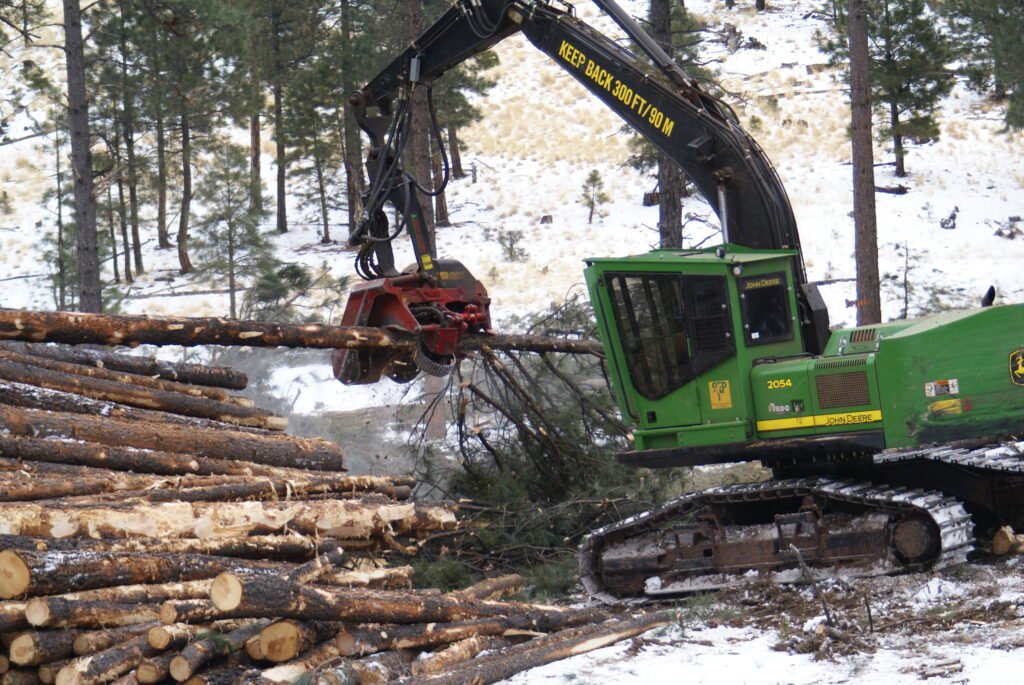
Selective logging is a harvesting method that removes specific individual trees, chosen by species, size, or condition, while leaving the surrounding forest canopy and stand structure largely intact.
Selection Criteria
Foresters mark trees for removal based on criteria such as commercial maturity, poor health, or overcrowding that limits the growth of neighboring trees, a process often guided by a forest inventory that records species, diameter, and condition across the stand. This targeted approach allows managers to improve overall stand quality and value over successive harvest cycles rather than resetting the entire site at once.
Ecological Advantages
Because most of the canopy remains standing, selective logging causes less soil disturbance and erosion than clear-cutting, maintains more continuous wildlife habitat, and preserves a multi-aged stand structure that many conservationists consider closer to natural forest conditions. Streams and understory vegetation are also better protected from temperature swings and sudden light exposure compared with even-aged harvesting methods.
Operational Challenges and Risks
Selective logging requires more careful planning and skilled equipment operation, since removing individual trees from a standing forest risks damaging neighboring trees during felling and extraction, and the lower volume harvested per acre makes the method less cost-efficient per unit of timber produced. Poorly executed selective logging, sometimes called high-grading, can also degrade a forest over time if only the best trees are repeatedly removed, leaving a stand dominated by lower-quality genetics.
Role in Sustainable Management
When applied with rigorous planning and genuine attention to long-term stand health, selective logging is widely regarded as one of the most ecologically compatible commercial harvesting methods, and it forms the backbone of many certified sustainable forestry operations worldwide. Tropical forest managers in particular rely on selective logging to extract valuable hardwoods while preserving the complex multi-species canopy structure that clear-cutting would destroy.
Equipment and Access Considerations
Because selective logging requires maneuvering machinery carefully between standing trees, operators often rely on smaller, more agile equipment and plan skid trails in advance to minimize the number of passes through sensitive areas, extending operation time but reducing residual stand damage. Some operations use cable or helicopter yarding on steep terrain specifically to avoid the soil disturbance that ground-based equipment would cause when extracting individual trees from difficult slopes.
Long-Term Stand Outcomes
Repeated selective harvests conducted with genuine attention to stand health, rather than simply extracting the most valuable trees each cycle, can gradually improve overall forest quality, growth rate, and resilience to pests over decades of management. This long-term orientation distinguishes well-managed selective logging from short-sighted high-grading, which prioritizes immediate value extraction at the expense of the forest’s future productive potential.
Tropical Applications
In tropical forests, where a single hectare can contain dozens of commercially valuable tree species intermixed with many more non-commercial species, selective logging allows extraction of specific high-value hardwoods like mahogany or teak while leaving the broader multi-species canopy structure largely intact. This targeted approach is central to reduced-impact logging certification programs that aim to make tropical timber extraction compatible with continued biodiversity conservation.
Monitoring Compliance
Verifying that selective logging crews actually followed marked-tree selections and avoided unauthorized cutting requires field audits, satellite monitoring of canopy disturbance, and increasingly GPS tracking of harvesting equipment, since the dispersed nature of selective harvest makes it harder to monitor than a single clearly bounded clear-cut. Certification bodies and government agencies alike have invested heavily in these monitoring tools specifically because selective logging’s subtlety makes illegal overharvesting easier to conceal than in more visually obvious clear-cutting operations.
As global demand for timber with verified sustainability credentials continues to grow, selective logging’s ability to combine commercial extraction with preserved canopy structure keeps it central to how certified forestry operations approach harvesting in both temperate and tropical settings.
Training Programs for Operators
Because selective logging demands greater skill than clear-cutting, many forestry organizations and certification programs now require documented training for equipment operators and crew supervisors, covering tree marking interpretation, directional felling technique, and damage-minimizing extraction planning. This professionalization of the workforce has gradually raised the baseline quality of selective logging operations in regions where certification has become commercially important.
Case Studies in Successful Application
Long-running selective logging operations in parts of Central Europe have maintained continuous forest cover for over a century while still producing commercial timber, often cited as evidence that well-managed selective harvesting can sustain both ecological integrity and economic output indefinitely when applied with sufficient discipline and long-term commitment from landowners and managers alike.
Balancing Speed and Care
Ultimately, the slower pace and higher per-unit cost of selective logging represent a deliberate trade-off that landowners and certification bodies consider worthwhile given the ecological and reputational benefits of keeping forest structure largely intact across repeated harvest cycles.
Looking Forward
As certification standards tighten and buyers demand greater supply chain transparency, selective logging operations are likely to face increasing pressure to document not just that trees were selectively removed, but precisely which trees, verified through satellite monitoring and digital chain-of-custody records rather than paperwork alone.
This trajectory suggests selective logging will remain a cornerstone of credible sustainable forestry claims even as the tools used to verify it continue to evolve.
Investment in operator training pays dividends across an entire logging career, since the skills needed to extract value safely from a standing forest without degrading it take years of field experience to fully develop.
For landowners balancing commercial return against conservation values, selective logging continues to offer one of the few harvesting methods that credibly delivers meaningful income without erasing the forest that produced it.
Key facts
- Targets trees by species, size, or condition;Preserves more canopy and habitat than clear-cutting;Can degrade forests if poorly applied through high-grading
Quick checkWhat distinguishes selective logging from clear-cutting?Show answer
It removes only chosen individual trees rather than the entire stand at once
Sources
- U.S. Forest Service silviculture guidelines; tropical forestry management literature
Editorially reviewed by Specialty Digest Editorial TeamLast reviewed November 3, 2026Researched and drafted with AI assistanceReport an issue