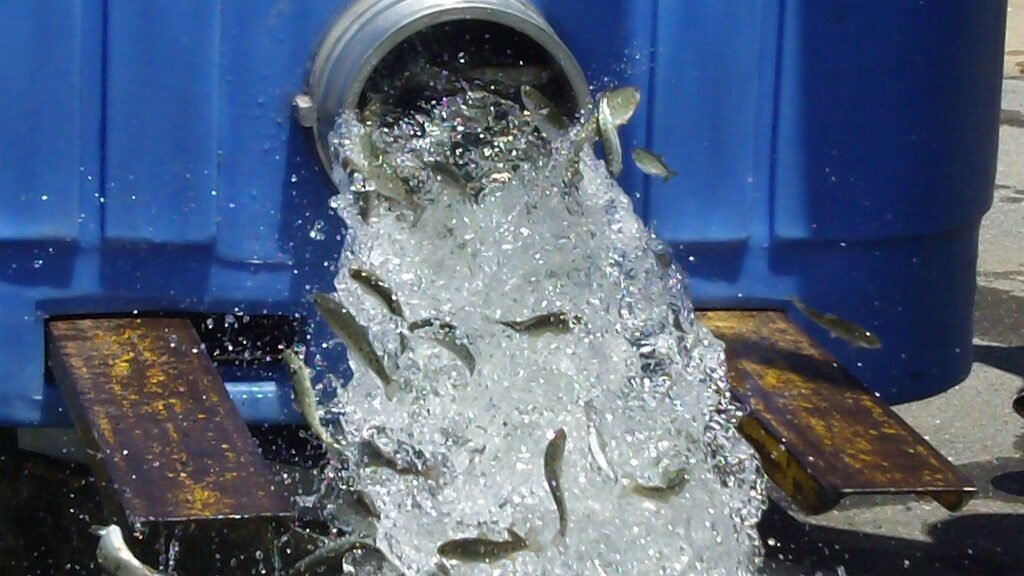
Finfish culture is the branch of aquaculture focused specifically on raising fish with internal skeletons, such as salmon, tilapia, catfish, and sea bass, as distinguished from the farming of shellfish or crustaceans. It encompasses the full range of species, systems, and techniques used to raise true fish from egg or fry to market size.
Major Production Categories
Freshwater finfish culture, which includes species like tilapia, carp, and catfish raised in ponds or tanks, accounts for the largest share of global finfish production by volume, concentrated heavily in Asia. Marine finfish culture, raising species such as salmon, sea bass, and grouper in coastal net pens or land-based saltwater systems, represents a smaller share by volume but often commands significantly higher market value per unit of production.
Life Cycle Management
Successful finfish culture requires managing distinct life stages differently, from delicate hatchery-reared larvae through juvenile nursery phases to final grow-out, with each stage often requiring different tank sizes, feed formulations, and water quality parameters. Many finfish operations specialize in just one or two of these stages, selling juveniles to other farms that focus specifically on grow-out to market size.
Feed Development
Modern finfish culture depends heavily on manufactured feeds formulated to match each species’ nutritional requirements, and feed research has steadily reduced reliance on wild-caught fish meal and fish oil by incorporating plant-based proteins, insect meal, and algae-derived ingredients. This shift toward more sustainable feed ingredients has become an increasingly important focus as the industry works to reduce its dependence on wild fish stocks for feed production.
Selective Breeding
Many commercially important finfish species have undergone generations of selective breeding to improve growth rate, disease resistance, and feed efficiency, similar in principle to livestock breeding programs used in land-based agriculture. Breeding programs for species such as farmed salmon and tilapia have produced substantial measurable gains in productivity over several decades of consistent selection.
Regional Specialization
Different regions have developed strong specializations in particular finfish species based on climate, water availability, and market demand, with Norway and Chile dominating global salmon farming, China leading freshwater carp and tilapia production, and Southeast Asian nations producing large volumes of farmed catfish and grouper. This regional specialization reflects both natural environmental suitability and decades of accumulated technical expertise concentrated in particular production centers.
Disease Management
Finfish culture faces ongoing disease pressures from parasites, bacteria, and viruses that can spread quickly in densely stocked populations, prompting significant investment in vaccines, selective breeding for resistance, and improved farm management practices to reduce outbreak risk. Sea lice affecting farmed salmon in net pens represent one of the most closely watched disease and parasite challenges in the industry, driving substantial research into both treatment and prevention methods.
Technological Innovation
Automated feeding systems, underwater cameras for monitoring fish behavior and health, and data-driven management software have increasingly been adopted in finfish culture to improve efficiency and catch problems earlier than visual inspection alone would allow. These technologies are helping larger operations manage increasingly complex production systems while also generating data useful for ongoing selective breeding and feed optimization programs.
Market Diversification
While salmon and tilapia dominate global finfish culture by value and volume respectively, growing consumer interest in diverse seafood options has encouraged farming of additional species such as barramundi, cobia, and various grouper species in different regions. This diversification spreads market and disease risk across more species while also meeting demand for seafood varieties that wild fisheries alone cannot reliably supply at scale.
Looking Ahead
Continued progress in selective breeding, disease management, and sustainable feed will likely remain the central drivers of growth and improvement across finfish culture in the coming years. As demand for seafood protein continues rising globally, finfish culture is expected to keep growing faster than wild capture fisheries, which face firmer biological limits on expansion.
Related Specialties
Finfish culture draws on veterinary science, genetics, and nutrition research together, reflecting its maturation into a technically sophisticated branch of modern food production.
Economic Considerations
Finfish culture economics vary dramatically by species, system, and market, but feed conversion efficiency is almost always a central driver of profitability, since feed represents the largest recurring cost for most finfish operations. Species that convert feed into body weight efficiently, reach market size quickly, and tolerate higher stocking densities tend to offer better returns on invested capital than slower-growing or more disease-prone species. Market positioning matters considerably as well, since some finfish species command premium prices as fresh, whole fish in specialty markets while others compete primarily as a commodity protein source, which affects how much margin a farm can realistically capture. Processing and distribution infrastructure, including facilities for filleting, freezing, and transport, often represents a major additional investment beyond the farm itself, particularly for operations aiming to reach markets beyond their immediate region. Currency exposure and feed ingredient price volatility, both tied closely to global commodity markets, add further financial risk that larger finfish operations typically manage through forward contracts or diversified sourcing arrangements.
Workforce and Training
Finfish culture spans an enormous range of species and systems, so workforce needs vary considerably from one operation to the next, but most farms require staff comfortable with both practical husbandry tasks and basic water quality monitoring. Vocational programs, university fisheries and aquaculture departments, and on-the-job apprenticeships all contribute to building the skilled workforce that growing finfish operations depend on.
Beyond feed and genetics, water quality management and disease prevention remain central to finfish culture success, since outbreaks can spread quickly through densely stocked populations and cause substantial economic losses if not caught early.
Key facts
- Includes freshwater species like tilapia and carp, and marine species like salmon.|Manages distinct hatchery, nursery, and grow-out life stages.|Relies on manufactured feeds increasingly using plant and algae proteins.|Shows strong regional specialization by species and climate.
Quick checkHow does finfish culture differ from shellfish farming?Show answer
Finfish culture raises fish with internal skeletons like salmon and tilapia, while shellfish farming raises mollusks like oysters and mussels that typically need no added feed.
Sources
- FAO Fisheries and Aquaculture Department
Editorially reviewed by Specialty Digest Editorial TeamLast reviewed November 3, 2026Researched and drafted with AI assistanceReport an issue