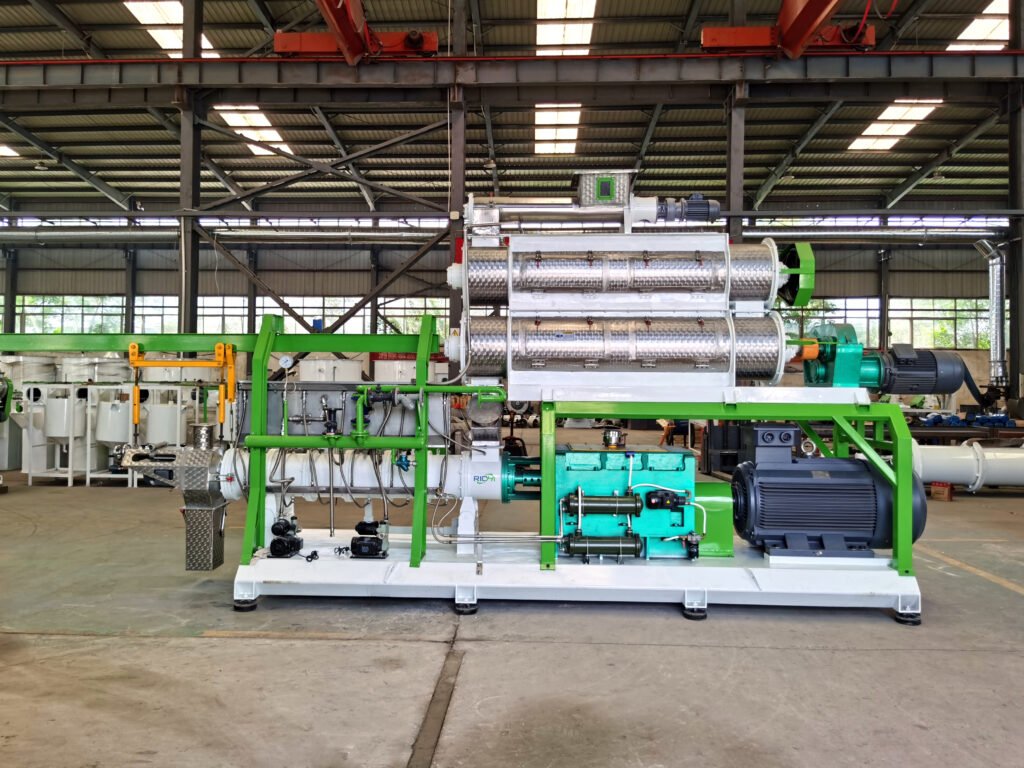
Aquaculture feed is manufactured nutrition formulated specifically for farmed fish, shrimp, and other aquatic animals, designed to supply the protein, fat, vitamins, and minerals each species needs at different life stages. Feed typically represents the largest single operating cost in most fish and shrimp farming, making its formulation and efficiency a central concern across the
Aquaculture Feed Read More »
Manufactured nutrition formulated for farmed fish, shrimp, and other aquatic animals.
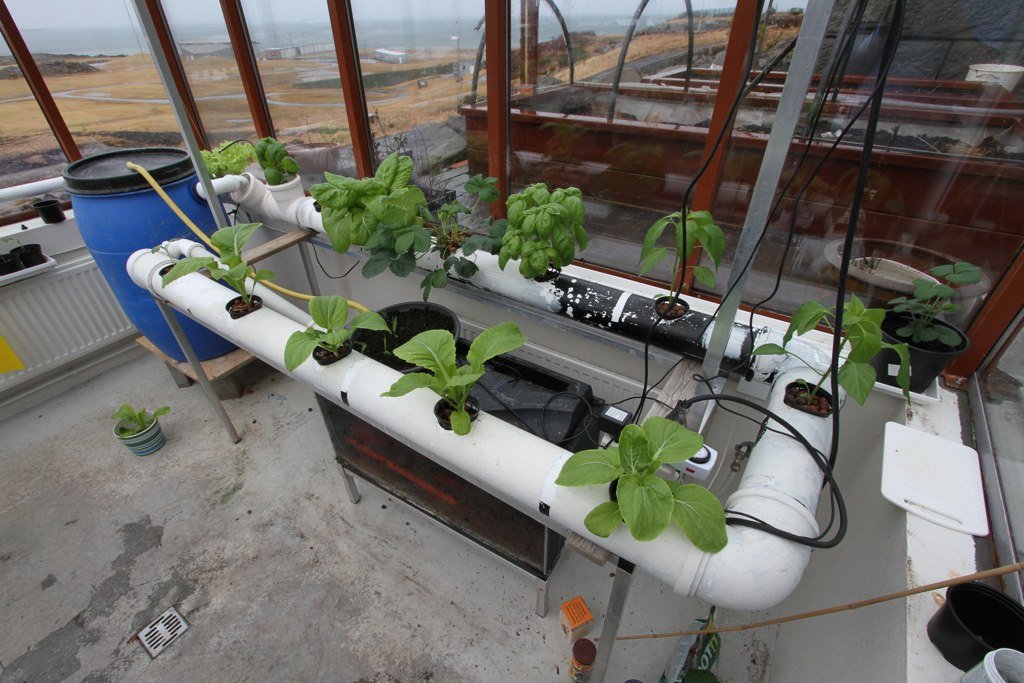
Aquaponics is a food production method that combines fish farming with hydroponic plant cultivation in a single integrated system, where fish waste provides nutrients for plants and the plants help filter and clean the water that returns to the fish. This closed-loop design allows both fish and vegetables to be produced together using substantially less
Aquaponics Read More »
A food production method combining fish farming and plant growing in one integrated, water-recycling system.
Finfish culture is the branch of aquaculture focused specifically on raising fish with internal skeletons, such as salmon, tilapia, catfish, and sea bass, as distinguished from the farming of shellfish or crustaceans. It encompasses the full range of species, systems, and techniques used to raise true fish from egg or fry to market size. Major
Finfish Culture Read More »
The branch of aquaculture focused on raising fish with internal skeletons, as distinct from shellfish farming.
Fish farming, also called aquaculture when applied to finfish, is the practice of raising fish in controlled environments such as ponds, tanks, cages, or enclosed sections of lakes and coastal waters, rather than catching them from wild populations. It now supplies more than half of all fish consumed by people worldwide, a dramatic shift from
Fish Farming Read More »
The practice of raising fish in controlled environments like ponds, tanks, or cages rather than catching them wild.
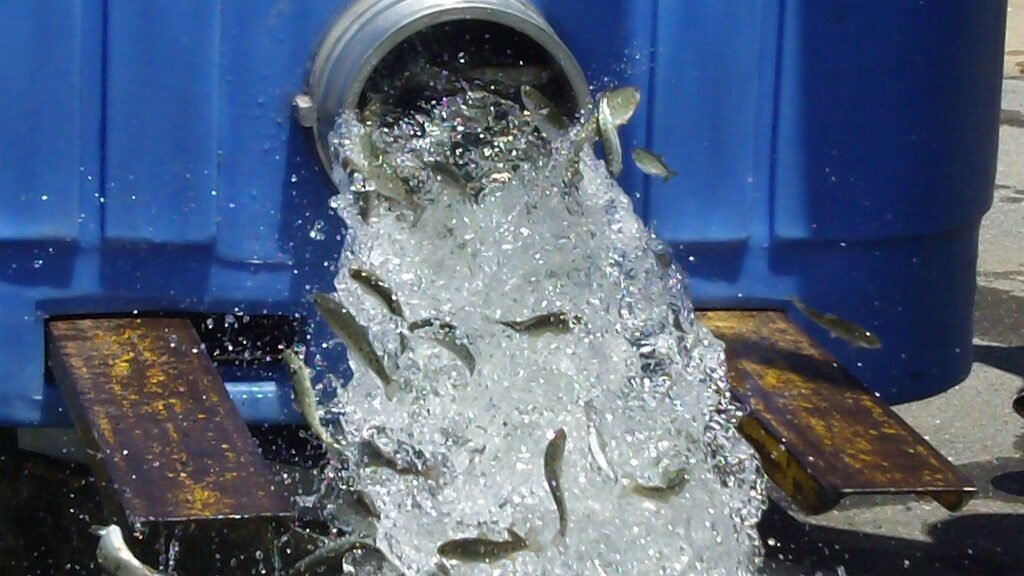
A hatchery is a facility designed to breed fish, shellfish, or other aquatic organisms through their earliest life stages, from fertilized eggs through larvae or juveniles, before they are either released into the wild or transferred to grow-out farms. Hatcheries play a central role in both aquaculture production and conservation programs aimed at supplementing wild
Hatchery Read More »
A facility that breeds fish or shellfish through their earliest life stages before release or transfer to farms.
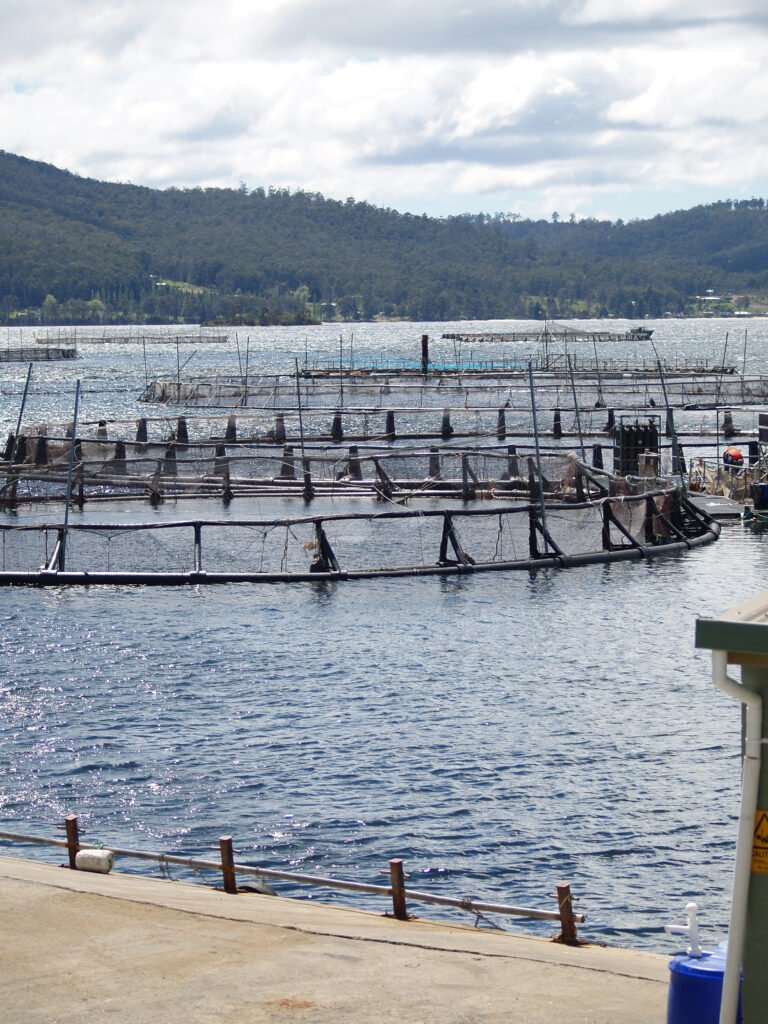
Offshore aquaculture is fish or shellfish farming conducted in open ocean waters farther from shore than traditional coastal operations, typically in deeper water with stronger currents and greater exposure to waves and weather. It represents an effort to expand aquaculture production into new areas while reducing some of the environmental and spatial conflicts associated with
Offshore Aquaculture Read More »
Fish or shellfish farming conducted in open ocean waters farther from shore than coastal operations.
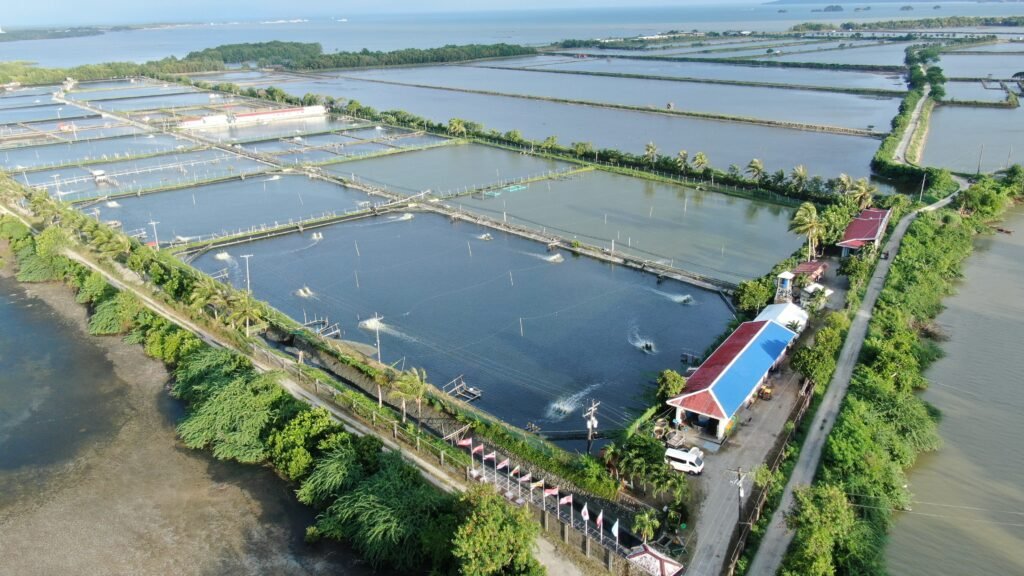
Pond culture is the practice of raising fish or shrimp in constructed earthen or lined ponds, making it one of the oldest and most widely used forms of aquaculture worldwide. It remains the dominant production method for species such as carp, tilapia, and farmed shrimp across much of Asia, where it has been practiced in
Pond Culture Read More »
The practice of raising fish or shrimp in constructed earthen or lined ponds.
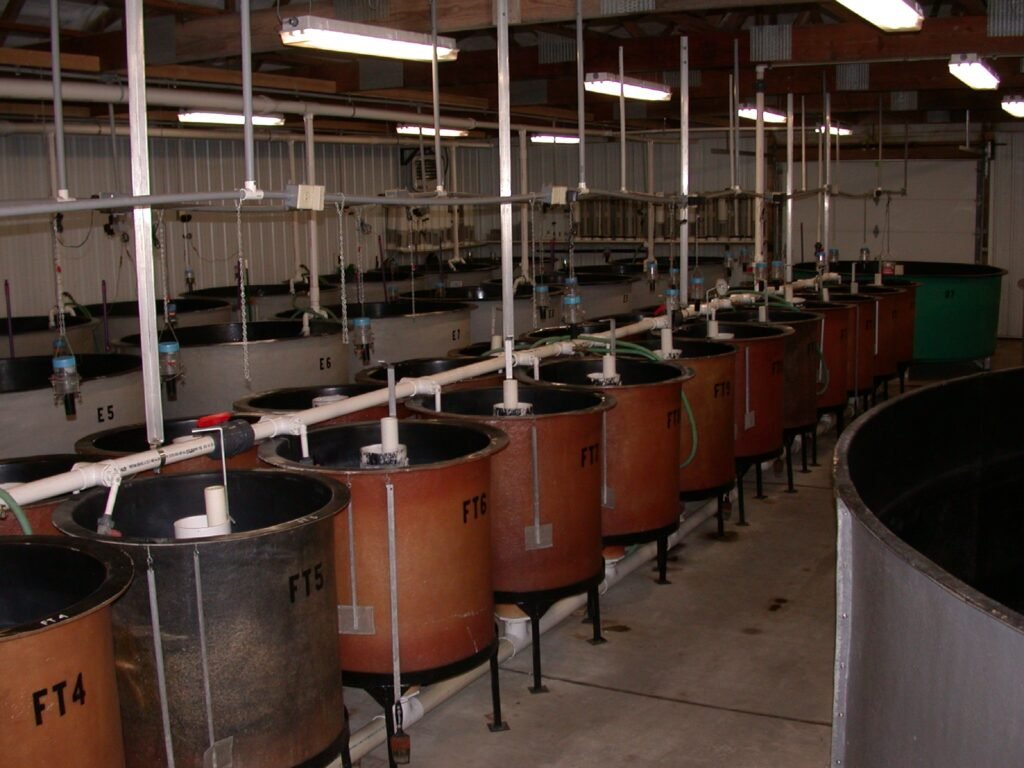
A recirculating aquaculture system, often abbreviated RAS, is a fish farming technology that continuously filters and reuses the same water within enclosed tanks, rather than relying on a constant flow of fresh water or open exchange with a natural water body. This closed-loop approach allows fish farming to occur almost anywhere, including indoor facilities far
Recirculating Aquaculture System Read More »
A fish farming technology that continuously filters and reuses the same water in enclosed tanks.
Seaweed farming is the cultivation of marine algae in coastal or offshore waters for food, animal feed, fertilizer, and increasingly, industrial and biotechnology applications. It is one of the fastest-growing segments of global aquaculture, requiring no feed, fresh water, or arable land, since seaweed draws its nutrients directly from the surrounding seawater and sunlight. Common
Seaweed Farming Read More »
The cultivation of marine algae in coastal waters for food, feed, and industrial uses.
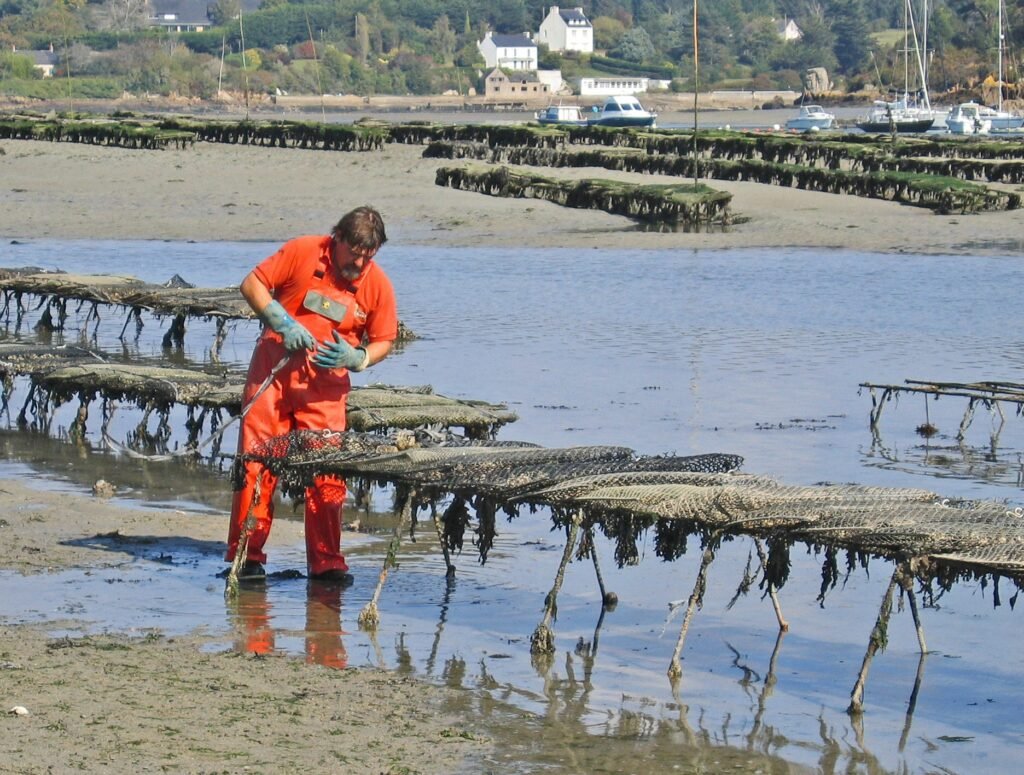
Shellfish farming is the cultivation of mollusks such as oysters, mussels, clams, and scallops in coastal or offshore waters, typically using methods that rely on the shellfish’s natural ability to filter food from the surrounding water rather than requiring manufactured feed. It represents one of the most resource-efficient forms of aquaculture, since farmed shellfish feed
Shellfish Farming Read More »
The cultivation of mollusks like oysters, mussels, and clams in coastal waters, usually without added feed.