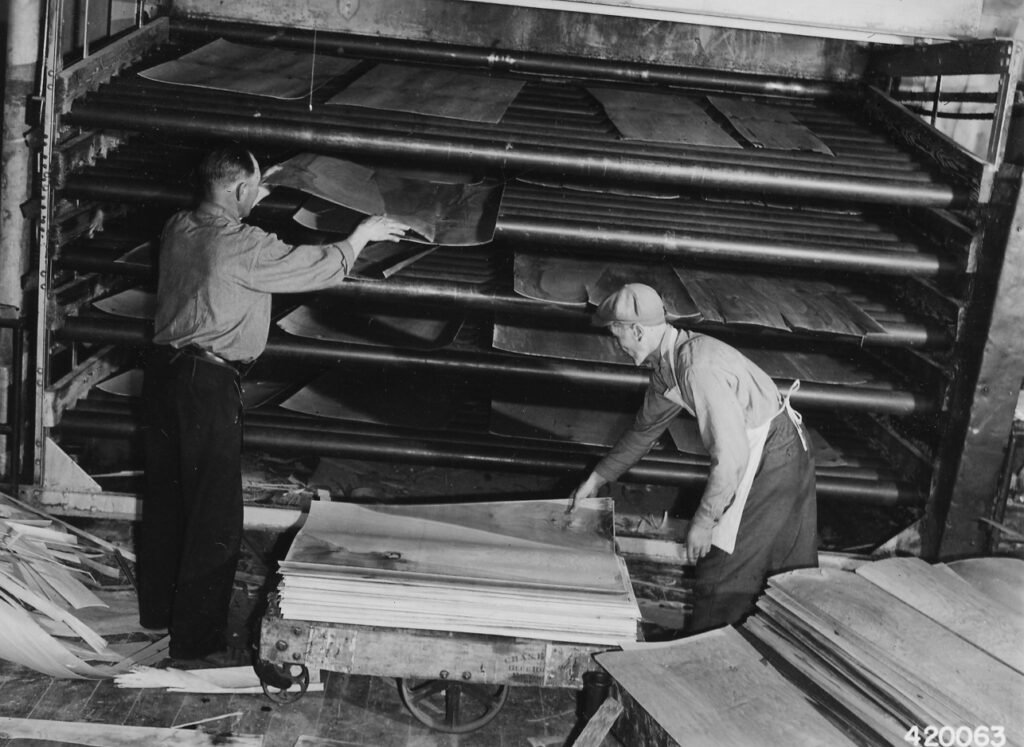
Wood veneer is a thin sheet of wood, typically less than three millimeters thick, sliced or peeled from a log and used as a decorative or functional surface layer on furniture, cabinetry, doors, and engineered wood panels. Veneer allows manufacturers to achieve the appearance of expensive or rare wood species while using far less raw material than building an item from solid wood.
Cutting Methods
Rotary-cut veneer is peeled continuously from a rotating log on a lathe, producing wide sheets efficiently but with a grain pattern that follows the log circular growth rings. Sliced veneer, by contrast, is cut lengthwise through a log section, producing more varied and often more visually prized grain patterns favored for high-end furniture and architectural woodwork, though at a lower yield and higher cost than rotary cutting.
Applications
Beyond furniture and cabinetry, veneer is a key component in plywood manufacturing, where multiple rotary-cut layers are glued together with alternating grain direction for structural strength. Decorative veneer applications also extend to musical instruments, architectural paneling, and marquetry, where small pieces of contrasting veneer are assembled into intricate patterns and images.
Grain Patterns and Selection
The way a log is cut relative to its growth rings produces distinctly different grain patterns in veneer, ranging from the cathedral-like arches of plain-sliced veneer to the straighter, more uniform lines of quarter-sliced material, and manufacturers select a cutting method based on the visual effect desired for a particular product line. Figured veneers, which display unusual patterns such as burl, curl, or birdseye figure, command significantly higher prices due to their rarity and the skill required to cut them without wasting material.
Matching and Application Techniques
When applying veneer to furniture or panels, craftsmen often arrange adjacent sheets from the same log in sequence, a technique called book-matching, to create a mirrored, symmetrical grain pattern across a large surface. Modern veneer is typically applied using adhesives and either vacuum pressing or hot pressing equipment, replacing older hand-applied methods, though fine furniture makers sometimes still use traditional hide glue and hand techniques for restoration or high-end custom work.
Economic Considerations
Veneer pricing varies enormously depending on species rarity, grain figure, and cutting method, with common rotary-cut veneers from fast-growing species costing only a fraction of rare figured veneers cut from slow-growing hardwoods. The ability to stretch a single valuable log into many square meters of veneer-covered surface area makes veneer an economically efficient way to use scarce or expensive wood species that would be prohibitively costly if used as solid lumber throughout an entire piece of furniture.
Looking Ahead
As solid hardwood becomes scarcer and more expensive in some regions, veneer is likely to remain an important way to deliver the look of premium wood species while conserving increasingly limited raw material. Advances in adhesive and pressing technology continue to expand the range of surfaces, including curved and flexible applications, where veneer can realistically be applied, broadening its use beyond traditional flat furniture and cabinetry surfaces.
Related Specialties
Wood veneer production connects directly to plywood manufacturing, since plywood panels are built from stacked, cross-oriented veneer layers. It also overlaps with furniture design and forest management, since the availability and cost of veneer-grade logs directly shapes which wood species designers can realistically specify.
Preservation and Restoration
Antique furniture restoration often requires sourcing veneer that closely matches the original material in species, cut, and age-related color, a task that has become more difficult as certain historic wood sources have become scarce or protected. Specialist veneer suppliers maintain inventories of rare and reclaimed wood specifically to serve this restoration market, alongside their core business supplying veneer for new furniture and architectural production.
Sustainability Certification
Because veneer production can draw on both plantation-grown and old-growth timber sources, certification schemes verifying sustainable and legal sourcing have become increasingly important to buyers concerned about the environmental impact of the wood products they purchase. Some veneer suppliers now market reclaimed or salvaged wood veneer specifically as a more sustainable alternative, appealing to designers and consumers prioritizing environmental considerations alongside appearance.
Veneer in Modern Design
Contemporary furniture and architectural designers continue to favor veneer for its ability to combine the visual richness of natural wood with design flexibility that solid lumber cannot easily match, including curved surfaces, large uninterrupted grain patterns, and lightweight construction. This has kept veneer relevant even as some furniture categories have shifted toward other materials, since no synthetic alternative fully replicates the specific visual depth and variation that natural wood veneer provides.
Veneer suppliers typically grade their sheets by visual quality and consistency, helping furniture makers and architects select material appropriate to a given project budget and visual requirement.
Storage conditions matter considerably for raw veneer, since thin wood sheets are prone to cracking or curling if humidity is not carefully controlled before the material is applied and pressed onto its final substrate.
Some specialty suppliers now offer digitally printed wood-look veneers as a lower-cost alternative for projects where exact natural grain matching matters less than overall visual consistency.
Training programs for veneer specialists increasingly combine traditional hand skills with instruction in modern pressing and finishing equipment.
Some architectural firms maintain dedicated relationships with veneer suppliers to source consistent material across multi-year building projects requiring matched wood surfaces throughout.
Veneer trade shows and industry publications help connect suppliers with furniture makers and architects seeking specific species, cuts, or figure patterns for upcoming projects.
Climate-controlled storage facilities have become standard at larger veneer suppliers to protect valuable sheets from humidity damage before they reach a customer workshop.
Key facts
- Produced via rotary-cut or sliced-cut methods; used in furniture, cabinetry, and plywood; allows efficient use of rare or expensive wood species.
Quick checkWhat is the main difference between rotary-cut and sliced veneer?Show answer
Rotary-cut veneer is peeled continuously from a rotating log, while sliced veneer is cut lengthwise for more varied grain patterns.
Sources
- Based on general wood products manufacturing literature.
Editorially reviewed by Specialty Digest Editorial TeamLast reviewed November 3, 2026Researched and drafted with AI assistanceReport an issue