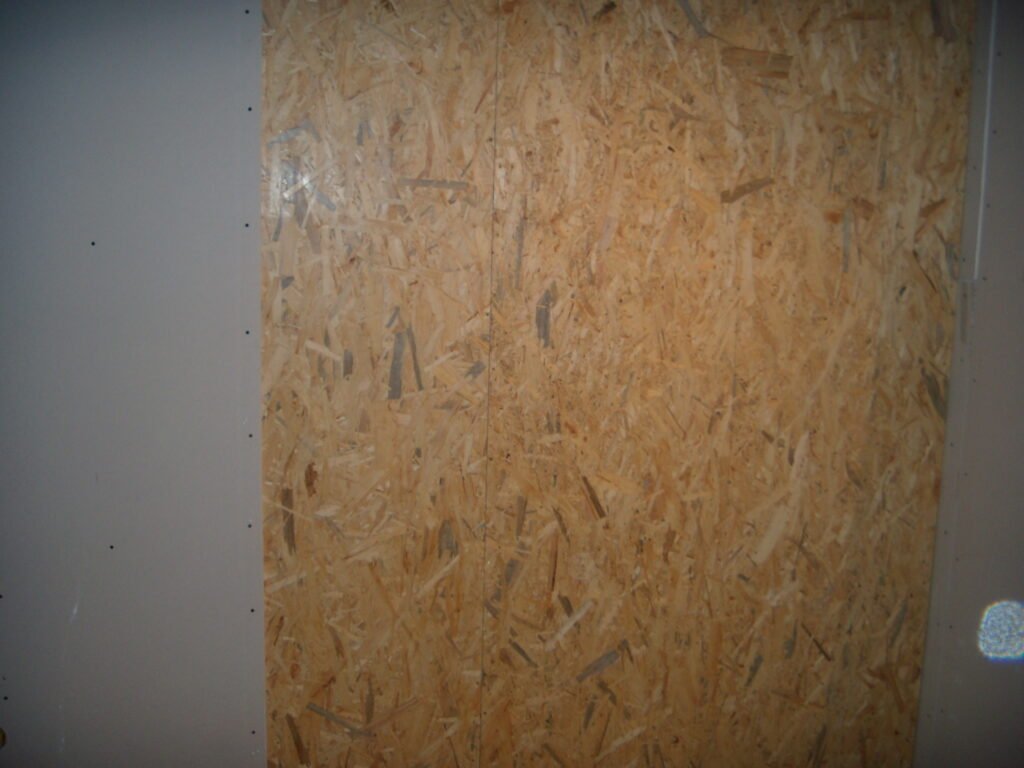
Particleboard is an engineered wood panel manufactured by combining small wood particles, chips, or shavings with a synthetic resin adhesive and pressing the mixture under heat into a flat sheet. It is one of the least expensive engineered wood products available, widely used in furniture, cabinetry, and flooring underlayment where appearance and structural strength requirements are modest.
Manufacturing Process
Wood particles, often sourced from sawmill byproducts, recycled wood, or purpose-cut material, are dried, sorted by size, and blended with resin before being formed into a loose mat and pressed under high heat and pressure. The pressing process cures the resin, bonding the particles into a rigid panel, which is then trimmed, sanded, and often finished with a laminate, veneer, or paint layer to improve its appearance.
Properties and Limitations
Particleboard offers a smooth, uniform surface well suited to laminate finishes, and its relatively low cost and efficient use of wood waste make it attractive for mass-produced furniture. However, it has lower strength and screw-holding capacity than plywood or solid wood, and it can swell or weaken when exposed to moisture, which limits its suitability for applications where durability or load-bearing capacity is critical.
Particle Size and Panel Types
Particleboard can be manufactured with a layered structure, using finer particles near the surfaces for a smoother finish and coarser particles in the core for structural bulk, a design that balances surface quality against material cost. Oriented strand board, a related but distinct product, uses larger, flat wood strands arranged in cross-oriented layers rather than fine particles, giving it greater structural strength suited to construction sheathing rather than furniture applications.
Formaldehyde and Emissions Standards
Early particleboard formulations often used adhesives that released formaldehyde gas over time, raising indoor air quality concerns that led many countries to adopt strict emissions standards for engineered wood products sold for interior use. Manufacturers have responded by developing low-formaldehyde and formaldehyde-free adhesive formulations, and many markets now require products to carry certification confirming they meet specific emissions thresholds before they can be sold for residential use.
Economic Considerations
Particleboard remains one of the most cost-effective engineered wood products available because it can be manufactured largely from low-value wood waste and recycled material rather than higher-grade timber, keeping raw material costs well below those of plywood or solid lumber. This cost advantage has made particleboard the dominant substrate choice for mass-market furniture and cabinetry, particularly when combined with a laminate or veneer surface that disguises its lower-cost core material.
Looking Ahead
Stricter emissions standards and growing consumer preference for lower-formaldehyde products are likely to keep pushing particleboard manufacturers toward alternative adhesive chemistries, some of which rely on bio-based or formaldehyde-free resin systems still being refined for cost and performance. Rising interest in using recycled and post-consumer wood waste as feedstock is also expected to grow, aligning particleboard production further with broader sustainability and circular economy goals in the wood products industry.
Related Specialties
Particleboard manufacturing overlaps closely with sawmill operations, since sawmill waste such as sawdust and offcuts is a common raw material input. It also connects to furniture design and manufacturing, where particleboard serves as the dominant substrate beneath laminate and veneer surface finishes.
Manufacturing Process Detail
Particleboard production begins with wood particles being dried to a precise moisture content before resin is applied, typically through a blending process that coats each particle evenly to ensure consistent bonding throughout the finished panel. The resin-coated particles are then formed into a loose mat matching the target panel dimensions before being compressed under a hot press that cures the adhesive and consolidates the material into a rigid, uniform board.
Market Position and Alternatives
Particleboard competes directly with medium-density fiberboard, a related engineered panel made from finer wood fibers rather than particles, which offers a smoother surface and machining characteristics better suited to some furniture applications at a somewhat higher cost. Manufacturers often maintain production lines for both products, allowing them to serve different segments of the furniture and construction markets depending on which material best fits a customer specific performance and budget requirements.
End-of-Life and Recycling
Particleboard disposal has become a growing consideration as furniture using it reaches the end of its service life, since the resin bonding particles together complicates recycling compared with solid wood, which can more easily be reused or burned as clean fuel. Some recycling programs have developed methods to reprocess particleboard waste back into new panels or alternative products, though contamination from laminates, finishes, and hardware remains a persistent practical challenge.
Furniture manufacturers typically select particleboard density and thickness based on the specific structural demands of a given design, balancing material cost against the weight-bearing and fastening performance the finished piece will need.
Ongoing research into alternative binders continues to explore ways of reducing both cost and environmental impact while maintaining acceptable panel strength.
Some manufacturers now market particleboard made predominantly from post-consumer recycled wood as a distinct, sustainability-focused product line aimed at environmentally conscious furniture buyers.
Quality testing for particleboard typically includes measures of internal bond strength and screw-holding capacity to verify consistent manufacturing performance.
Industry groups representing particleboard manufacturers periodically update voluntary performance standards to reflect improvements in adhesive technology and evolving customer expectations.
Some particleboard producers have begun experimenting with agricultural fiber blends, incorporating materials such as wheat straw alongside wood particles to diversify their raw material supply.
Panel thickness tolerances are checked carefully during quality control, since even small dimensional inconsistencies can cause problems during furniture assembly downstream.
Furniture assembly instructions for particleboard products typically specify exact fastener types and pre-drilling guidance to avoid splitting the panel edges during installation.
Key facts
- Made from wood particles and resin pressed under heat; commonly used in furniture and cabinetry; weaker and more moisture-sensitive than plywood.
Quick checkWhat is a key limitation of particleboard compared with plywood?Show answer
It has lower strength and screw-holding capacity and is more prone to swelling when exposed to moisture.
Sources
- Based on general wood products manufacturing literature.
Editorially reviewed by Specialty Digest Editorial TeamLast reviewed November 3, 2026Researched and drafted with AI assistanceReport an issue