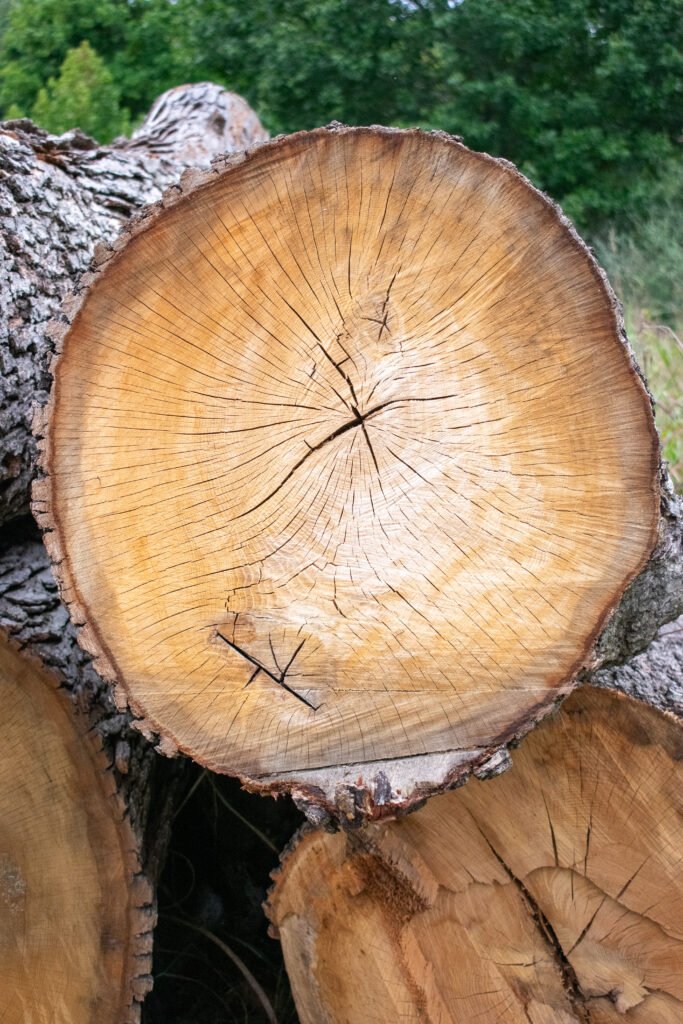
Wood density is a measure of how much mass a given volume of wood contains, usually expressed as mass per unit volume, and it is one of the most important physical properties influencing how a species of wood performs structurally, how it burns, and how it machines or finishes. Denser woods generally offer greater strength and durability, while lighter woods are easier to work and transport.
Factors Affecting Density
Wood density varies considerably both between species and within a single tree, influenced by growth rate, the ratio of earlywood to latewood in each growth ring, and moisture content at the time of measurement. Trees that grow slowly in competitive or resource-limited conditions often produce denser wood with tighter growth rings, while fast-growing species in favorable conditions tend to produce lighter, less dense wood.
Practical Significance
Density strongly influences a wood species intended use, since denser hardwoods like oak or hickory are prized for flooring, tool handles, and structural applications requiring strength and wear resistance, while lighter woods such as balsa or certain pines are favored for insulation, packaging, or applications where weight matters more than strength. Density also affects a wood suitability as fuel, since denser wood generally contains more energy per unit volume and burns longer than an equivalent volume of lighter wood.
Measuring Density
Wood density is typically measured by weighing a sample of known volume after drying it to a standard moisture content, since moisture significantly affects weight and would otherwise distort comparisons between species or samples. Specific gravity, a related measure comparing wood density to that of water, is commonly used in scientific literature and allows researchers to compare wood properties across species without needing to specify units of mass and volume directly.
Density in Species Selection
Foresters and wood buyers use published density values, often compiled into reference tables by species and region, to predict how a given wood will perform before it is even cut, informing decisions about which species to plant for timber production or select for a specific end use. Wood density can vary meaningfully even within the same species depending on where and how a tree grew, which is why density figures in reference tables are typically presented as ranges or averages rather than single fixed values.
Economic Considerations
Density influences wood market value both directly, since denser hardwoods often command premium prices for flooring and furniture, and indirectly, since density affects transportation economics by determining how much usable wood fits within a given shipping weight or volume limit. Buyers purchasing wood for fuel or pulp production also weigh density carefully, since denser wood delivers more energy or fiber per truckload, affecting the overall cost efficiency of sourcing and transporting raw material to a mill or processing facility.
Looking Ahead
As timber supply increasingly comes from faster-growing plantation forests rather than old-growth stands, understanding and managing wood density through breeding and silvicultural practices has become more important for ensuring future wood supplies still meet the structural and quality demands of builders and manufacturers. Researchers continue to study how climate change and shifting growing conditions might affect wood density in various species, since any significant shift could have downstream effects on construction material performance and fuel value.
Related Specialties
Wood density is closely tied to lumber grading, since density-related stiffness is one of the properties machine stress rating systems measure directly. It also connects to forest genetics and silviculture, fields that influence density through tree breeding and management of growth conditions.
Density and Wood Working
Woodworkers account for density when selecting tools, fasteners, and techniques, since denser woods require sharper blades, slower cutting speeds, and often different joinery approaches than lighter, softer woods that cut and shape more easily but may hold fasteners less securely. This practical knowledge, often developed through hands-on experience rather than formal density measurement, remains an important part of woodworking craft even as scientific density data becomes more widely available and accessible.
Density Across Wood Products
Density considerations extend well beyond solid lumber into engineered wood products, since manufacturers of plywood, particleboard, and other panels must account for how the density of input material affects the strength, weight, and performance of their finished products. This has made density data an important input not just for foresters and lumber buyers but for engineers designing engineered wood products with specific performance targets in mind.
Density Testing in Practice
Field researchers and foresters sometimes use portable density measurement tools, such as resistance drills that measure resistance as a small probe penetrates a standing tree, allowing density-related properties to be estimated without felling the tree itself. This non-destructive approach has become valuable for breeding programs and forest inventory work where assessing many trees quickly matters more than obtaining laboratory-precision density figures for each individual sample.
Builders and engineers reference published density tables when calculating structural load capacities, since density correlates closely with several key mechanical properties relevant to construction design.
Collectors and craftspeople working with rare or exotic wood species often prize unusually dense material for its durability and distinctive feel in finished items such as tool handles and decorative objects.
Some wood science programs now offer specialized coursework focused specifically on non-destructive density testing methods, reflecting growing industry demand for these faster evaluation techniques.
Density data is also incorporated into some building codes as part of broader structural design requirements for wood construction.
Shipping companies handling raw timber sometimes factor density into freight calculations, since density determines how much wood volume fits within a given weight-based shipping allowance.
Key facts
- Varies by species, growth rate, and moisture content; denser woods are generally stronger; density affects fuel value and workability.
Quick checkWhy do slow-growing trees often produce denser wood than fast-growing trees?Show answer
Slow growth under competitive or limited conditions tends to produce tighter growth rings and denser wood.
Sources
- Based on general wood science and forest products literature.
Editorially reviewed by Specialty Digest Editorial TeamLast reviewed November 3, 2026Researched and drafted with AI assistanceReport an issue