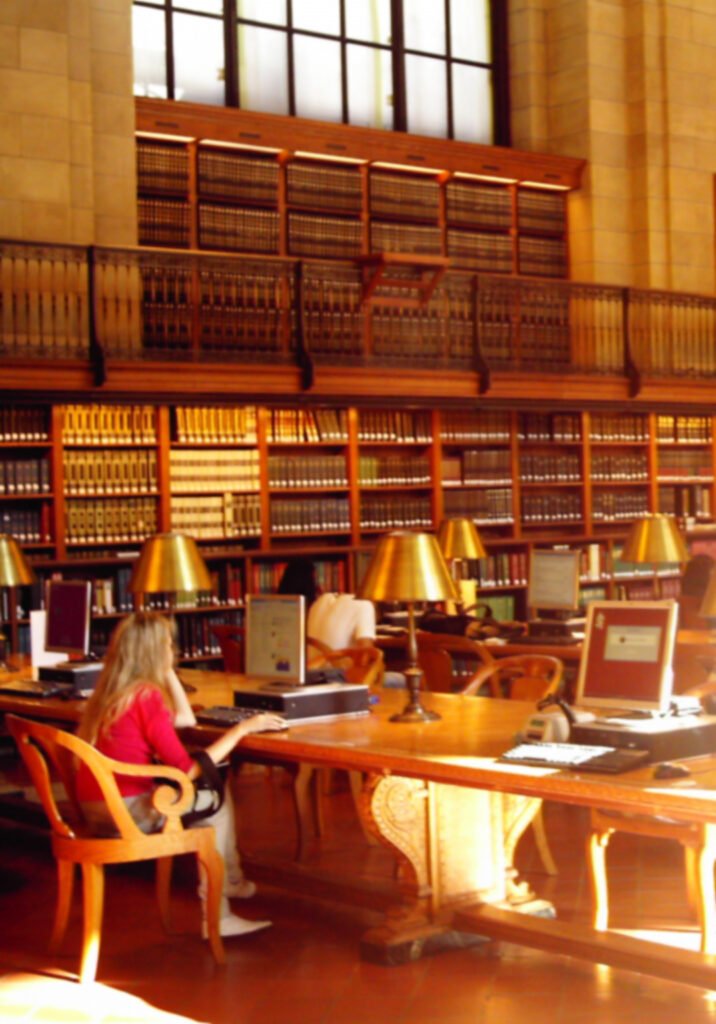
A digital library is an organized collection of digital content and associated services that allows users to discover, access, and use information resources in electronic form.
Unlike a conventional library building, a digital library has no physical shelving or circulation desk, but it still performs the core functions of a library: it selects materials, describes them with metadata, preserves them for future use, and provides tools for searching and retrieval. Digital libraries can include digitized versions of print books, journals, photographs, and maps, as well as born-digital materials that never existed in physical form, such as datasets, websites, and electronic theses.
Core Components
A functioning digital library rests on several interlocking components. A digital repository stores the actual files, often with multiple backup copies in different locations to protect against data loss. A metadata catalog describes each item so it can be found through search and browsing. A discovery interface, usually a web-based search system, lets users query the collection and filter results by format, date, or subject. Access control systems manage who can view or download restricted materials, particularly where copyright or donor agreements limit availability.
Digitization and Born-Digital Content
Digital libraries draw on two different sources of content. Digitization converts physical originals, such as rare books or photographic negatives, into digital files through scanning or photography, usually accompanied by metadata creation and sometimes optical character recognition to make scanned text searchable. Born-digital content, by contrast, is created directly in electronic form and never has a physical counterpart; examples include websites, social media archives, and datasets produced by research instruments. Both streams require distinct workflows, since digitization involves careful handling of fragile originals while born-digital acquisition often involves transferring files from external media or harvesting them directly from the web.
Preservation Challenges
Digital content faces preservation risks that physical materials do not. File formats become obsolete as software changes, storage media degrades or becomes unreadable, and organizations must actively monitor their collections and migrate files to current formats before they become inaccessible. This active management, often called digital preservation, distinguishes long-term digital library stewardship from simply storing files on a server and hoping they remain usable.
Access Models and User Services
Digital libraries offer varied access models depending on their content and mission. Some provide fully open access to anyone with an internet connection, while others restrict certain materials to registered patrons, campus networks, or paying subscribers, often reflecting licensing agreements with publishers or copyright restrictions on in-copyright content. User services built on top of the core collection can include personalized accounts for saving search results, citation export tools, and application programming interfaces that let other software query the collection programmatically.
Economic Considerations
Building and sustaining a digital library requires ongoing investment well beyond the initial digitization or acquisition cost. Server storage, bandwidth, staff time for metadata creation, and software licensing or development all represent recurring expenses. Many institutions fund digital libraries through a mix of institutional budgets, grants, and occasionally cost-recovery mechanisms such as licensing fees for commercial reuse of digitized content, while striving to keep core public access free wherever possible.
International Perspectives
National libraries and cultural heritage institutions around the world have pursued digital library initiatives at different paces and scales, often shaped by available funding, copyright law, and language considerations. Multinational collaborative projects have emerged to aggregate digitized cultural heritage material from many countries into shared, multilingual portals, making it easier for researchers to search across national collections that would otherwise remain siloed by language and institutional boundary.
Looking Ahead
As digital libraries mature, attention is shifting from simply accumulating digitized content toward improving long-term sustainability, interoperability between different platforms, and the integration of computational research methods that allow scholars to analyze digital library collections at scale, such as through text mining or machine learning, rather than reading items one at a time.
Practical Guidance
Institutions building a digital library are generally advised to begin with a clearly scoped pilot collection rather than attempting to digitize everything at once, establishing metadata standards, quality benchmarks, and preservation workflows on a manageable set of materials before scaling up to larger or more complex collections, since early mistakes in metadata structure can be costly to correct across hundreds of thousands of records later.
Related Specialties
Building and maintaining a digital library draws on expertise from cataloging and metadata librarianship, digital preservation, web development, and user experience design, since a technically sound collection still requires an intuitive discovery interface if patrons are to find and use the material effectively, making cross-disciplinary collaboration a routine part of digital library work.
Interoperability Between Systems
Digital libraries increasingly need to exchange data with other platforms, including search aggregators, citation databases, and other digital libraries, which has driven adoption of shared technical standards for metadata exchange and record harvesting. A digital library that ignores interoperability standards risks becoming an isolated silo, discoverable only to users who already know to search that specific platform directly rather than finding its content through broader scholarly search tools.
Governance of a digital library also matters considerably to its long-term stability, since decisions about what content to retain, how long preservation commitments extend, and who bears financial responsibility if an institution funding changes all shape whether a digital library remains a durable resource or eventually becomes inaccessible when institutional priorities shift.
Sustainability Planning
A digital library best-practice plan accounts for succession, documenting what happens to the collection and its infrastructure if the sponsoring institution loses funding, merges with another organization, or otherwise cannot continue hosting the content indefinitely, since collections built without such contingency planning risk disappearing entirely rather than being transferred to a new stable home.
Key facts
- Array
Quick checkWhat distinguishes a digital library from a simple website hosting files?Show answer
A digital library applies organized metadata, preservation planning, and discovery tools to its collection, rather than just storing files for download.
Sources
- Array
Editorially reviewed by Specialty Digest Editorial TeamLast reviewed November 3, 2026Researched and drafted with AI assistanceReport an issue