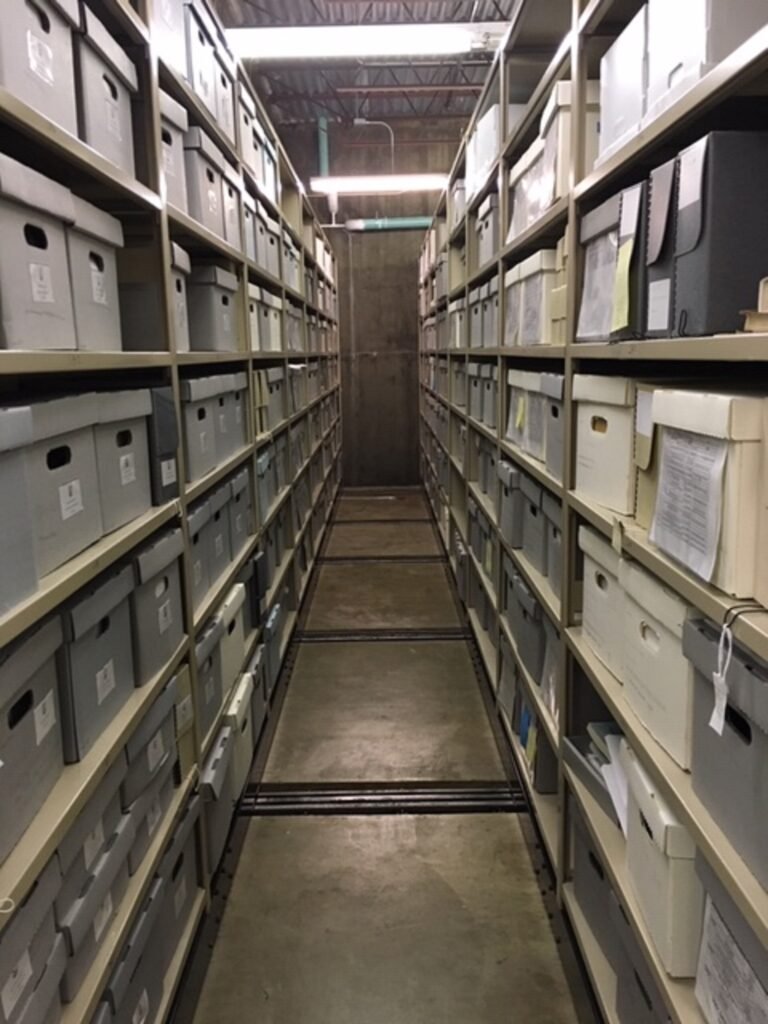
Deciding What to Keep Forever Archival appraisal is the process of evaluating records to determine which deserve permanent preservation and which can eventually be destroyed, a task that directly shapes the historical record available to future researchers. Because no institution can realistically preserve everything indefinitely, appraisal decisions carry significant and lasting consequences. Criteria for Appraisal
Archival Appraisal Read More »
The process of evaluating records to determine which have enduring value and should be preserved permanently in an archive.
Turning Raw Records Into a Usable Collection Archival arrangement and description together make up the core processing work that transforms a newly received, often disorganized accession of records into an organized collection that researchers can actually use. Arrangement establishes structure, while description explains that structure and its contents to anyone who was not present when
Archival Arrangement and Description Read More »
The combined archival processes of organizing records into a logical structure and creating documentation that explains their content and context.
Keeping Records Together by Origin Archival provenance is the principle that records originating from a single creator, whether an individual, family, or organization, should be maintained as a distinct group rather than being broken apart and reorganized by subject matter. This foundational idea, sometimes called respect des fonds after its French origins, shapes how archives
Archival Provenance Read More »
The principle that records should be kept together according to the person, family, or organization that created them, preserving the context of their origin.
Authority control is the practice of maintaining consistent, standardized forms of names, subjects, and titles across a library catalog, ensuring that every work by or about the same person, organization, place, or topic is linked together under one authorized heading rather than scattered across multiple inconsistent variants. An author name might appear differently across different
Authority Control Read More »
Authority control is the practice of maintaining consistent, standardized forms of names, subjects, and titles across a library catalog so that all works by or about the same entity are reliably linked together.
Measuring Scholarly Communication Quantitatively Bibliometrics applies quantitative methods to the study of publications, citations, and related patterns of scholarly communication, turning questions about research influence and trends into measurable data rather than subjective impression alone. Librarians, research administrators, and funding agencies all draw on bibliometric methods for different purposes. Common Indicators Citation counts, measuring how
Bibliometrics Read More »
The quantitative study of publications, citations, and other scholarly communication patterns to measure research impact and trends.
A call number is the unique alphanumeric code assigned to a library item that indicates its subject classification and determines its specific physical location on the shelf, functioning as the practical address a patron or staff member uses to locate the item among a library entire collection. A call number typically combines two elements: a
Call Number Read More »
A call number is the unique alphanumeric code assigned to a library item that indicates its subject classification and determines its specific physical location on the shelf.
Tracking Who Has Controlled a Record Chain of custody refers to the documented history of every person or institution that has had control over a record from the moment of its creation to its present location, establishing confidence that the record remains authentic and unaltered. This concept originated largely in legal and forensic contexts before
Chain of Custody Read More »
The documented, unbroken record of who has had control over a set of records from their creation through to their current location.
Managing the Flow of Materials Circulation services cover the everyday transactions that move materials between a library shelf and a patron hands: checkouts, returns, renewals, and the holds that let a patron reserve an item currently on loan to someone else. For many visitors, the circulation desk is the most frequent point of direct contact
Circulation Services Read More »
The library function that manages the lending, return, and tracking of materials to and from patrons.
A classification scheme is a structured system of categories used to organize library materials or information by subject, providing the underlying logical framework that determines how related items are grouped together and where they are physically located on the shelf. Every classification scheme must address the fundamental challenge that knowledge does not divide neatly into
Classification Scheme Read More »
A classification scheme is a structured system of categories used to organize library materials or information by subject so that related items can be grouped and located systematically.
What Collection Development Means Collection development is the deliberate work of shaping what a library owns or licenses so that its holdings match the needs of the community it serves. A public library branch in a small town and a university research library pursue very different collections, yet both rely on the same underlying discipline:
Collection Development Read More »
The ongoing process by which libraries plan, select, acquire, and evaluate materials to build a collection that serves patron needs.