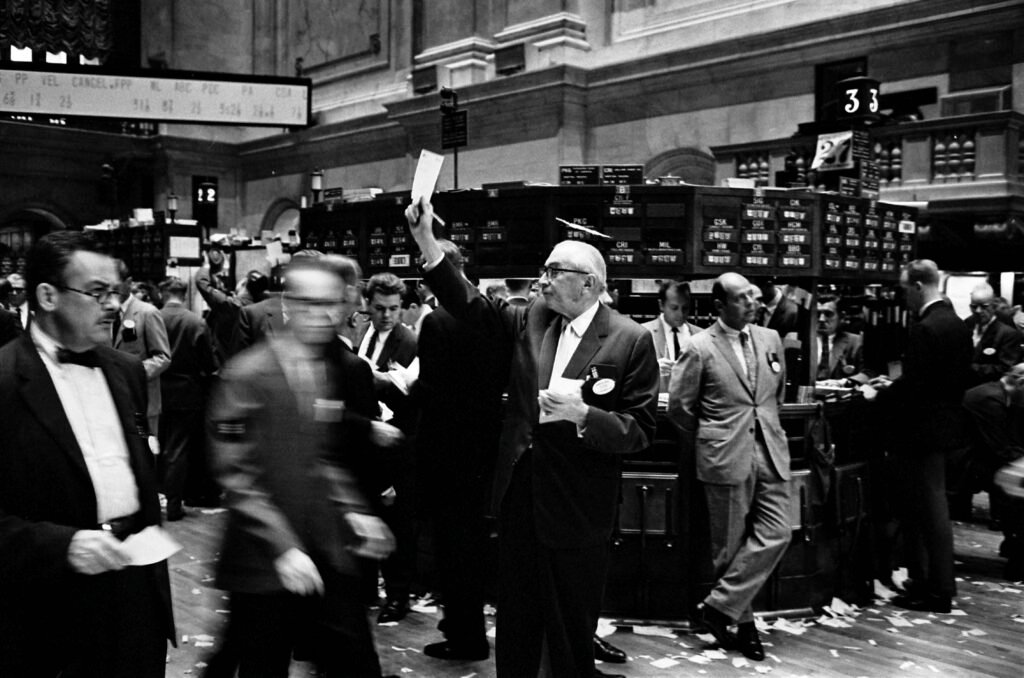
Trillions of dollars change hands on the stock market every single day, yet for most people the process feels like a black box: numbers flash on a screen, and prices move for reasons that are rarely explained. So how does the stock market actually work? In reality, it runs on a fairly simple idea, buyers and sellers competing to set a price, layered with over a century of infrastructure built to make that competition fast, fair, and transparent.
What a Share of Stock Actually Represents
When a company “goes public,” it sells small ownership slices of itself, called shares, to investors through an initial public offering (IPO). From that point on, owning a share means owning a small piece of that company, with a claim on its future profits and, often, a vote on major corporate decisions. Exchanges like the New York Stock Exchange (NYSE) and Nasdaq set listing standards companies must meet to be traded there, including minimum share price and market value requirements.
The Exchange: Where Buyers and Sellers Meet
Once a company is listed, its shares trade on the secondary market, meaning investors are buying and selling stock to and from each other, not the company itself. A stock exchange is essentially a highly regulated marketplace for that trading, whether it is the physical trading floor still used by the NYSE or the fully electronic system that powers Nasdaq. Either way, the job is the same: match a buyer’s bid (the price they are willing to pay) with a seller’s ask (the price they are willing to accept).
How the Stock Market Actually Sets Prices
Stock prices move through continuous auctions. Every order to buy or sell adds to a real-time order book, and when a bid and an ask meet, a trade executes at that price. The NYSE also relies on Designated Market Makers, firms obligated to maintain fair and orderly trading in specific stocks by regularly quoting competitive prices, especially at the volatile market open and close. The NYSE reports that this human-plus-algorithm hybrid model measurably reduces price volatility compared to fully automated venues. Ultimately, though, no market maker sets a price by fiat; it emerges from the balance of what buyers are willing to pay and sellers are willing to accept at any given moment.
Why Prices Rise and Fall
A stock’s price reflects investors’ collective, ever-shifting expectations about a company’s future earnings. News of strong profits, a new product, or a favorable economic report tends to pull buyers in, pushing prices up; disappointing earnings, rising interest rates, or broader economic uncertainty tend to push prices down. Because millions of investors are processing information and trading simultaneously, prices can shift by the second, which is why stock charts look so jagged even though the underlying businesses change far more slowly.
The Market as a Whole
Individual stock prices roll up into broader indexes, such as the S&P 500 or the Dow Jones Industrial Average, that track the performance of groups of companies and are often used as shorthand for how “the market” is doing. U.S. markets, including the NYSE and Nasdaq, operate weekdays from 9:30 a.m. to 4 p.m. Eastern time, and trading is overseen by the Securities and Exchange Commission, which enforces rules meant to keep the process fair and transparent for every participant.