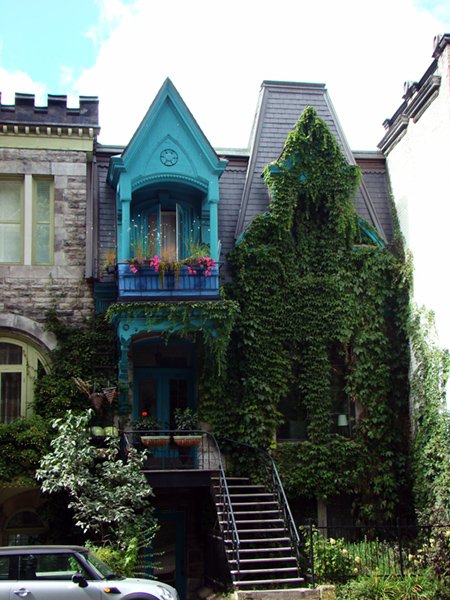
An architectural style is a recognizable set of forms, materials, proportions, and construction habits that recur across buildings from a given period, region, or design philosophy, letting a viewer place a structure in time and tradition almost the way a linguist places a dialect. Styles are rarely invented by a single architect working alone. They emerge from a mix of available materials, structural knowledge, climate, religious or civic function, and the social meanings a culture attaches to building. A Gothic cathedral and a Georgian townhouse communicate entirely different ideas about authority, faith, and domestic life, and the vocabulary of pointed arches versus symmetrical sash windows is part of how that communication happens.
How Styles Form and Spread
Most styles begin as a practical response to a problem. Gothic ribbed vaulting and flying buttresses let medieval masons push walls higher and open them up with stained glass because the structural loads were redirected outward and down rather than carried by thick, windowless walls. Once a solution proves workable and visually striking, it becomes a vocabulary other builders borrow, often traveling along trade routes or through pattern books and engravings long before photography existed. The printing press accelerated this considerably. Renaissance architects such as Andrea Palladio published illustrated treatises that let builders across Europe and later colonial America copy proportions and details they had never seen in person, which is why Palladian facades appear from Venice to Virginia. Colonialism, religious missions, and later global trade all served as additional channels, which is why so many architectural styles are not confined to a single country but appear in clusters wherever a particular power or culture extended its reach.
Reading a Building for Style
Architectural historians typically look at a handful of features to identify style: the shape and decoration of window and door openings, the roofline and its pitch, the proportion between height and width, the ornamentation around cornices and columns, and the underlying structural logic a building reveals or conceals. Neoclassical buildings, for example, borrow columns, pediments, and symmetry from ancient Greek and Roman temples to project civic permanence, which is why so many courthouses, capitols, and banks across the nineteenth and early twentieth centuries share that vocabulary regardless of the country. Art Nouveau instead privileges curving, plant-like lines and custom ironwork, rejecting the straight-edged classical tradition entirely. A single building can also blend styles, either because of additions built in later periods or because an architect deliberately quotes multiple traditions, a practice historians usually label eclectic or revivalist.
Style Versus Movement
Style and movement are related but not identical. A style describes a shared visual and material vocabulary, while a movement often carries an explicit ideology about how architecture should serve society. Modernism, for instance, functioned as both: stylistically it favored flat roofs, exposed structural materials, and an absence of historical ornament, but as a movement it also argued that form should follow function and that mass-produced housing could solve urban overcrowding. Postmodernism arose partly as a reaction against modernism’s austerity, deliberately reintroducing historical ornament, color, and irony while still using modern construction methods, which shows that a style can consciously restage an older vocabulary rather than simply inheriting it. Because styles are named retrospectively almost as often as they are declared by their practitioners, architectural historians continue to debate the exact boundaries between adjacent styles and the point at which a regional variation deserves its own name.
Why Style Still Matters in Practice
Style classification is not just an academic exercise. Historic preservation boards use stylistic analysis to decide which buildings merit protection and what alterations are appropriate to a landmarked structure. Architects working on infill projects in historic districts often must match or sympathetically depart from the dominant local style under zoning and design-review rules. Real estate markets attach measurable value to recognizable styles such as Victorian, Craftsman, or Mid-Century Modern, with buyers sometimes paying a premium for stylistic authenticity. Even contemporary architecture, which often claims to reject historical styles altogether, still gets classified by critics into informal categories such as deconstructivism, parametricism, or high-tech, confirming that the impulse to name and group architectural vocabularies persists even when architects themselves resist the label.
Notable Period Styles at a Glance
Romanesque architecture, dominant across Europe from roughly the tenth to twelfth centuries, favored thick walls, rounded arches, and small windows for structural stability before advanced vaulting techniques existed. Gothic architecture that followed introduced pointed arches, ribbed vaults, and flying buttresses, allowing dramatically taller walls pierced by large stained-glass windows. Baroque architecture of the seventeenth century embraced dramatic curves, elaborate ornament, and theatrical use of light to overwhelm the viewer emotionally, often in service of religious or royal authority. Victorian architecture, spanning much of the nineteenth century, is really an umbrella term covering several revival styles built during Queen Victoria’s reign, unified mainly by ornate detailing and asymmetrical massing rather than a single consistent vocabulary. Art Deco, popular in the 1920s and 1930s, paired geometric ornament, stepped massing, and new materials like chrome and glass block with an optimistic, machine-age aesthetic visible in landmarks such as the Chrysler Building. Brutalism, emerging in the mid-twentieth century, exposed raw poured concrete and blocky massing as an honest expression of structure and material, a stance that made it both influential among architects and controversial among the wider public, with many Brutalist buildings facing demolition pressure in later decades even as preservationists increasingly argue for their protection.
Contemporary practice increasingly treats these historical labels as a shared vocabulary for critique and homage rather than rules to follow, with architects quoting fragments of several period styles within a single new building.
Key facts
- Array
Quick checkWhat is the difference between an architectural style and an architectural movement?Show answer
A style is a shared visual and material vocabulary; a movement adds an explicit ideology about how architecture should function in society, as with modernism.
Sources
- Array
Editorially reviewed by Specialty Digest Editorial TeamLast reviewed November 3, 2026Researched and drafted with AI assistanceReport an issue