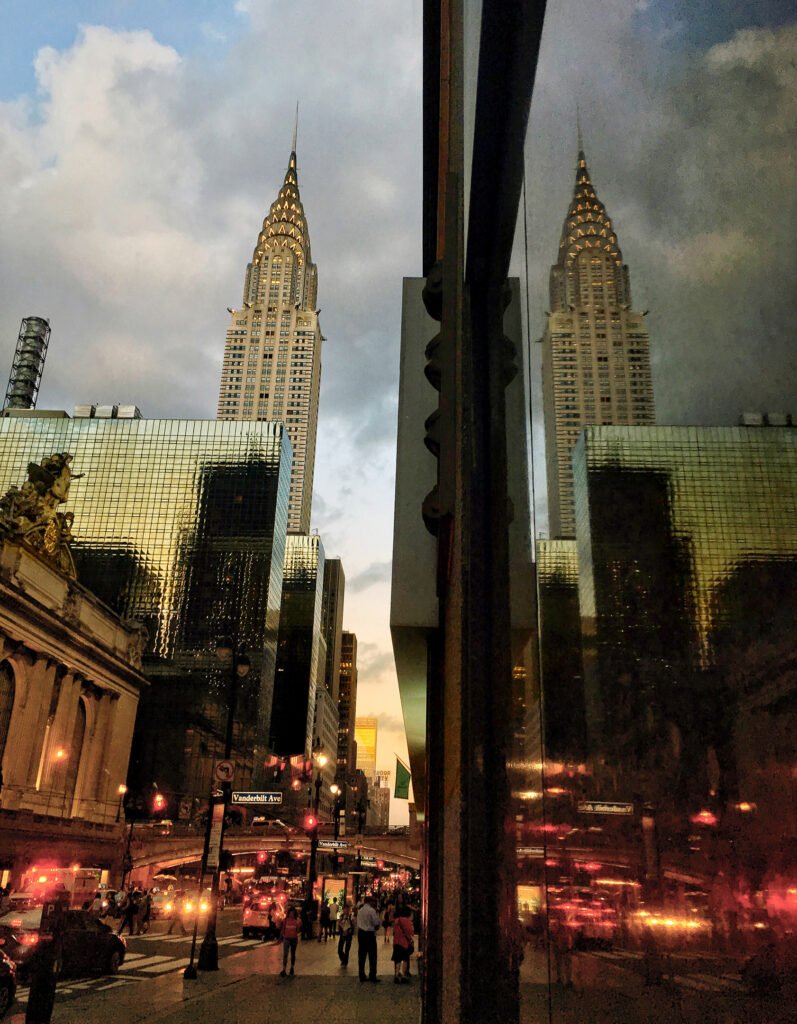
Art Deco is a decorative arts and architecture style defined by streamlined geometric forms, bold symmetrical ornament, and an enthusiastic embrace of modern, machine-made materials. It flourished internationally from the 1920s through the 1930s, shaping buildings, furniture, jewelry, fashion, and graphic design with a visual language that one historian described as modernism turned into fashion.
n
The 1925 Paris exposition
n
The style takes its name from the Exposition Internationale des Arts Decoratifs et Industriels Modernes, held in Paris in 1925, where new decorative styles from across Europe were showcased to the public. The term ‘Art Deco’ itself, however, was not widely used at the time; it was coined and popularized decades later, notably through historian Bevis Hillier’s 1968 book on the style, as writers looked back and needed a name for the distinctive aesthetic that had emerged from that exhibition and the years surrounding it.
n
Characteristics
n
Art Deco favors streamlined geometric shapes, zigzags, sunburst motifs, and stepped, symmetrical forms, often rendered in bold color contrasts. Designers combined modern industrial materials, including Bakelite, chrome, and stainless steel, with luxurious natural materials such as jade, ivory, and lacquer. Unlike the strict functionalism promoted by modernist architects of the same period, Art Deco treated ornament as a celebration of industry and craftsmanship rather than something to be eliminated, prioritizing glamour and visual drama alongside modern construction methods.
n
Art Deco skyscrapers
n
Nowhere is Art Deco more associated with a single building type than the skyscraper, particularly in New York City during the 1920s and 1930s. The Chrysler Building, completed in 1930 with its stainless steel crown of radiating sunburst arches, remains one of the style’s most recognizable examples and was, briefly, the tallest building in the world, part of a broader architectural race for height that also produced the Empire State Building just a year later.
n
Spread and influence beyond architecture
n
Art Deco’s influence extended far beyond skyscrapers, shaping furniture, fashion, jewelry, advertising posters, and the ornate movie palaces built to showcase the new medium of cinema. The style spread well beyond the United States and France, producing notable concentrations of Art Deco buildings in places such as Miami Beach’s Art Deco Historic District and the port city of Mumbai, which holds one of the largest collections of Art Deco buildings anywhere in the world.
n
Decline and revival
n
Art Deco fell out of fashion after World War II as architects increasingly embraced the austere, ornament-free modernism of the International Style, which treated decoration as wasteful rather than celebratory. Interest in Art Deco revived substantially in the 1960s and 1970s, as design historians and collectors rediscovered and began systematically naming the style, and its glamorous visual vocabulary has continued to resurface periodically in fashion, film production design, and graphic design ever since.
n
Streamline Moderne
n
By the 1930s, Art Deco evolved into a related sub-style known as Streamline Moderne, which softened the earlier style’s sharp zigzags and sunbursts into smooth, aerodynamic curves inspired by the era’s fascination with speed and modern transportation, including ocean liners, airplanes, and automobiles. Diners, bus terminals, and household appliances adopted this streamlined look, incorporating horizontal lines, rounded corners, and chrome detailing that evoked motion even in a stationary building or object.
n
Notable designers
n
French furniture designer Emile-Jacques Ruhlmann became one of the era’s most celebrated names for his luxurious Art Deco furniture, built from exotic woods such as macassar ebony and often inlaid with ivory, which exemplified the style’s pairing of geometric restraint with expensive materials. Industrial designers of the period also applied Art Deco and Streamline Moderne principles to consumer products ranging from radios to kitchen appliances, helping spread the aesthetic well beyond architecture and high-end furniture into everyday household goods.
n
Rockefeller Center
n
Another landmark Art Deco complex, Rockefeller Center in midtown Manhattan, was developed through the 1930s as a coordinated group of buildings, including Radio City Music Hall, combining Art Deco ornament, relief sculpture, and murals with a then-unusual scale of private urban development, and it remains one of the most visited examples of the style’s integration of architecture with public art.
n
Art Deco in graphic design
n
The style also shaped graphic design and advertising of the period, most notably through French poster artist A. M. Cassandre, whose streamlined, geometric travel and advertising posters for railways and ocean liners during the late 1920s and 1930s are now considered some of the finest examples of Art Deco applied to commercial graphic design, carrying the style’s machine-age glamour into mass-produced print advertising.
n
Art Deco cinemas built during the same decades, often called picture palaces, extended the style’s sense of glamour into the moviegoing experience itself, with elaborately decorated lobbies and auditoriums designed to make an evening at the cinema feel like an occasion in its own right, reinforcing how thoroughly the style permeated everyday leisure and entertainment architecture of the period.
n
Today, well-preserved Art Deco districts are often protected by historic preservation laws, recognizing the style as a defining chapter in twentieth-century design history rather than merely a dated fashion.
n
FAQs
n
Is Art Deco the same as Art Nouveau? No; Art Nouveau came earlier, flourishing around the turn of the twentieth century with flowing, organic, plant-inspired curves, while Art Deco emerged in the 1920s with angular, geometric, machine-age forms that deliberately broke from Art Nouveau’s naturalistic style.
n
Where does the name ‘Art Deco’ actually come from? It is a shortened reference to the 1925 Paris exposition’s full French name, Exposition Internationale des Arts Decoratifs et Industriels Modernes, though the abbreviated term itself only came into common use decades after the exhibition itself.
Key facts
- Named after the 1925 Paris Exposition Internationale des Arts Decoratifs et Industriels Modernes
- The term 'Art Deco' was popularized decades later, notably by Bevis Hillier's 1968 book
- The Chrysler Building (1930) is a landmark Art Deco skyscraper
- Miami Beach and Mumbai hold notable concentrations of Art Deco buildings
Related concepts
Quick checkWhat 1925 event gave Art Deco its name?Show answer
The Exposition Internationale des Arts Decoratifs et Industriels Modernes, held in Paris in 1925.
Sources
- Encyclopaedia Britannica, Art Deco
- National Building Museum, Art Deco at 100
- EBSCO Research Starters, Paris Exhibition Defines Art Deco
Editorially reviewed by Specialty Digest Editorial TeamLast reviewed November 1, 2026Researched and drafted with AI assistanceReport an issue