Overview
The Axial Age refers to a remarkable period, roughly between 800 and 200 BCE, during which several major philosophical and religious traditions emerged largely independently across widely separated regions of Eurasia. Philosopher Karl Jaspers coined the term in the twentieth century to highlight the striking parallel timing of these developments despite minimal direct contact between the civilizations involved.
Key Developments
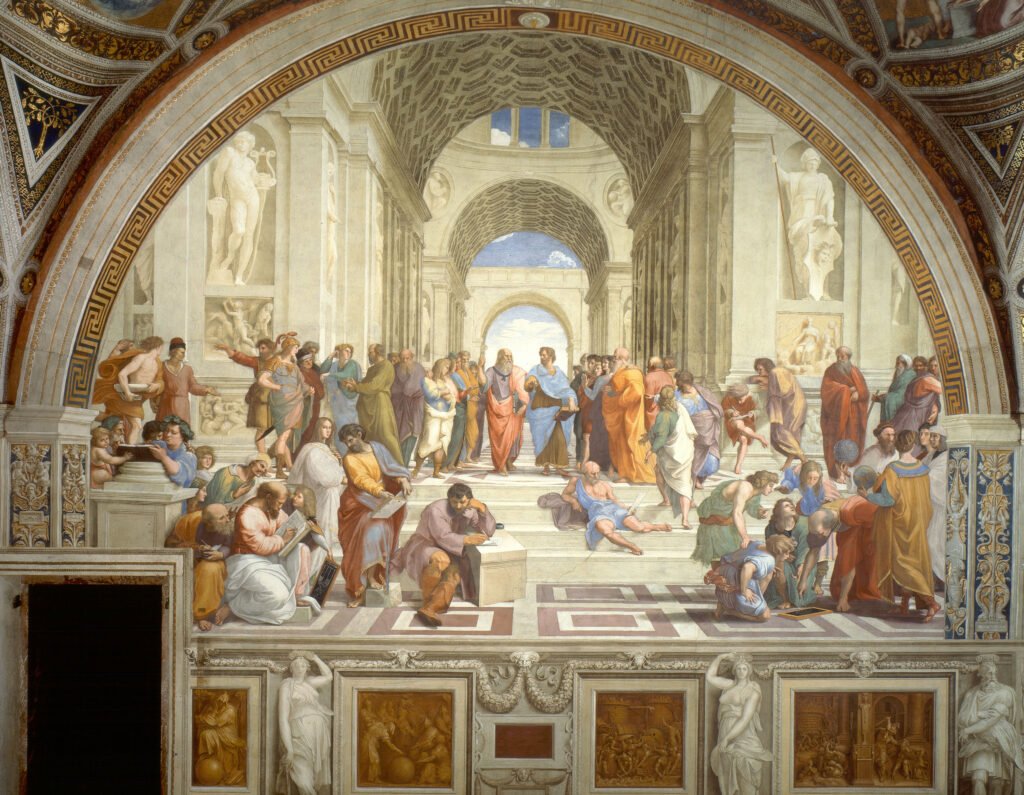
During this period, Confucius and Laozi taught in China, the Buddha taught in South Asia, Hebrew prophets delivered influential ethical and theological teaching in the Near East, and Greek philosophers including Socrates developed new modes of rational inquiry. Each tradition, working independently, shifted attention toward ethical reflection, individual conscience, and transcendent or abstract conceptions of ultimate reality.
Common Features
Scholars studying the Axial Age note recurring features across these otherwise unconnected developments, including increased emphasis on individual moral responsibility, critique of existing ritual and political arrangements, and new concepts of transcendence that moved beyond earlier, more localized or nature-centered religious frameworks common in preceding centuries.
Explanatory Theories
Various theories attempt to explain why such parallel developments occurred around the same centuries, including social disruption from warfare and political fragmentation that may have prompted deeper reflection on ethical order, growing literacy and urbanization enabling new forms of intellectual exchange, and simple coincidence given the enormous span of human history being considered.
Scholarly Debate
Critics have questioned whether the Axial Age concept imposes artificial unity on genuinely distinct historical developments, noting that the specific dating, geographic scope, and included traditions vary considerably among scholars who use the term, with some excluding or adding particular traditions and periods to the core framework.
Role Today
Despite ongoing debate over its precise boundaries, the Axial Age remains an influential framework for comparative study of religious and philosophical history, encouraging scholars to examine parallel developments across civilizations rather than treating each tradition in complete isolation from the others.
Comparative Significance
Sociologist of religion Robert Bellah later extended Jaspers framework, arguing that the Axial Age marks a decisive shift in human capacity for abstract, critical reflection on existing social and cosmic order, a shift he traced through careful comparative analysis of ritual, myth, and emerging philosophical reasoning across the affected civilizations.
This comparative project situates the Axial Age within a longer evolutionary account of human religious and cultural development, treating the period as a hinge point between earlier, more locally bound ritual traditions and later traditions capable of sustained critical and universalizing reflection extending beyond any single community boundary.
Regional Variations
Even within the broad Axial Age framework, significant variation existed among the affected traditions, with Chinese developments emphasizing social and political ethics, Indian developments emphasizing liberation from suffering and rebirth, and Greek developments emphasizing systematic rational inquiry, suggesting shared timing without implying any single uniform intellectual content across all regions.
Zoroastrian and Near Eastern Developments
Some scholars also include Zoroastrian religious development in ancient Persia and the activity of Hebrew prophets within the broader Axial Age framework, pointing to shared emphasis on cosmic moral order, individual ethical accountability, and critique of purely ritual religious practice without accompanying ethical substance.
These Near Eastern developments, occurring alongside the better-known Chinese, Indian, and Greek cases, reinforce the broader observation that multiple widely separated civilizations moved toward more abstract, ethically demanding religious and philosophical frameworks within a roughly comparable historical window, whatever the ultimate explanation for this striking pattern.
Lasting Influence
Traditions and thinkers originating during the Axial Age continued to shape subsequent religious and philosophical development for millennia afterward, with Confucian, Buddhist, Greek philosophical, and prophetic Hebrew traditions all contributing foundational elements to later civilizations built upon their original insights across subsequent centuries of historical development.
Contemporary Relevance
The Axial Age framework continues to inform contemporary discussions about religious and philosophical pluralism, offering a historical lens for understanding how seemingly disparate ethical and spiritual traditions developed through broadly comparable, if independently occurring, processes of social and intellectual transformation across the ancient world.
Comparative religion scholars often invoke the concept when discussing shared ethical commitments across traditions, such as versions of reciprocity or moral reasoning that appear in Confucian, Buddhist, Greek, and Hebrew sources despite their independent origins, suggesting something significant about convergent human ethical reasoning across distant and unconnected ancient societies.
Closing Note
Whatever ultimately explains its timing, the Axial Age marks a genuinely remarkable chapter in the history of human thought, one that continues to shape how scholars across history, philosophy, and comparative religion understand the deep roots of major living traditions still practiced by billions of people today.
Students of world history continue to find the framework a useful, if imperfect, lens for approaching this extraordinary period of parallel human achievement.
Final Thought
The question of why so many civilizations turned toward deeper ethical reflection within a comparable window of centuries may never be fully settled, but the pattern itself remains one of the more intriguing puzzles in the comparative history of human thought and religious development.
It endures as one of history most fascinating patterns.
Each generation of scholars finds new angles for examining this shared historical moment of transformation.
It will likely keep inspiring fresh research for a long time yet.
It endures.
Its reach spans the ancient and modern worlds alike.
It endures as a touchstone for comparative study.
New comparative studies keep appearing regularly.
Interest shows no sign of fading anytime soon among historians of ideas.
It remains a cornerstone topic for comparative historians.
It endures as a touchstone topic.
It will likely remain so for a long time yet.
Key facts
- Array
Quick checkWho introduced the concept of the Axial Age?Show answer
The German philosopher Karl Jaspers introduced the concept in the mid-twentieth century to describe a period of parallel spiritual and philosophical transformation across several ancient civilizations.
Sources
- Array
Editorially reviewed by Specialty Digest Editorial TeamLast reviewed November 4, 2026Researched and drafted with AI assistanceReport an issue