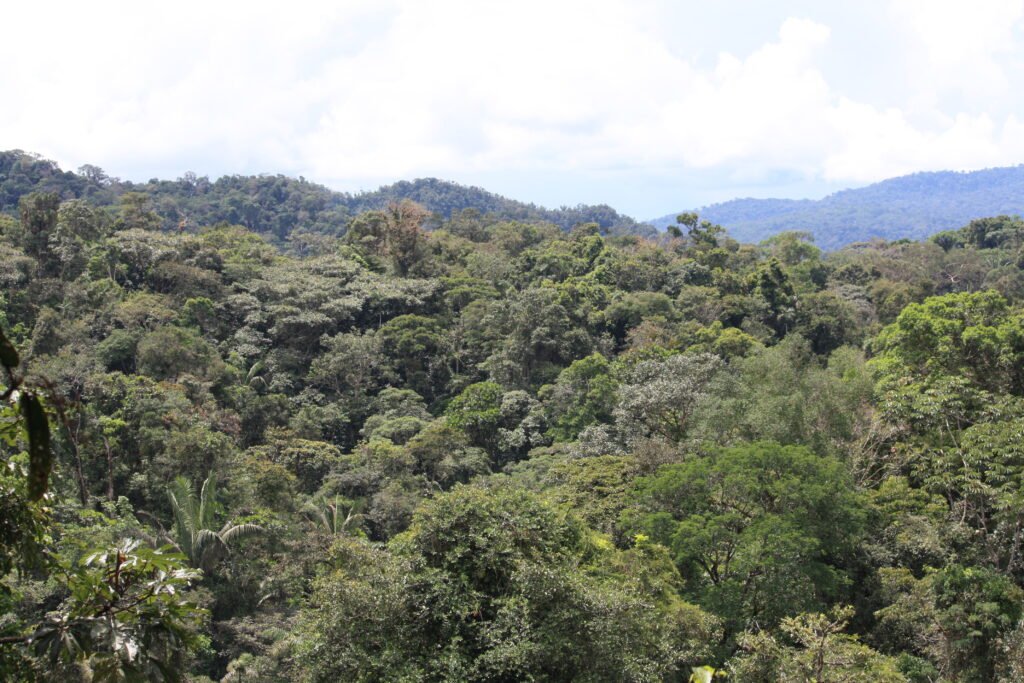
Biodiversity is the full variety of life on Earth, encompassing the diversity within a species, the diversity between different species, and the diversity of entire ecosystems. The UN Convention on Biological Diversity defines it this way to capture that biodiversity is not just a count of how many species exist, but a layered measure covering genetic variation, species variety, and the range of habitats and ecosystems those species form.
History of the biodiversity concept
The word “biodiversity” itself is a relatively recent contraction of “biological diversity,” which entered wide scientific and policy use in the 1980s as ecologists sought a single term for the combined richness of genes, species, and ecosystems. International recognition followed quickly: the United Nations Convention on Biological Diversity opened for signature at the 1992 Rio Earth Summit and has since become one of the most widely ratified international environmental agreements, committing signatory countries to conserve biological diversity, use its components sustainably, and share the benefits of genetic resources fairly.
Types of biodiversity
Scientists generally describe biodiversity across three nested levels. Genetic diversity refers to the variation within a single species, which gives populations the raw material to adapt to disease, changing conditions, or new predators. A frequently cited historical illustration is the Irish famine of the 1840s, when heavy reliance on a small number of genetically similar potato varieties left crops with little natural resistance to a single fungal blight, allowing it to spread with devastating speed; modern agricultural breeding programs now deliberately maintain diverse seed banks partly to avoid repeating that same vulnerability. Species diversity refers to the variety of different species present in a given area. Ecosystem diversity refers to the range of distinct habitats, from coral reefs to rainforests to wetlands, each supporting its own characteristic mix of species and ecological processes.
Researchers measure species diversity in more than one way, since a simple species count, known as species richness, can be misleading on its own. An area where one species vastly outnumbers all others is generally considered less diverse, in a meaningful ecological sense, than an area with a similar number of species present in more balanced proportions, a property ecologists call species evenness; both figures are typically reported together for a more complete picture of a habitat’s condition.
Why biodiversity matters
Biodiversity underpins the natural systems that supply food, clean water, medicine, and shelter, and more than half of global economic output depends in some way on functioning ecosystems, with over a billion people relying directly on forests for their livelihoods. Healthy land and ocean ecosystems also absorb roughly half of human carbon emissions, making biodiversity one of the most practical natural defenses against climate change: forests alone are estimated to offer about two-thirds of the climate mitigation potential available from nature-based solutions, while peatlands, which cover only about 3 percent of land, store roughly twice as much carbon as all the world’s forests combined. Diverse ecosystems also tend to be more resilient to disturbance, since losing one species can sometimes be partly offset if a similar species fills a comparable role, an effect that becomes less reliable as biodiversity itself declines.
Threats to biodiversity
Land and sea use change, mainly to expand agriculture, is the single largest driver of biodiversity loss worldwide; human activity has altered more than 70 percent of ice-free land, and roughly 420 million hectares of forest have been lost since 1990. Overfishing, invasive species, pollution, and habitat degradation compound these pressures, and climate change is an increasingly important driver in its own right, having already caused local species losses, more wildlife disease, mass die-offs, and the first documented climate-driven extinctions. The United Nations Environment Programme estimates that up to one million species face extinction, many within decades, a pace of loss researchers compare to the aftermath of the extinction event that ended the age of dinosaurs. A separate long-running measure, the Living Planet Index compiled by the World Wildlife Fund and the Zoological Society of London, tracked an average decline of 73 percent across more than 35,000 monitored populations of mammals, birds, reptiles, amphibians, and fish between 1970 and 2022, a figure that reflects shrinking population sizes within species rather than the number of species lost outright. About 85 percent of wetlands, including salt marshes and mangroves, have already disappeared, and roughly 14 percent of the world’s coral was lost between 2009 and 2018 alone, mostly due to warming linked to climate change.
Applications and examples of protecting biodiversity
Formal protected areas remain the main legal tool for conserving biodiversity, often targeted specifically at biodiversity hotspots, regions with an unusually large concentration of species found nowhere else. Protecting keystone species, whose ecological influence is disproportionate to their numbers, offers a related but more targeted conservation strategy, since safeguarding one such species can help preserve many others that depend on it, often at lower cost than managing an entire ecosystem species by species.
FAQs
Does losing individual animals within a species count as biodiversity loss, even if the species itself survives? Yes, in an important sense. A sharp decline in a species’ population size, even well short of extinction, is exactly what the Living Planet Index measures, and it matters because a severely reduced population is more vulnerable to disease, inbreeding, and further decline than a healthy one.
Is a tropical rainforest always more biodiverse than a desert? Usually, but not automatically. Tropical rainforests generally host far more species per unit area, but some deserts and other seemingly sparse ecosystems support unusually high levels of specialized, locally adapted species found nowhere else, so overall species counts alone can understate a dry ecosystem’s conservation importance.
Key facts
- The UN Convention on Biological Diversity opened for signature at the 1992 Rio Earth Summit.
- Biodiversity is commonly described across three levels: genetic, species, and ecosystem diversity.
- Land and sea use change for agriculture is the largest driver of biodiversity loss; over 70% of ice-free land has been altered by human activity.
- Up to one million species face extinction, many within decades, according to UNEP.
- Healthy ecosystems absorb roughly half of human carbon emissions, linking biodiversity loss directly to climate change.
Related concepts
In the news
Quick checkIs biodiversity just a count of how many species exist in an area?Show answer
No. The UN Convention on Biological Diversity defines it across three levels: genetic diversity within species, diversity between species, and the diversity of whole ecosystems, not species counts alone.
Sources
- UN News. Biodiversity: What is it and how can we protect it?. 2024-01 (accessed 2026-11-01)
- United Nations. Biodiversity - our strongest natural defense against climate change. 2024 (accessed 2026-11-01)
- Our World in Data. A 73% average decline in wildlife populations: an overview of the 2026 Living Planet Index report. 2026 (accessed 2026-11-01)
Editorially reviewed by Specialty Digest Editorial TeamLast reviewed November 1, 2026Researched and drafted with AI assistanceReport an issue