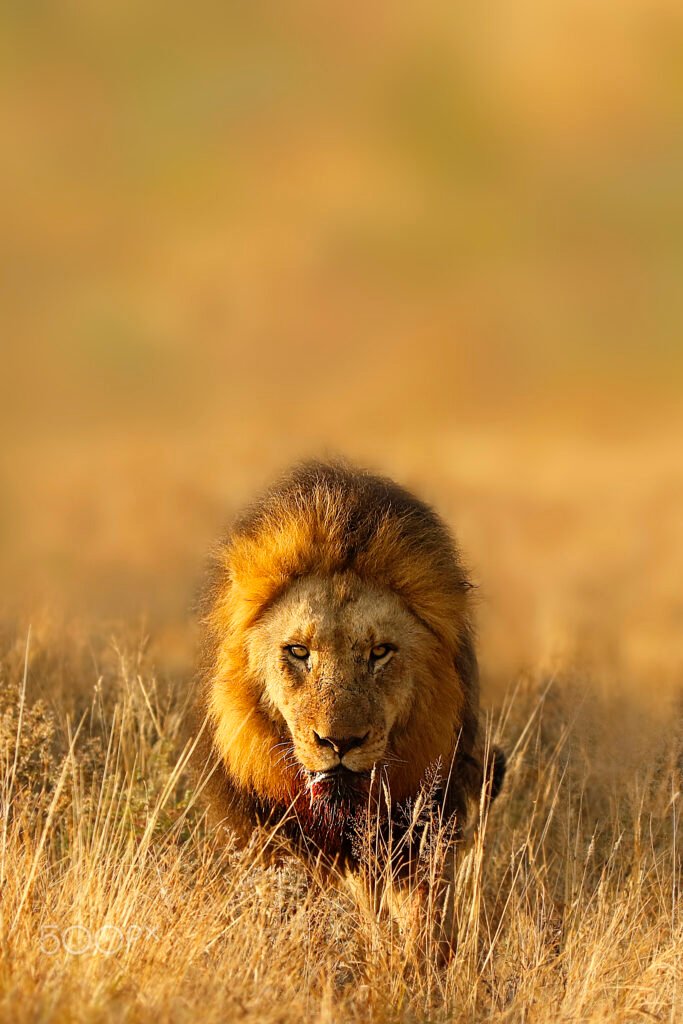
An ecosystem is a community of living organisms interacting with one another and with the nonliving parts of their surroundings, functioning together as a single, loosely bounded system. The idea links two things ecologists had long studied separately, living communities and physical environments, into one unit defined by the flows of energy and matter that connect them.
History of the ecosystem concept
British ecologist Arthur Tansley introduced the term in 1935 in an essay titled “The Use and Abuse of Vegetational Concepts and Terms,” published in the Journal of Ecology. He was responding to a running debate with the South African ecologist John Phillips, who followed the American botanist Frederic Clements in treating a plant community as a kind of “complex organism” that grows, matures, and behaves as a living whole. Tansley thought this pushed the biological analogy too far. He proposed “ecosystem” instead, a term his Oxford colleague Arthur Roy Clapham had suggested to him, to describe a dynamic, interdependent system of interacting organic and inorganic parts that tends toward a stable equilibrium, without implying the system itself was alive. Tansley was also wrestling with a broader question, whether humans belong inside nature or stand apart from it, and he concluded that human-altered ecosystems do not differ in kind from undisturbed ones, only in which biotic factor is doing the most disrupting.
Biotic and abiotic components
Every ecosystem has two kinds of parts. Biotic components are the living organisms themselves, plants, animals, fungi, and microorganisms. Abiotic components are the nonliving elements that shape where and how those organisms live, including sunlight, temperature, soil chemistry, water availability, and climate. Neither half explains an ecosystem on its own. A desert and a rainforest can share many of the same biotic categories, producers, herbivores, predators, decomposers, but radically different abiotic conditions produce radically different communities built from very different species.
Energy flow and nutrient cycling
Two linked processes hold an ecosystem together. Energy flow moves in one direction only. Sunlight enters the system and is captured by producers, mainly green plants and algae, through photosynthesis, which converts light, water, and carbon dioxide into chemical energy stored in carbohydrates. That energy then passes to herbivores that eat the plants, to carnivores that eat the herbivores, and so on up a food chain, with a large share lost as heat at every step, which is why energy pyramids narrow sharply toward the top. Nutrient cycling works differently: elements such as carbon, nitrogen, and phosphorus do not flow through and disappear, they cycle repeatedly through living organisms, soil, water, and atmosphere, which is why decomposers, the bacteria and fungi that break down dead organic matter, are just as essential to an ecosystem as the producers at the base of its food chain.
Scale and types of ecosystems
Ecosystems have no fixed size. Ecologists apply the term to a puddle of rainwater, a fallen log crawling with insects and fungi, a single coral reef, or an entire biome such as a tropical rainforest or the open ocean. Terrestrial ecosystems are usually classified by dominant vegetation and climate, forests, grasslands, deserts, and tundra among them, while aquatic ecosystems split broadly into freshwater systems such as lakes, rivers, and wetlands, and marine systems such as coral reefs, kelp forests, and the deep ocean. A single landscape can also contain many overlapping and nested ecosystems, which is part of why drawing a firm boundary around any one of them is more a matter of convenience for study than a natural dividing line.
Ecosystem services and human dependence
Ecologists and economists increasingly describe the practical benefits healthy ecosystems provide as ecosystem services, usually grouped into four categories: provisioning services such as food, timber, and fresh water; regulating services such as pollination, flood control, and climate regulation; supporting services such as soil formation and nutrient cycling; and cultural services such as recreation and spiritual value. Wetlands filter pollutants from water, forests store carbon and moderate local climate, and pollinating insects underpin a large share of global food crops. These services are easy to take for granted precisely because they operate continuously in the background, which is one reason ecosystem degradation often goes unpriced until a service fails.
Stability, disturbance, and resilience
Ecosystems are rarely static. Disturbances such as fire, storms, disease outbreaks, or the arrival of an invasive species constantly push them away from any stable state, and a key question in ecology is how resilient a given ecosystem is, meaning how quickly and completely it recovers afterward. A keystone species can be central to that resilience, since removing one can trigger outsized, cascading changes through an entire community, while an ecosystem with many overlapping, redundant relationships among species tends to absorb disturbance more easily than one with few dominant links. Human pressures, habitat loss, pollution, overharvesting, and climate change among them, now act as disturbances of their own, often at a scale and speed that outpaces an ecosystem’s capacity to adapt.
FAQs
What is the difference between an ecosystem and a habitat? A habitat is the specific place where a particular organism or species lives, while an ecosystem is the broader system of interacting organisms and their environment that can contain many different habitats nested within it.
Can an ecosystem be artificial or human-made? Yes. An aquarium, a managed farm field, or a city park all function as ecosystems with biotic and abiotic components and flows of energy and nutrients, even though humans created or heavily manage them; ecologists generally do not treat human-made and natural ecosystems as functionally different in kind.
Key facts
- British ecologist Arthur Tansley introduced the term in 1935, replacing Frederic Clements's view of vegetation as a single complex organism.
- Ecosystems combine biotic (living) and abiotic (nonliving) components linked by energy flow and nutrient cycling.
- Energy flows in one direction, from the sun through producers to consumers, while chemical nutrients cycle repeatedly through the system.
- Ecosystems range enormously in scale, from a single puddle or fallen log to an entire biome such as a rainforest or ocean.
- Ecosystem services such as pollination, water filtration, and carbon storage underpin human economies as well as wild communities.
Related concepts
In the news
Quick checkWhy did Arthur Tansley propose the term "ecosystem" in 1935?Show answer
He was arguing against Frederic Clements's view of vegetation as a single "complex organism" and wanted a term for the dynamic system of interacting living and nonliving components without implying the community itself was alive.
Sources
- Encyclopaedia Britannica. Ecosystem. 2024 (accessed 2026-11-01)
- Encyclopedia.com. Sir Arthur George Tansley. 2024 (accessed 2026-11-01)
Editorially reviewed by Specialty Digest Editorial TeamLast reviewed November 1, 2026Researched and drafted with AI assistanceReport an issue