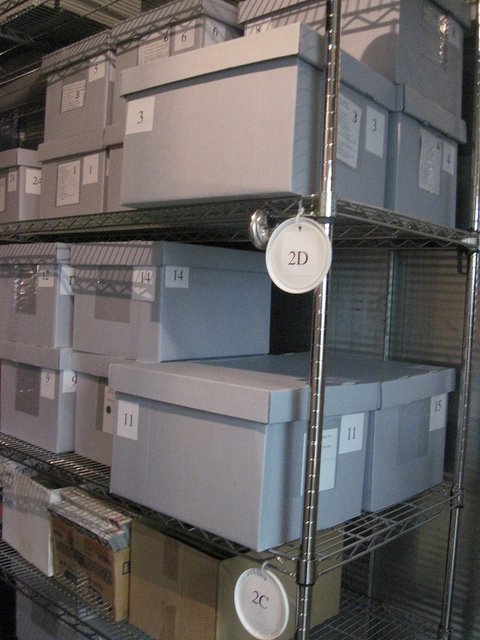
Digital curation is the ongoing process of managing digital materials throughout their lifecycle, from initial creation or acquisition through long-term preservation, to ensure that the materials remain accessible, usable, and trustworthy for current and future users.
The term covers a broader set of activities than simple file storage. Curators appraise which materials merit long-term retention, create descriptive and technical metadata, select appropriate storage systems, and continually monitor the condition of stored files. Because digital formats and storage media change over time, curation also includes periodic migration of content to current formats and verification that files have not become corrupted.
Lifecycle Approach
Many institutions follow a formal lifecycle model to organize curation activities, dividing the process into stages such as conceptualizing what to collect, creating or receiving content, appraising and selecting materials for retention, ingesting them into a managed system, and then continuously preserving, storing, and providing access over the long term. Treating curation as a cycle rather than a single event emphasizes that digital materials require continuous attention rather than one-time processing.
Metadata and Trustworthiness
Robust metadata is central to digital curation, documenting not only what a resource is but also its provenance, the actions taken on it over time, and any technical dependencies it carries, such as the software needed to open a particular file format. This documentation allows future users to assess whether a digital resource can be trusted and understood, even decades after its creation, when the people and systems originally responsible for it may no longer exist.
Relationship to Digital Preservation
Digital curation is sometimes used interchangeably with digital preservation, but curation is generally understood as the broader concept, encompassing the full range of management activities across a resource lifecycle, while preservation refers more narrowly to the technical actions, such as format migration and fixity checking, that keep digital content usable over time.
Roles and Skills Involved
Digital curation work draws on a mix of skills spanning archival appraisal, metadata standards, information technology, and project management. Practitioners must understand both the content and research value of the materials they manage and the technical realities of storage systems, file formats, and preservation software, often working in teams that combine subject specialists with dedicated digital preservation technologists.
Economic Considerations
Digital curation requires sustained funding rather than a one-time investment, since ongoing storage costs, staff time, and periodic format migration continue indefinitely as long as an institution intends to keep content accessible. Many organizations have struggled to secure permanent funding for curation activities, since grant funding that supports initial digitization projects does not always extend to the decades of ongoing maintenance that genuine long-term curation requires.
International Perspectives
Approaches to digital curation vary across countries, shaped by differing national research data policies, funding structures, and professional training pathways. Some countries have established dedicated national digital curation centers or coordinating bodies to develop shared standards and provide training, while in other contexts curation responsibility is distributed unevenly across individual institutions without centralized coordination.
Looking Ahead
As the volume of digital research data grows, digital curation is increasingly recognized as a distinct professional specialization rather than an informal add-on to existing library or archival duties, with dedicated training programs, certifications, and professional communities emerging to develop and share curation expertise across institutions.
Practical Guidance
Institutions starting a digital curation program are generally advised to create a written curation plan identifying what will be retained, for how long, and under what format and storage commitments, since without such a plan, curation activity tends to default to simple storage without the active monitoring and migration that genuine curation requires.
Related Specialties
Digital curation intersects closely with records management, archival science, and information technology, with practitioners often holding formal training in one of these related fields before specializing further in the technical and policy dimensions specific to managing digital materials over extended time horizons.
Curation of Research Data
Research data curation has become a particularly active area of digital curation practice, as funders increasingly require data management plans and long-term access to underlying datasets supporting published findings. Curators working with research data must often collaborate directly with the researchers who generated it, since understanding the data collection methods and intended reuse context is essential for creating metadata that will remain meaningful to future users unfamiliar with the original research project.
This close collaboration distinguishes research data curation from some other digital curation contexts, where the curator may work primarily from existing documentation rather than needing ongoing dialogue with the content creators themselves.
Fixity and Integrity Checking
A core technical practice in digital curation is fixity checking, which involves generating a checksum, a fixed-length value computed from a file content, when a file is first ingested, then periodically recomputing it to confirm the file has not been altered or corrupted during storage, migration, or transfer between systems over time.
Documentation Standards
Consistent documentation practices, including standardized metadata schemas and clearly written preservation policies, allow curation responsibilities to transfer smoothly between staff over time, which matters because digital materials often remain under active curation for far longer than any single staff member typical tenure in the role.
Institutions that neglect documentation often find that curation knowledge is effectively lost whenever a key staff member departs, forcing costly rediscovery of decisions and dependencies that were never properly recorded in the first place.
For this reason, many curation programs now require written transition plans whenever a staff member with primary curation responsibility changes roles or leaves an institution entirely.
Such plans help ensure continuity of care for digital materials regardless of turnover among the individual staff responsible for them at any given moment.
Key facts
- Array
Quick checkHow does digital curation differ from simply backing up files?Show answer
Digital curation involves ongoing appraisal, description, and active management across a resource entire lifecycle, including format migration and integrity checking, rather than a single copy-and-store action like a backup.
Sources
- Array
Editorially reviewed by Specialty Digest Editorial TeamLast reviewed November 3, 2026Researched and drafted with AI assistanceReport an issue