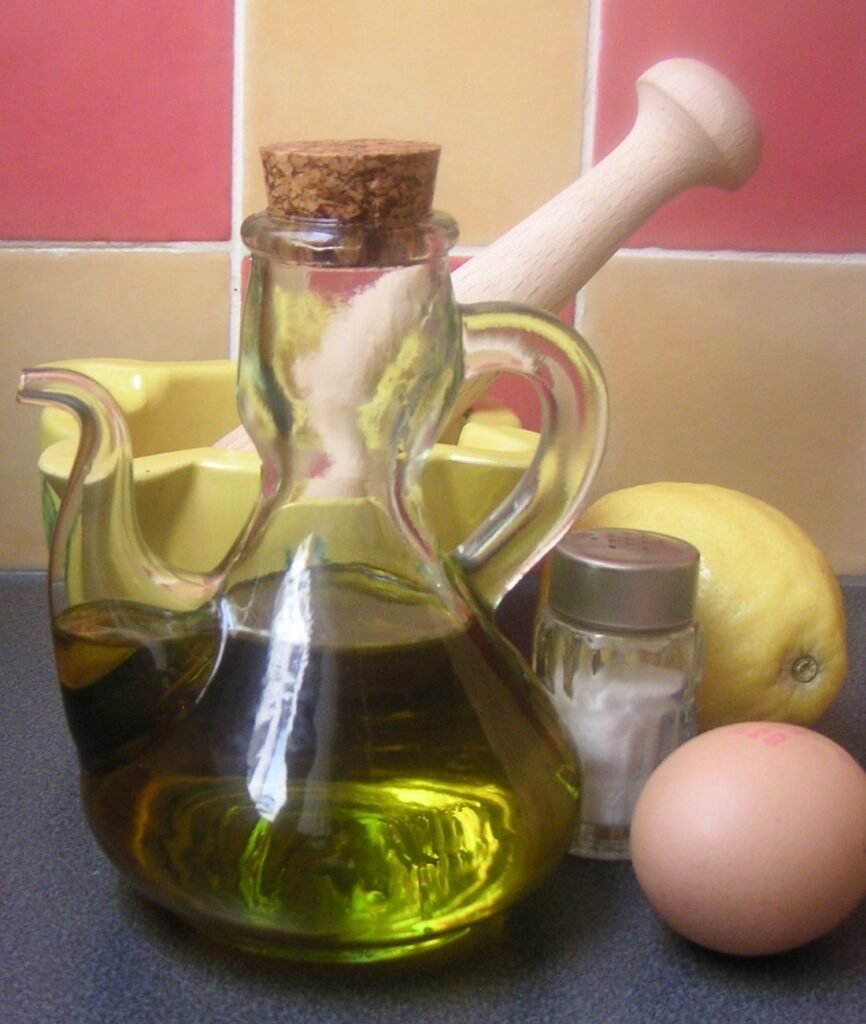
Emulsification is the process of combining two normally immiscible liquids, typically oil and water, into a stable, uniform mixture called an emulsion, achieved either through mechanical agitation or with the help of an emulsifying agent that stabilizes the tiny droplets of one liquid dispersed throughout the other. Emulsification is fundamental to many foods, including mayonnaise, salad dressings, ice cream, and various sauces, where achieving and maintaining a smooth, uniform texture depends entirely on successfully keeping oil and water-based components from separating.
How Emulsifiers Work
Emulsifying agents are molecules with both a water-attracting and an oil-attracting portion, allowing them to position themselves at the interface between oil and water droplets, reducing the surface tension that would otherwise cause the two liquids to separate back into distinct layers. Common food emulsifiers include lecithin, found naturally in egg yolks and soybeans, mono- and diglycerides derived from fats, and various plant-derived gums and proteins, each offering different stabilizing properties suited to particular food applications depending on factors like the desired texture, shelf stability, and the specific liquids being combined.
Types of Emulsions in Food
Oil-in-water emulsions, where tiny droplets of oil are dispersed throughout a continuous water-based phase, are common in products like milk, mayonnaise, and salad dressings, while water-in-oil emulsions, where water droplets are dispersed throughout a continuous oil-based phase, characterize products like butter and margarine. Some food products, including certain processed cheeses and specialty sauces, involve more complex multiple emulsions combining both arrangements, requiring more sophisticated emulsifier systems and processing techniques to achieve and maintain stability throughout the product shelf life.
Mechanical and Chemical Approaches to Emulsification
Achieving a stable emulsion typically requires both an appropriate emulsifying agent and sufficient mechanical energy to break one liquid into small enough droplets within the other, commonly accomplished through vigorous whisking or blending at the small scale, and through specialized high-shear mixing or homogenization equipment in industrial food production, which can achieve much smaller, more uniform droplet sizes than manual mixing typically allows. Smaller, more uniform droplet size generally produces a more stable emulsion with a smoother mouthfeel, which is why industrial homogenization equipment plays such an important role in producing consistent commercial emulsified products at scale.
Emulsion Stability Challenges
Emulsions are inherently somewhat unstable thermodynamic systems, meaning that over time, without adequate emulsifier and proper processing, the dispersed droplets tend to coalesce and the emulsion eventually separates back into its original distinct liquid layers, a process food scientists work to delay as long as possible through emulsifier selection, processing technique, and sometimes additional stabilizing ingredients such as thickeners that increase the viscosity of the continuous phase and physically slow droplet movement and coalescence. Temperature fluctuations, mechanical agitation during transport, and extended storage time can all accelerate emulsion breakdown, which is why food manufacturers conduct extensive shelf-life testing specifically focused on emulsion stability before bringing a new emulsified product to market.
Natural Versus Synthetic Emulsifiers
Consumer interest in simpler ingredient lists has driven growing demand for natural emulsifiers derived from plant and animal sources rather than synthetically manufactured alternatives, even though both categories undergo similar safety evaluation before approval for food use and often perform comparably in technical function. Lecithin, extracted from sources such as soybeans, sunflower seeds, or egg yolks, has become one of the most widely used natural emulsifiers specifically because of this consumer preference, appearing in products ranging from chocolate to baked goods to margarine, where it helps maintain a smooth, stable texture throughout the product shelf life.
Emulsification in Non-Food Industries
While central to food science, emulsification principles extend well beyond food production into industries such as cosmetics, where lotions and creams rely on stable oil-water emulsions for their texture and feel, and pharmaceuticals, where certain medications are formulated as emulsions to improve how the body absorbs specific active ingredients. The underlying chemistry and physics of stabilizing two immiscible liquids remains fundamentally similar across these different applications, even though the specific emulsifiers, processing equipment, and regulatory requirements differ considerably between food, cosmetic, and pharmaceutical contexts.
Testing and Quality Control for Emulsified Products
Food manufacturers conduct extensive testing on emulsified products throughout development and production, measuring droplet size distribution, viscosity, and stability under various storage conditions to ensure a product will maintain acceptable texture and appearance throughout its intended shelf life and distribution conditions, which can include extended time at varying temperatures during shipping and retail storage. This rigorous testing process helps manufacturers avoid costly product recalls or consumer complaints related to separated, broken, or otherwise unstable emulsions reaching store shelves, an outcome that can significantly damage consumer trust in an affected brand or product line.
These quality standards continue to raise the bar for consistent texture and stability across the entire emulsified food category worldwide.
Manufacturers that invest in rigorous emulsion testing generally see fewer quality complaints and stronger long-term consumer loyalty for their emulsified product lines.
This combination of science and consumer preference keeps emulsification a central area of ongoing food product development across the industry.
Its central role in texture and shelf stability ensures emulsification will remain a core topic in food science education and research for the foreseeable future.
Ongoing research continues to refine emulsifier performance across an ever-widening range of food products and consumer preferences.
Key facts
- Array
Quick checkWhat is the difference between an oil-in-water and water-in-oil emulsion?Show answer
An oil-in-water emulsion disperses oil droplets in a continuous water phase, while a water-in-oil emulsion disperses water droplets in a continuous oil phase.
Sources
- Array
Editorially reviewed by Specialty Digest Editorial TeamLast reviewed November 3, 2026Researched and drafted with AI assistanceReport an issue