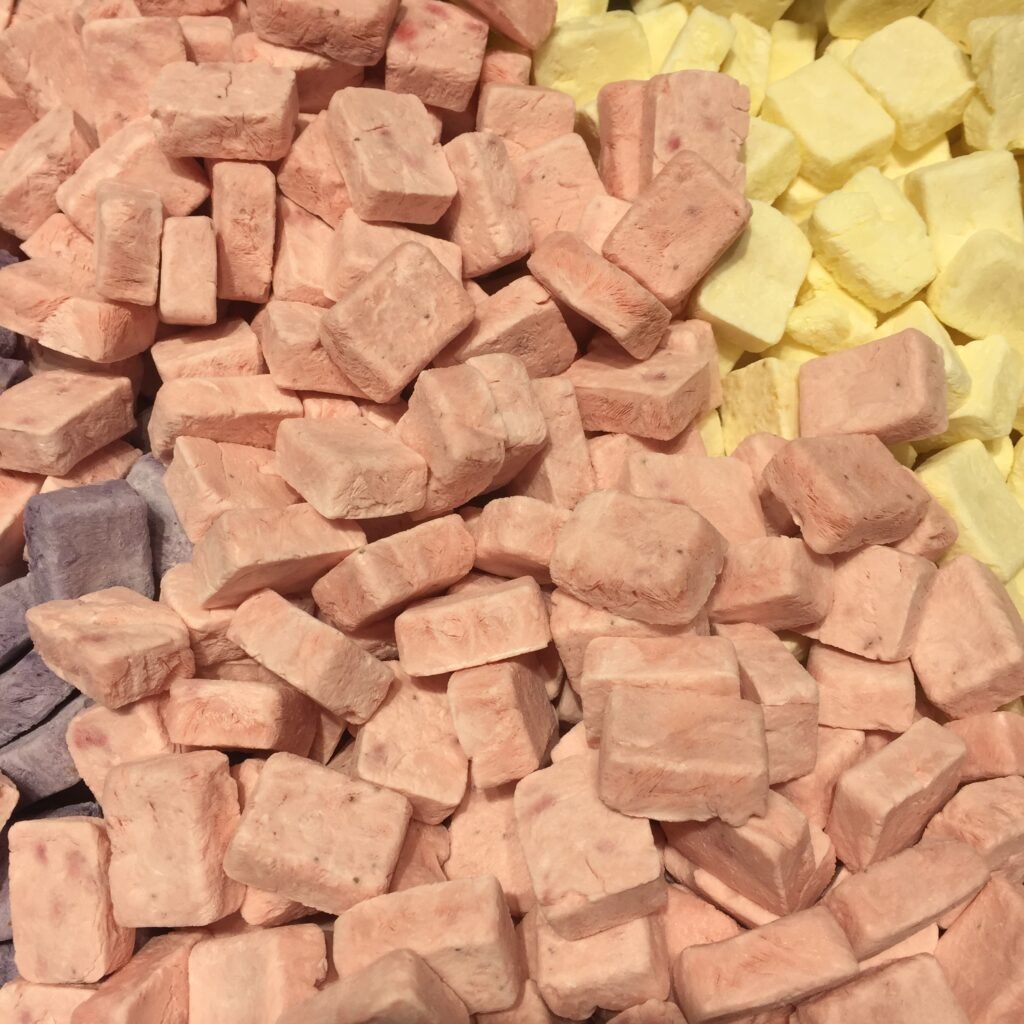
Freeze-drying, formally known as lyophilization, is a food preservation method that removes moisture from food by first freezing it and then reducing surrounding pressure to allow the frozen water to sublimate directly from solid ice into water vapor without passing through a liquid phase, producing a lightweight, shelf-stable product that retains much of its original shape, flavor, and nutritional content better than many other drying methods. Freeze-dried foods are widely used in applications ranging from instant coffee and backpacking meals to space food and pharmaceutical preparations.
The Sublimation Process
Freeze-drying takes advantage of sublimation, the direct transition of a substance from solid to gas without passing through a liquid state, which occurs for water under the low-pressure conditions maintained inside specialized freeze-drying equipment. The process begins with freezing the food solid, followed by a primary drying phase under vacuum conditions that removes the majority of frozen water through sublimation, and a secondary drying phase that removes any remaining bound moisture through a different mechanism called desorption, together reducing the food total moisture content to a very low level that significantly inhibits microbial growth and spoilage reactions.
Advantages Over Other Drying Methods
Because freeze-drying removes water without the food ever passing through a liquid state, it largely preserves the original cellular structure of the food, resulting in less shrinkage and better retention of shape, texture upon rehydration, color, and flavor compared to conventional heat-based drying methods, which can cause significant structural collapse and flavor loss as water evaporates through more disruptive heat-driven processes. Freeze-dried foods also tend to retain more heat-sensitive vitamins and other nutrients than heat-dried alternatives, since the low-temperature freeze-drying process avoids the thermal degradation that conventional drying at higher temperatures can cause to certain nutrients.
Rehydration and Product Applications
Freeze-dried foods rehydrate relatively quickly and effectively when water is reintroduced, since the sublimation process leaves behind a porous structure with numerous small channels where ice crystals once existed, allowing water to penetrate the food more readily than it could through the denser structure that often results from conventional drying methods. This rehydration quality makes freeze-drying particularly valuable for backpacking and camping meals, military field rations, and space food, where lightweight, long shelf life, and reasonably quick preparation with minimal added water or equipment are especially important practical considerations.
Cost and Commercial Considerations
Freeze-drying is generally more expensive and energy-intensive than conventional drying or other preservation methods, since it requires specialized equipment capable of maintaining precise low-temperature, low-pressure conditions over an extended processing time that can take many hours or even days depending on the food being processed and the desired final moisture level. This higher cost has historically limited freeze-drying mainly to higher-value products such as instant coffee, specialty snacks, pharmaceutical ingredients, and military or outdoor recreation food products, though growing consumer interest in freeze-dried snacks and ingredients has expanded commercial freeze-drying capacity in recent years.
Equipment and Industrial Scale-Up
Industrial freeze-drying relies on large vacuum chambers equipped with refrigeration systems capable of maintaining the precise low-temperature, low-pressure conditions needed for efficient sublimation across potentially thousands of units simultaneously, representing a substantial capital investment compared to conventional drying equipment. Scaling freeze-drying operations to commercial volume requires careful engineering to ensure uniform heat and vacuum distribution throughout a large batch, since inconsistent conditions across a chamber can result in uneven drying, with some portions of a batch finishing before others, potentially affecting final product quality and consistency across an entire production run.
Pharmaceutical and Biological Applications
Beyond food, freeze-drying plays a critical role in pharmaceutical manufacturing, used to stabilize vaccines, biological samples, and certain medications that would otherwise degrade quickly in liquid form, allowing these sensitive products to be shipped and stored at more manageable temperatures than their liquid equivalents would require. This pharmaceutical application became particularly prominent during recent vaccine development and distribution efforts, where freeze-dried vaccine formulations helped address cold-chain logistics challenges that liquid vaccine formulations requiring continuous deep refrigeration would have made significantly more difficult to overcome in many regions.
Consumer Trends in Freeze-Dried Snacks
Growing consumer interest in freeze-dried fruit, candy, and other snack products has expanded commercial freeze-drying capacity well beyond its traditional applications in coffee and camping food, driven partly by social media attention to the distinctive crunchy texture freeze-drying produces in foods that are normally soft or chewy. This consumer trend has prompted both established food manufacturers and smaller specialty producers to invest in freeze-drying equipment specifically to meet growing demand for these novel textural snack products across retail and direct-to-consumer sales channels.
This renewed commercial interest has helped diversify freeze-drying applications well beyond its traditional industrial and institutional uses.
As equipment costs decline and consumer demand grows, freeze-drying is expected to keep expanding across new food and specialty product categories.
Food scientists continue exploring new applications for this versatile preservation technology across both everyday snacks and specialized industries alike.
Its unique balance of preservation quality and practicality continues to secure freeze-drying a lasting place in modern food technology.
Investment in new equipment and processing techniques is expected to keep lowering costs and expanding access to this technology over time.
This combination of improving economics and growing consumer demand positions freeze-drying for continued growth across multiple industries in the years ahead.
Key facts
- Array
Quick checkWhy does freeze-dried food rehydrate more effectively than conventionally dried food?Show answer
The sublimation process leaves a porous structure with channels where ice crystals once were, allowing water to penetrate more readily during rehydration.
Sources
- Array
Editorially reviewed by Specialty Digest Editorial TeamLast reviewed November 3, 2026Researched and drafted with AI assistanceReport an issue