Fish stock assessment is the scientific process of estimating the size, health, and sustainable harvest potential of a fish population, or stock, within a defined geographic area. Fisheries scientists combine survey data, catch records, and biological sampling to build mathematical models that describe how a stock is likely to respond to continued fishing pressure.
What a Stock Assessment Measures
An assessment estimates several linked quantities: the current biomass of a stock, its rate of natural growth and mortality, the proportion being removed by fishing each year, and the biomass needed to sustain long-term yields. Scientists express many of these figures relative to reference points such as maximum sustainable yield, the theoretical largest catch that can be taken indefinitely without depleting the population.
Data Sources
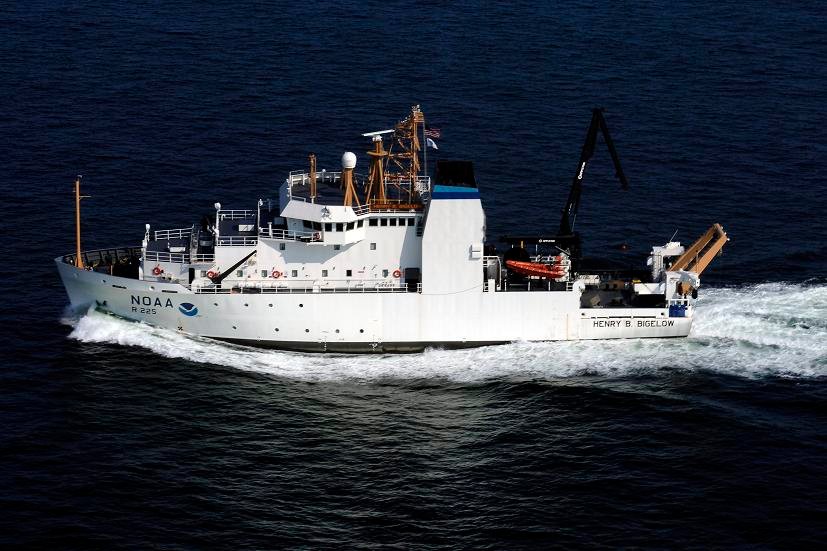
Assessments draw on fishery-independent surveys conducted from research vessels, which sample a stock using standardized gear regardless of commercial activity, alongside fishery-dependent data such as logbooks, landings records, and observer reports from commercial vessels. Age and length data from sampled fish, often read from growth rings in otoliths or scales, let scientists reconstruct how many fish of each age class remain in the population.
Modeling Approaches
Stock assessment models range from simple surplus-production models, which treat a stock as a single pool of biomass, to detailed age-structured models that track separate cohorts of fish born in different years. Integrated assessment frameworks combine multiple data streams into one statistical model, allowing scientists to weigh survey trends, catch history, and biological parameters simultaneously and to quantify uncertainty in the resulting estimates.
Why Assessments Matter for Management
Regulatory bodies use assessment results to set annual catch limits, define rebuilding timelines for depleted stocks, and evaluate whether current management measures are working. A stock classified as overfished or experiencing overfishing typically triggers mandatory harvest reductions, while a healthy assessment can support stable or increased quotas.
Limitations and Uncertainty
Every assessment carries uncertainty from incomplete data, natural variability in fish populations, and simplifying assumptions in the models themselves. Scientists address this by presenting ranges rather than single numbers and by applying precautionary buffers so that management decisions remain conservative when data are sparse or conflicting.
Regional and Global Assessment Bodies
In the United States, NOAA Fisheries and regional fishery management councils conduct stock assessments for federally managed species, while in Europe the International Council for the Exploration of the Sea performs a similar role for stocks in the North Atlantic and adjacent seas. Globally, the Food and Agriculture Organization compiles assessment results from many countries to track the overall state of world fish stocks, reporting periodically on what share of assessed stocks are fished within biologically sustainable limits.
Frequency and Timing of Assessments
Major commercial stocks are often reassessed every one to three years, though data-rich stocks with continuous monitoring may be updated annually while data-poor stocks might go a decade or longer between full assessments. Between full assessments, scientists sometimes conduct simpler index updates using the latest survey and catch data to flag any sudden changes that might warrant an earlier full review.
Communicating Uncertainty to Decision-Makers
Stock assessment scientists increasingly present results as probability distributions rather than single point estimates, showing managers the range of plausible stock sizes and the likelihood that a given catch level would cause overfishing. This probabilistic framing helps fishery managers weigh the risk of being too conservative, which can needlessly restrict fishing communities, against the risk of being too permissive, which can allow a stock to decline toward collapse, and it has become standard practice in many well-resourced assessment programs around the world.
Role in Fishery Certification
Independent sustainability certification programs rely heavily on the quality and transparency of a fishery’s stock assessment, since certifiers need credible evidence that harvest levels are grounded in sound science before awarding a sustainability label. Fisheries lacking recent or reliable assessments are generally ineligible for certification regardless of how they are actually managed, which has created a strong incentive for fisheries seeking market access to invest in improved data collection and assessment capacity.
Public Access to Assessment Results
Most national fisheries agencies now publish stock assessment reports and underlying data publicly, allowing independent scientists, conservation groups, and industry representatives to review the methods and conclusions rather than relying solely on agency summaries. This transparency has become an important check on the credibility of the assessment process, particularly in contentious fisheries where different stakeholders may interpret the same underlying biological trends very differently depending on their economic interests.
Training and Capacity Building
Many developing coastal nations lack the trained personnel, research vessels, and laboratory infrastructure needed to conduct full stock assessments on their own, prompting international organizations to run capacity-building programs that train local scientists in survey design, data analysis, and assessment modeling. Building this local capacity is widely seen as essential to closing the global gap between well-assessed stocks in wealthy nations and the large number of stocks elsewhere that remain poorly understood despite their importance to local food security.
Related Specialties
Stock assessment draws on specialized sub-fields such as fish aging science, survey design statistics, and population modeling, each contributing distinct expertise to the overall assessment process. Universities and government research agencies increasingly offer dedicated graduate training in quantitative fisheries science to supply the specialized workforce this work requires.
Ultimately, the credibility of fishery management rests on the quality of the stock assessment behind it, which is why continued investment in this science remains one of the clearest levers available for improving global fisheries outcomes.
Fisheries graduate programs around the world now treat stock assessment as a core professional skill, reflecting how central this discipline has become to responsible ocean governance everywhere fish are commercially harvested.
Key facts
- Estimates current biomass and sustainable harvest levels.|Combines survey and catch data in statistical models.|Informs legally binding catch limits.|Carries quantified scientific uncertainty.
Quick checkWhat is the main purpose of a fish stock assessment?Show answer
To estimate how large a fish population is and how much of it can be caught without harming its long-term sustainability.
Sources
- NOAA Fisheries; FAO Fisheries and Aquaculture Department
Editorially reviewed by Specialty Digest Editorial TeamLast reviewed November 3, 2026Researched and drafted with AI assistanceReport an issue