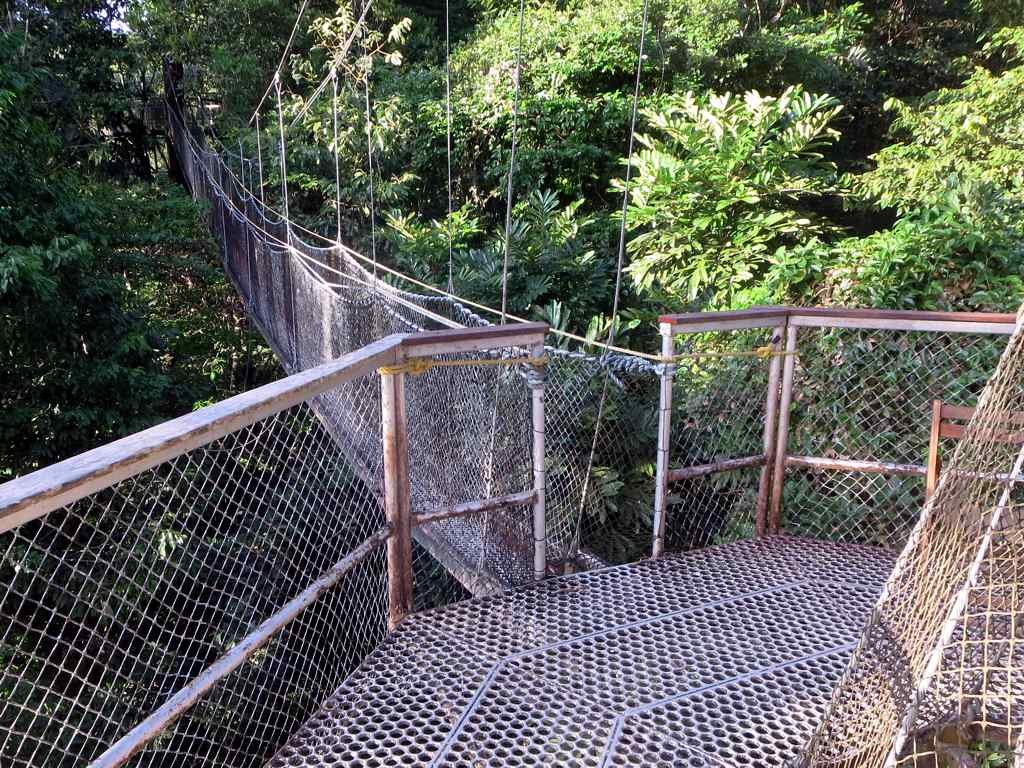
The forest canopy is the uppermost layer of a forest formed by the crowns of the tallest trees, intercepting most incoming sunlight before it reaches lower vegetation layers and shaping the physical and ecological conditions of the entire forest beneath it.
Canopy Structure and Layers
A mature forest often has several distinct vertical layers beneath the main canopy, including a subcanopy of smaller trees, a shrub layer, and a herbaceous ground layer, with the density and continuity of the uppermost canopy determining how much light penetrates to support growth in each lower layer. Forests with an open, broken canopy allow considerably more light to reach the forest floor than those with a dense, continuous canopy, strongly influencing understory plant composition.
Canopy as Habitat
The forest canopy itself hosts a distinct community of organisms, including epiphytic plants, canopy-dwelling insects, and birds and mammals that rarely descend to the forest floor, a habitat zone that researchers have historically found difficult to study directly due to its height and inaccessibility. The development of canopy access techniques, including specialized climbing rope systems and canopy walkways, has dramatically expanded scientific understanding of this previously under-studied forest layer in recent decades.
Canopy Gaps and Disturbance
When a canopy tree falls due to wind, disease, or age, it creates a canopy gap that allows a pulse of sunlight to reach the forest floor, triggering a burst of growth among shade-intolerant seedlings and understory plants that had been waiting for exactly this kind of opening. These gap dynamics are a major driver of forest regeneration in undisturbed forests, creating a patchwork of different light conditions and successional stages even within a seemingly uniform mature stand.
Measuring Canopy Cover
Foresters and ecologists measure canopy cover and height using tools ranging from simple handheld densiometers to sophisticated LiDAR remote sensing that can map three-dimensional canopy structure across large areas, data used for everything from timber inventory to wildlife habitat assessment and carbon stock estimation. These measurements have become increasingly important as canopy structure is recognized as a key indicator of overall forest health and biodiversity potential.
Canopy Loss and Climate Effects
Loss of forest canopy through logging, disease, or severe disturbance significantly changes local microclimate, increasing ground-level temperature swings and reducing humidity, effects that can make it harder for shade-dependent species to survive and that contribute to broader concerns about forest fragmentation reducing the buffering effect that intact canopy provides against climate extremes.
Canopy Research Methods
Beyond physical climbing and walkway access, researchers increasingly use drones equipped with cameras and sensors to survey canopy condition and structure across large areas without the time and safety demands of direct human access, complementing ground-based and climbing-based research with broader landscape-scale canopy data. These technological advances have made canopy research considerably more accessible and scalable than it was even a decade ago.
Canopy Interception and Water Cycling
Forest canopy intercepts a substantial portion of rainfall before it reaches the ground, with some water evaporating directly from leaf surfaces and the remainder reaching the forest floor more slowly through stemflow and drip, a process that significantly moderates how precipitation translates into soil moisture and streamflow compared with an open, canopy-free landscape receiving the same rainfall.
Canopy Height as a Health Indicator
Researchers increasingly track canopy height and structural complexity over time as an indicator of overall forest health, since declining canopy height or increasing structural simplification can signal stress from drought, pests, or disease before more obvious symptoms appear.
Canopy Role in Biodiversity Hotspots
Tropical forest canopies in particular host an extraordinary concentration of biodiversity, with some estimates suggesting canopy habitats may contain a majority of all terrestrial species on Earth despite occupying a relatively thin vertical slice of the overall forest ecosystem, a concentration of life that has driven significant scientific interest in canopy research over recent decades.
Canopy Connectivity for Arboreal Wildlife
Many forest-dwelling species rarely or never descend to the ground, relying instead on continuous canopy connectivity to move through a forest, meaning canopy gaps created by logging or fragmentation can isolate arboreal wildlife populations just as effectively as ground-level barriers isolate terrestrial species.
From its role regulating water cycling to its function as the densest concentration of forest biodiversity, the canopy remains the defining structural feature that shapes nearly every other process occurring within the forest below it.
Canopy and Local Climate Buffering
Dense, continuous canopy cover buffers understory temperature and humidity against extremes, a microclimate regulation function that becomes increasingly valuable for forest-dependent species as broader climate variability intensifies outside the forest’s protective canopy cover.
Recognizing the canopy’s role in climate buffering adds yet another dimension to the case for protecting intact forest cover beyond its more commonly cited carbon and biodiversity benefits.
From regulating light and water to sheltering a dense concentration of specialized wildlife, the canopy earns its reputation as the single most consequential structural layer within any forest ecosystem.
Understanding the canopy, in the end, is understanding the forest itself.
Everything else, from the understory below to the wildlife throughout, ultimately answers to conditions the canopy sets first.
Few single structural features in any ecosystem carry quite this much downstream influence over everything living beneath them.
Respect for the canopy, in practical terms, means respecting the whole forest it quietly governs.
That governing role is easy to overlook from the ground, yet it shapes nearly every outcome a visitor eventually notices.
Look up before judging any forest’s health; the answer is usually already written there.
A forest’s crown tells its story first.
Key facts
- Intercepts most sunlight before it reaches lower layers;Hosts a distinct community of canopy-dwelling organisms;Canopy gaps from fallen trees drive forest regeneration
Quick checkWhat is a canopy gap and why does it matter?Show answer
An opening created when a canopy tree falls, allowing sunlight to trigger growth among shade-intolerant plants below
Sources
- Forest ecology research on canopy structure and gap dynamics
Editorially reviewed by Specialty Digest Editorial TeamLast reviewed November 3, 2026Researched and drafted with AI assistanceReport an issue