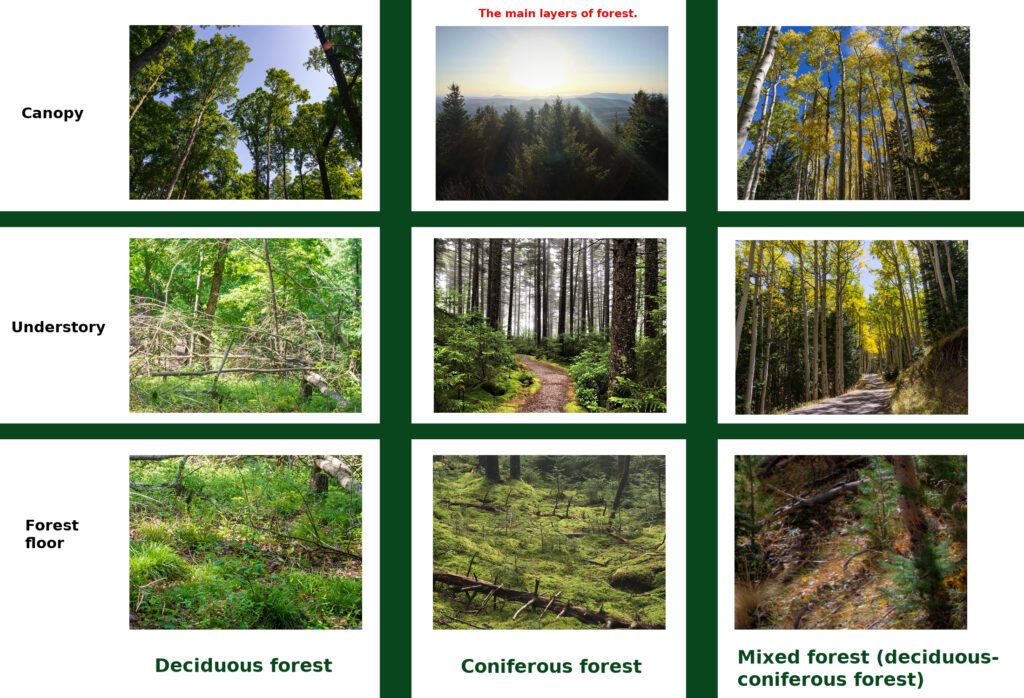
The forest understory is the layer of vegetation growing beneath the main canopy, encompassing shrubs, saplings, ferns, and herbaceous plants that have adapted to the reduced light conditions found beneath taller trees.
Light-Adapted Plant Strategies
Understory plants have evolved various strategies to survive in low light, including broad, thin leaves optimized for capturing limited available light, chlorophyll arrangements tuned to the specific wavelengths that filter through the canopy, and in some cases a spring ephemeral strategy of completing most growth before deciduous canopy leaves fully emerge. These adaptations allow understory species to thrive in a light environment that would be insufficient for most canopy tree seedlings, carving out an ecological niche distinct from the overstory trees above.
Role in Forest Regeneration
The understory layer often contains the next generation of canopy trees in the form of shade-tolerant seedlings and saplings waiting for a canopy gap to open before they can grow rapidly toward the light, making understory composition a strong predictor of how a forest stand will develop over coming decades. Foresters pay close attention to understory regeneration when planning harvests, since a stand lacking adequate understory regeneration of desired species may require active planting rather than relying on natural succession.
Wildlife Habitat Value
A diverse, well-developed understory provides essential food and shelter for many wildlife species, including ground-nesting birds, small mammals, and insects, and understory structure and composition often matter as much to wildlife habitat quality as the canopy itself, particularly for species that spend most of their time near the forest floor.
Threats to Understory Health
Invasive plant species, overgrazing by deer in areas with inflated deer populations, and excessive shade from an overly dense canopy can all suppress native understory diversity, sometimes creating a sparse, degraded understory layer even in forests with an otherwise healthy-looking canopy. These understory health problems can persist for years and significantly limit a forest’s regeneration capacity even when the dominant canopy trees themselves appear unaffected.
Management Interventions
Land managers sometimes intervene directly in understory conditions through practices like deer population control, invasive species removal, or prescribed fire specifically timed to favor native understory regeneration over competing invasive or undesirable species, recognizing that a healthy understory is essential to a forest’s long-term resilience and regenerative capacity.
Understory Diversity Across Forest Types
Understory composition and diversity vary enormously between forest types, with some old-growth conifer forests supporting a sparse, low-diversity understory due to deep shade and acidic needle litter, while certain deciduous forests host remarkably diverse herbaceous understory communities adapted to the seasonal light pulse before canopy leaf-out, illustrating how understory ecology depends heavily on the specific canopy and soil conditions above and below it.
Understory Monitoring in Forest Management
Forest managers increasingly include understory surveys as a standard part of monitoring programs, since changes in understory composition often signal broader ecosystem stress, such as excessive deer browsing or invasive species establishment, well before such problems become visible in the overstory canopy trees themselves.
Understory Restoration Techniques
Active understory restoration techniques, including targeted invasive species removal and reintroduction of native seed sources, are increasingly used in degraded forests where natural understory recovery has stalled due to persistent invasive competition or altered browsing pressure.
Understory and Pollinator Habitat
Flowering understory plants provide critical early-season forage for pollinators emerging from winter dormancy before many other floral resources become available, making a diverse, healthy forest understory an important though often overlooked component of broader pollinator conservation efforts extending well beyond agricultural and garden settings alone.
Understory Response to Canopy Thinning
Deliberate canopy thinning conducted specifically to benefit understory plant communities has become an increasingly common forest management tool, allowing managers to boost understory light availability and diversity without the more disruptive consequences of a full canopy-removing harvest.
Attending carefully to understory health, not just canopy appearance, remains essential for anyone genuinely assessing the long-term condition and regenerative capacity of a forest ecosystem.
Understory as an Early Warning System
Because understory plants often respond more quickly to environmental stress than long-lived canopy trees, monitoring understory condition has become a valuable early warning tool for detecting emerging forest health problems well before they become visible in the slower-responding overstory.
Attending to these early signals gives land managers a meaningful head start in addressing forest health problems before they become far more costly and difficult to reverse.
As understanding of understory ecology deepens, its role as both habitat and health indicator seems likely to receive growing attention within mainstream forest management practice.
A forest with a thriving, diverse understory is, in a very real sense, a forest actively preparing for its own healthy future.
That quiet preparation, carried out largely unseen beneath the canopy, deserves far more attention than it typically receives.
A Foundation Worth Protecting
Protecting understory health alongside canopy health gives forest managers a far more complete picture of whether a stand is genuinely thriving or merely appears healthy from above.
The ground beneath the canopy, it turns out, tells its own important part of the story.
Managers who learn to read it gain a genuine advantage in anticipating problems long before they reach the treetops.
In forestry, as in medicine, the earliest symptoms are often the quietest, and the understory is where many of them first appear.
That quiet vigilance, once learned, becomes second nature to any forester who spends enough seasons walking the same stands.
It rewards patience, close observation, and a willingness to look down as often as up.
That habit alone separates an attentive forester from one who only ever looks skyward.
Key facts
- Plants adapt to low light through specialized leaf and growth strategies;Often holds the next generation of canopy trees as seedlings;Threatened by invasive species, deer overgrazing, and excess shade
Quick checkWhy does the understory matter for forest regeneration?Show answer
It often holds shade-tolerant seedlings and saplings that grow into canopy trees once a gap opens above them
Sources
- Forest ecology research on understory dynamics and regeneration
Editorially reviewed by Specialty Digest Editorial TeamLast reviewed November 3, 2026Researched and drafted with AI assistanceReport an issue