Geometry is the branch of mathematics concerned with the properties and relationships of points, lines, angles, surfaces, and solids in space. It is one of the oldest fields of mathematics, with roots in the practical problems of measuring land, constructing buildings, and tracking the motion of celestial bodies, and it remains central to fields ranging from architecture and engineering to computer graphics and cosmology. Geometry asks questions about shape, size, relative position, and the properties of space itself, and the answers it provides have historically served as a model for logical, deductive reasoning throughout the rest of mathematics.
Euclidean geometry
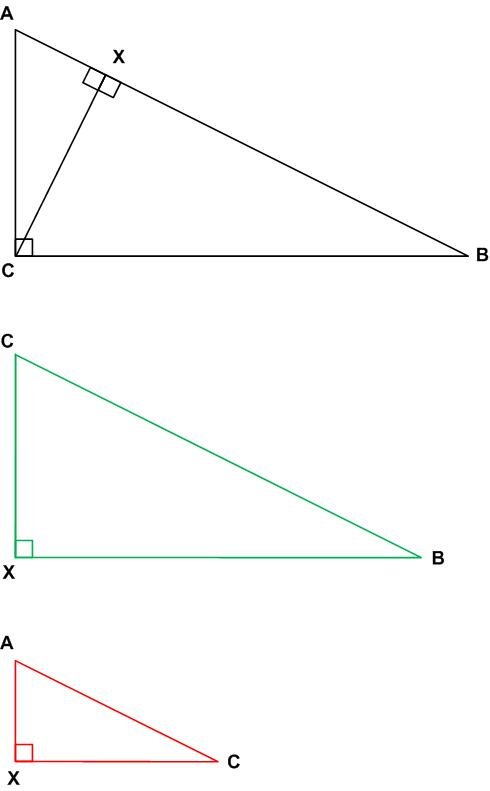
Euclidean geometry, named after the Greek mathematician Euclid, is built from a small set of basic definitions, postulates, and axioms from which an enormous body of theorems can be logically derived. Euclid compiled this system around 300 BCE in his treatise the Elements, which organized existing Greek geometric knowledge into a rigorous deductive structure that influenced the way mathematics was taught and practiced for more than two thousand years. Central concepts include points, which have no size, lines, which extend infinitely in one dimension, and the famous Pythagorean theorem, which relates the lengths of the sides of a right triangle and has applications ranging from construction to navigation. Euclidean geometry describes space as flat, meaning parallel lines never meet and the angles of a triangle always sum to exactly 180 degrees.
Proof and deductive reasoning
Euclid approach to geometry is as historically significant for its method as for its content, since the Elements demonstrates how an entire body of knowledge can be built up from a handful of self-evident starting assumptions using strict logical deduction alone. A geometric proof proceeds step by step from these axioms and previously established theorems to a new conclusion, with each step justified by an explicit logical rule rather than by appeal to a diagram or intuition. This axiomatic method, in which a field is organized around a minimal set of unproved starting assumptions, became the template that later mathematicians applied far beyond geometry, including in the development of abstract algebra and formal logic. Students are still commonly introduced to formal proof writing through geometry precisely because its claims are visual and intuitive enough to check by eye, while the proofs themselves require the same rigor demanded everywhere else in mathematics.
Non-Euclidean geometry
During the nineteenth century, mathematicians including Carl Friedrich Gauss, Janos Bolyai, and Nikolai Lobachevsky independently discovered that replacing Euclid parallel postulate with a different assumption produces entirely consistent alternative geometries, now called non-Euclidean. In hyperbolic geometry, space curves away from itself like a saddle, and the angles of a triangle sum to less than 180 degrees, while in elliptic or spherical geometry, space curves back on itself like the surface of a sphere, and triangle angles sum to more than 180 degrees. These discoveries overturned the long-held assumption that Euclidean geometry was the only logically possible description of space, and they later proved essential to Albert Einstein, whose general theory of relativity describes gravity itself as the curvature of four-dimensional spacetime, a fundamentally non-Euclidean structure.
Coordinate and analytic geometry
Analytic geometry, developed chiefly by Rene Descartes in the seventeenth century, represents geometric shapes using algebraic equations within a coordinate system, allowing geometric problems to be solved using algebraic techniques and vice versa. A point on a plane is described by an ordered pair of coordinates, a line can be written as a linear equation, and a circle corresponds to a specific quadratic equation relating the coordinates of every point on its circumference. This fusion of algebra and geometry proved enormously powerful, enabling the development of calculus shortly afterward and providing the mathematical basis for computer-aided design, geographic information systems, and the rendering engines used in video games and film.
Geometry in the modern world
Architects and civil engineers rely on geometric principles to calculate structural loads, design stable shapes, and ensure that buildings and bridges can be constructed accurately from technical drawings. Computer graphics depend heavily on geometric transformations, such as rotation, scaling, and translation, to render three-dimensional objects on a two-dimensional screen convincingly. Global positioning systems use a branch of geometry applied to the curved surface of the Earth, called geodesy, to calculate a receiver exact location from the timing of signals sent by multiple orbiting satellites, a calculation that depends on solving a geometric problem called trilateration. Even fields that seem unrelated to shape, such as data science, make extensive use of geometric concepts, since many machine learning algorithms work by measuring distances and angles between data points represented as vectors in a high-dimensional geometric space.
FAQs
Who is considered the father of geometry?
Euclid, a Greek mathematician active around 300 BCE, is traditionally called the father of geometry because his treatise the Elements organized existing geometric knowledge into the rigorous deductive system still used as a model today.
What is the difference between Euclidean and non-Euclidean geometry?
Euclidean geometry describes flat space, where parallel lines never meet and triangle angles sum to exactly 180 degrees, while non-Euclidean geometries describe curved space, where that sum is either greater or less than 180 degrees.
How is geometry used in general relativity?
Albert Einstein general theory of relativity describes gravity not as a force but as the curvature of four-dimensional spacetime, a concept that relies directly on non-Euclidean geometry developed decades earlier.
What is analytic geometry?
A branch of geometry, developed chiefly by Rene Descartes, that represents geometric shapes using algebraic equations within a coordinate system, allowing geometric and algebraic methods to be combined.
Key facts
- One of the oldest branches of mathematics, rooted in land measurement and construction
- Euclid's Elements (c. 300 BCE) organized geometry into a rigorous deductive system
- Non-Euclidean geometry, discovered in the 19th century, describes curved space
- Einstein's general relativity describes gravity as curved, non-Euclidean spacetime
- Analytic geometry fuses algebra and geometry using coordinate systems
In the news
Quick checkWhat is the Pythagorean theorem used for?Show answer
It relates the side lengths of a right triangle and is used in construction, navigation, and countless other practical measurement problems.
Sources
- Euclid, Elements; Britannica, Geometry
Editorially reviewed by Specialty Digest Editorial TeamLast reviewed November 2, 2026Researched and drafted with AI assistanceReport an issue