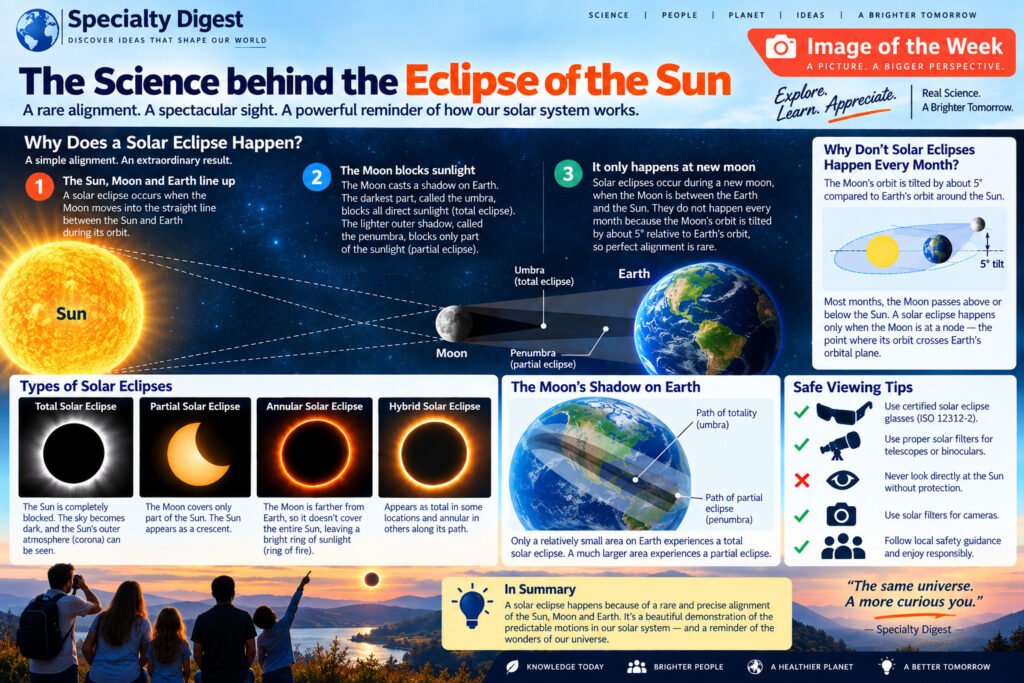
Solar eclipses look like magic, but they come down to simple geometry: the Sun, the Moon, and Earth lining up in a single, precise moment. This week’s Visual Bite breaks down why eclipses happen, why they don’t occur every month, the four types you can witness, and how to watch one safely.
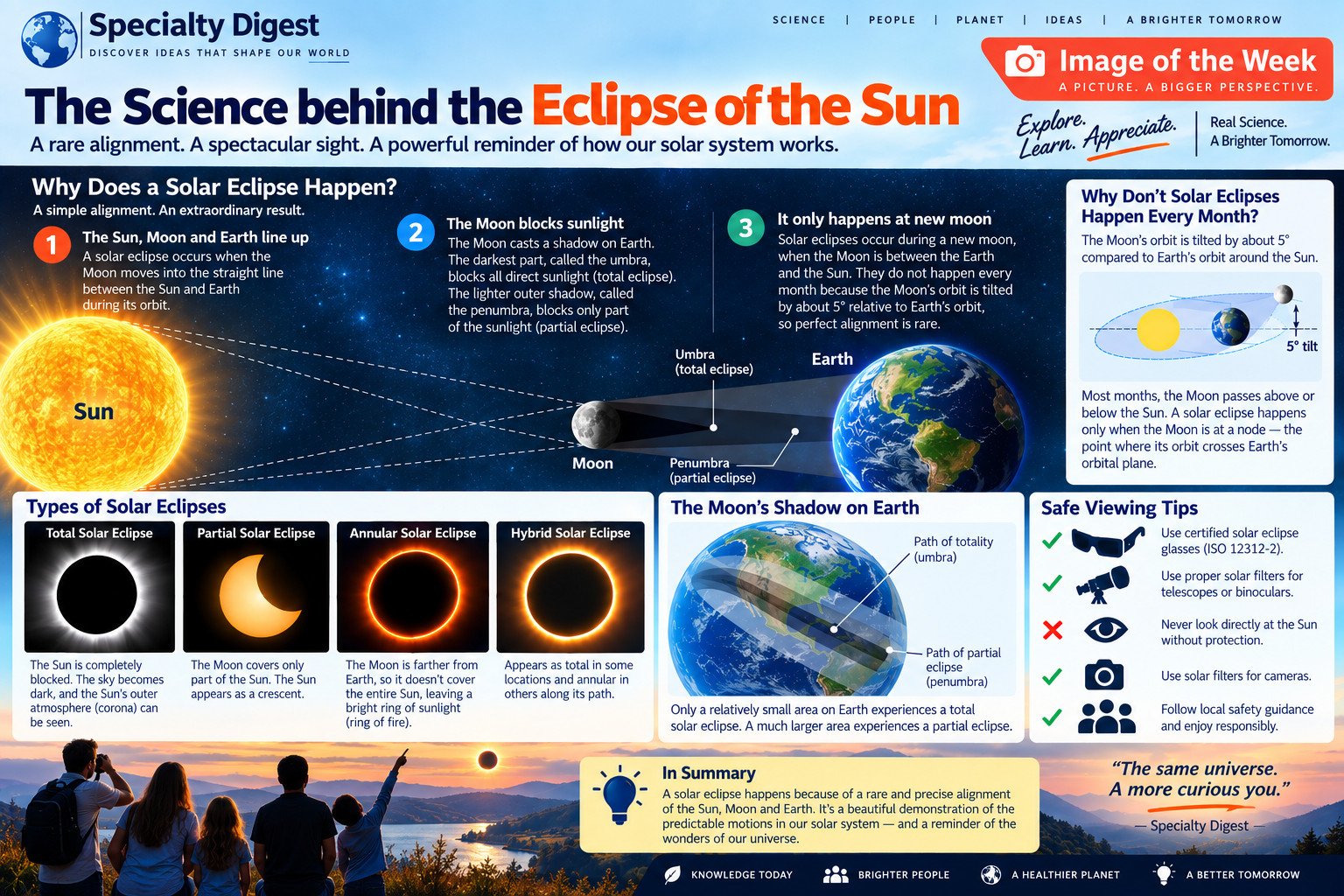
The Digest Takeaway: A solar eclipse only happens at new moon, and only when the Moon’s slightly tilted orbit lines it up exactly between the Sun and Earth — which is why the spectacle is rare, and why it’s always worth stepping outside (with certified eclipse glasses) when one is visible from where you live.
About the AuthorSpecialty Digest Editorial TeamEditorial StaffReporting and analysis from the Specialty Digest editorial team.