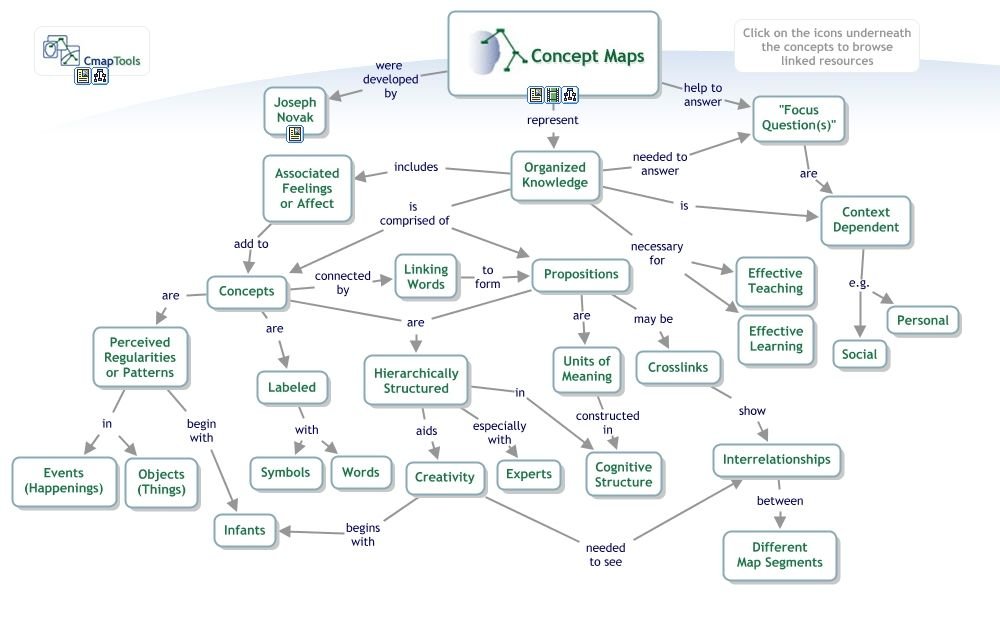
Organizing Concepts and Their Relationships
Knowledge organization systems is an umbrella term covering the various structured tools, including thesauri, taxonomies, classification schemes, and ontologies, that information professionals use to organize concepts within a subject domain and define how those concepts relate to one another. These systems provide the structural backbone that lets large, complex collections remain navigable.
Types of Systems
A taxonomy typically organizes concepts into a hierarchy of broader and narrower categories, while a thesaurus adds richer relationship types including related but non hierarchical connections between concepts. Ontologies, developed largely within computer science, formalize these relationships with enough precision that software can reason about them automatically, supporting applications well beyond simple human browsing.
Building Effective Systems
Constructing a knowledge organization system requires deep familiarity with how a subject domain actual experts think and talk about their field, since a system built around an outside perspective often fails to match how users actually search. Ongoing maintenance and expert review remain essential, since any living field of knowledge continues generating new concepts that existing structures must eventually accommodate.
SKOS and Technical Representation
The Simple Knowledge Organization System standard, developed under the World Wide Web Consortium, provides a widely adopted technical format for representing thesauri and taxonomies in a way that software across different platforms can read and process consistently, bridging the gap between a conceptually designed knowledge organization system and its practical implementation in digital systems.
Multilingual Knowledge Organization
Organizing knowledge across multiple languages introduces particular challenges, since a concept in one language may not map cleanly onto a single equivalent term in another, requiring multilingual knowledge organization systems to represent concepts independently of any one language and then link language specific terms to those underlying concepts.
Governance of Shared Systems
Widely used knowledge organization systems typically operate under formal governance structures involving committees, revision cycles, and documented procedures for proposing changes, since a system used across many institutions cannot be modified unilaterally without risking inconsistency across the entire community relying on it.
Automatic Classification Against Existing Systems
Machine learning classifiers are increasingly trained to automatically assign new content to categories within an existing knowledge organization system, a practice that can dramatically speed up indexing work for large content volumes though it typically still requires human review to catch classification errors, particularly for content that falls ambiguously between established categories.
Looking Ahead for Knowledge Organization
As organizations increasingly integrate knowledge organization systems with artificial intelligence tools capable of reasoning over structured data, demand has grown for systems built with enough formal precision to support automated inference, pushing some fields toward more rigorously defined ontologies rather than looser traditional thesauri.
Practical Guidance for System Builders
Teams building a new knowledge organization system for their organization benefit from starting with an existing published system in a closely related domain and adapting it, rather than building an entirely original structure from scratch, since established systems already reflect substantial accumulated expert consensus.
Related Specialties
Knowledge organization systems connect closely with controlled vocabulary work, metadata standards, and the broader field of ontology engineering within computer science, since all of these specialties address related aspects of representing and structuring knowledge formally.
International Perspectives
International standards bodies have worked to establish shared technical frameworks for knowledge organization systems specifically so that systems developed in different countries and languages can interoperate, though deep conceptual differences between cultures and disciplines mean that full interoperability remains an ongoing challenge rather than a solved problem.
Some fields have developed internationally coordinated ontologies specifically to support cross border scientific collaboration that would otherwise be hampered by incompatible local classification schemes.
Practical Guidance for New Builders
Teams new to building knowledge organization systems benefit from starting with a narrow, well bounded subject area rather than attempting to organize an entire broad domain at once, since a focused initial scope allows the team to refine their approach based on real usage feedback before committing to a larger scale structure that would be far more costly to revise later.
Involving actual subject matter experts throughout the design process, not just at the final review stage, consistently produces more usable systems than building structure first and seeking expert validation only afterward.
Economic Considerations
Building and maintaining a knowledge organization system requires sustained investment in subject expert time, which can represent a significant ongoing cost particularly for rapidly evolving fields where the underlying structure requires frequent revision to remain accurate and useful.
Looking Ahead for System Economics
Shared, collaboratively maintained knowledge organization systems distributed across multiple contributing institutions have emerged partly as a way to spread this maintenance cost, allowing organizations to pool expert effort rather than each independently maintaining a separate, overlapping structure.
Documentation describing the reasoning behind specific structural choices within a knowledge organization system helps future maintainers understand original intent rather than guessing at decisions made years earlier by different staff.
Version control practices borrowed from software development have increasingly been applied to knowledge organization system maintenance, letting teams track exactly how and why a structure changed over its history.
Scheduled periodic reviews, rather than purely reactive updates, help a knowledge organization system stay current without accumulating a large backlog of needed revisions.
Pilot testing a proposed structural change with a small group of actual users before a full rollout helps catch usability problems while they remain cheap to fix.
Cross institutional working groups focused on a shared knowledge organization system help distribute the burden of ongoing expert review across more available people.
A dedicated change log for structural revisions helps distributed maintainers stay synchronized without needing constant real time coordination.
Key facts
- Array
Quick checkWhat distinguishes a thesaurus from a simple list of subject terms?Show answer
A thesaurus does not just list terms but also defines relationships between them, such as broader, narrower, and related concepts, allowing a searcher to navigate from one concept to closely connected ones rather than relying on an unstructured term list alone.
Sources
- Array
Editorially reviewed by Specialty Digest Editorial TeamLast reviewed November 3, 2026Researched and drafted with AI assistanceReport an issue