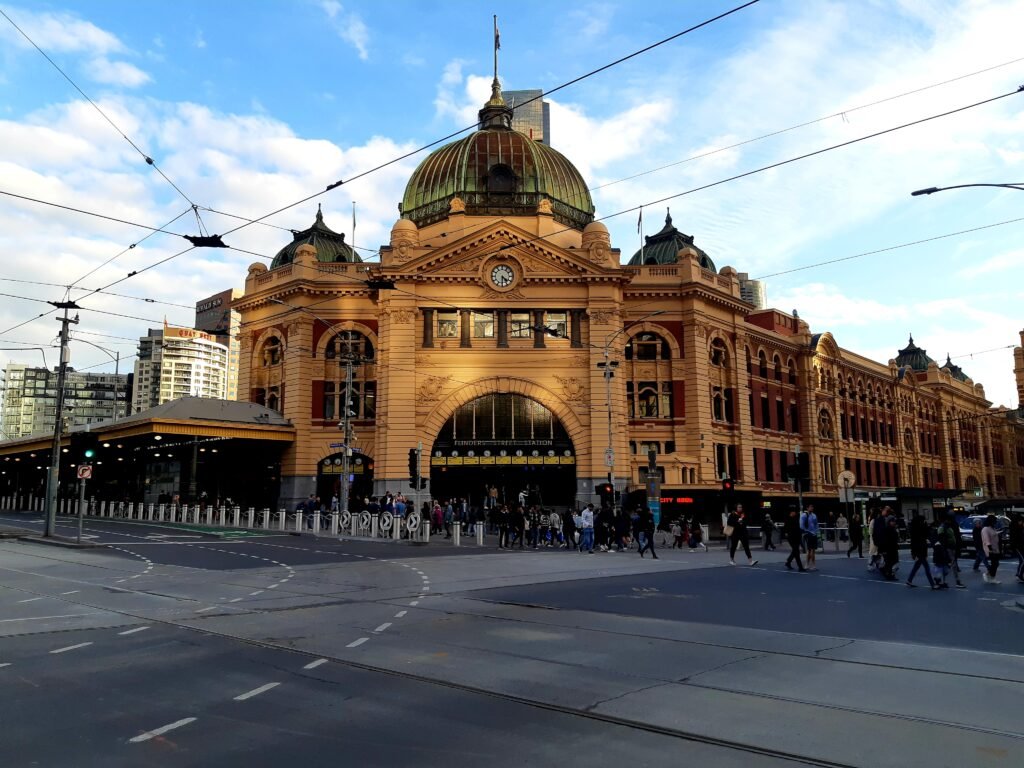
Melbourne is the capital of the Australian state of Victoria and the country’s second-largest city, built around the Yarra River near the northern end of Port Phillip Bay in the country’s southeast. Founded by free settlers in 1835 and transformed by the Victorian gold rush of the 1850s, it briefly ranked among the wealthiest cities in the world.
Where Is Melbourne Located?
Melbourne lies in southeastern Australia on the Yarra River, near the northern shore of Port Phillip Bay, and serves as the capital of the state of Victoria.
A Brief History of Melbourne
Free settlers led by John Batman and John Pascoe Fawkner established competing settlements at the site in 1835, and the city was named in 1837 after the British Prime Minister, Lord Melbourne. The discovery of gold in Victoria in the early 1850s triggered a gold rush that transformed Melbourne almost overnight, and the resulting wealth earned it the nickname “Marvellous Melbourne” as it built grand Victorian-era public buildings and infrastructure.
Federation and Growth
Melbourne served as Australia’s interim seat of national government from the country’s 1901 Federation until Canberra was sufficiently developed in 1927, housing the national Parliament during that period. The Royal Exhibition Building, completed in 1880 for Melbourne’s international exhibitions and later used for the opening of the first federal Parliament, was inscribed as Australia’s first UNESCO World Heritage Site in 2004.[1]
Melbourne Today
Melbourne is known for its strong cafe culture, its network of laneways and arcades, one of the largest urban tram networks in the world, and for Australian Rules Football, a sport that originated in the city and that draws large crowds to the Melbourne Cricket Ground each season.
Flinders Street Station
Melbourne’s single most recognizable landmark is Flinders Street Station, the city’s main railway station, whose current building, with its distinctive dome and clock tower above the main entrance, opened in 1910. For much of the twentieth century it was among the busiest suburban railway stations in the world, and its facade remains one of the most photographed symbols of central Melbourne.
What Is Melbourne Known For?
Melbourne is known for its gold rush-era architecture, its reputation as a center of Australian arts and sport, and for consistently ranking among the world’s most livable cities in international surveys.
Why Melbourne Matters
Melbourne matters as a city whose nineteenth-century gold wealth shaped much of its grand architecture, as a brief but formative seat of Australia’s national government, and as one of the country’s two largest and most culturally influential cities.
Key Takeaways
- Melbourne is the capital of Victoria and Australia’s second-largest city, founded in 1835.
- The Victorian gold rush of the 1850s rapidly transformed it into one of the world’s wealthiest cities.
- Melbourne served as Australia’s interim national capital from 1901 to 1927.
- The Royal Exhibition Building, completed in 1880, was Australia’s first UNESCO World Heritage Site.
- Flinders Street Station, opened in 1910, is Melbourne’s most recognizable landmark.
Sources
- UNESCO World Heritage Centre | “Royal Exhibition Building and Carlton Gardens” | whc.unesco.org/en/list/1131/
Key facts
- Melbourne is the capital of Victoria and Australia's second-largest city, founded in 1835.
- The Victorian gold rush of the 1850s rapidly made it one of the world's wealthiest cities.
- Melbourne served as Australia's interim national capital from 1901 to 1927.
- The Royal Exhibition Building, completed in 1880, was Australia's first UNESCO World Heritage Site.1
- Flinders Street Station, opened in 1910, is Melbourne's most recognizable landmark.
Quick checkWas Melbourne ever the capital of Australia?Show answer
Melbourne served as Australia's interim seat of national government from Federation in 1901 until Canberra was ready in 1927, but it was never the permanent national capital.
Sources
- UNESCO World Heritage Centre. Royal Exhibition Building and Carlton Gardens. Undated (accessed Accessed 2026-10-21)
Editorially reviewed by Specialty Digest Editorial TeamLast reviewed October 21, 2026Researched and drafted with AI assistanceReport an issue