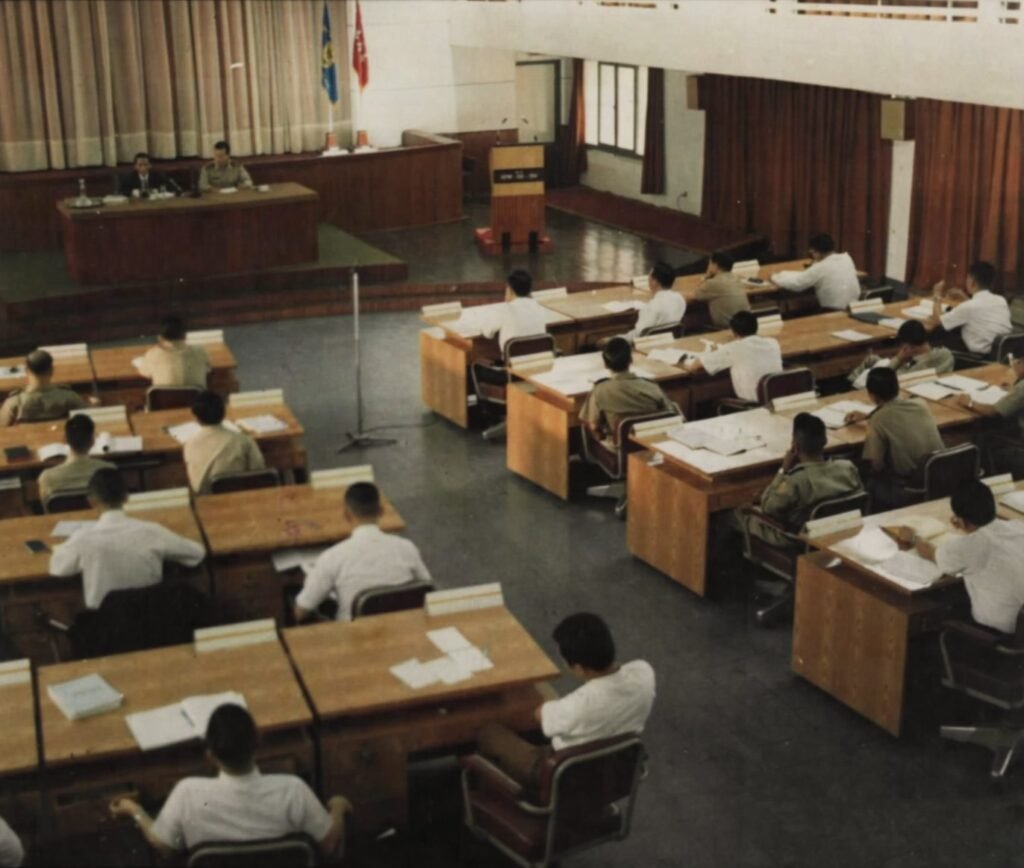
Overview
Military doctrine is the body of officially approved principles that guides how an armed force organizes, trains, and employs itself in operations. It functions as a shared professional vocabulary and framework, allowing commanders and units across a large organization to understand how they are expected to fight and cooperate even without detailed, case specific instructions.
Function and scope
Doctrine typically covers a wide range of subjects, including how different branches should cooperate in combined arms operations, how command relationships should be structured, and how forces should respond to common tactical situations. It is meant to be broadly applicable across many possible scenarios rather than tailored to one specific conflict, which distinguishes it from strategy or operational plans developed for a particular campaign.
Development and revision
Doctrine is not static. Military organizations regularly revise their doctrine based on lessons learned from past conflicts, changes in technology, and shifts in the strategic environment. Major wars have historically driven significant doctrinal change, as militaries absorb hard won lessons about what tactics and organizational structures proved effective or disastrous.
Doctrine across different militaries
Different countries and military traditions often develop distinct doctrinal approaches reflecting their history, geography, and strategic priorities. Some emphasize rapid offensive maneuver, others prioritize layered defense, and still others focus heavily on technological superiority or asymmetric and irregular capabilities, reflecting the particular challenges each military anticipates facing.
Doctrine and institutional learning
Military organizations use formal processes to capture lessons from training exercises and real conflicts and incorporate them into revised doctrine. After action reviews, historical analysis, and dedicated doctrine development commands are common institutional mechanisms through which armed forces attempt to systematically learn from experience rather than relying on individual commanders to draw their own, potentially inconsistent, lessons.
Doctrine and interoperability
Shared doctrine becomes especially important in multinational military alliances, where forces from different countries must be able to operate together effectively. Organizations such as NATO develop common doctrinal standards specifically to ensure that member states forces can communicate, coordinate, and fight alongside one another despite differences in language, equipment, and national military traditions.
Risks of outdated doctrine
Doctrine that fails to keep pace with changes in technology or the strategic environment can leave militaries poorly prepared for the conflicts they actually face. Historical examples abound of armed forces entering a new conflict still organized and trained according to doctrine suited to a previous war, a pattern sometimes summarized by the observation that militaries are frequently better prepared to refight their last war than to anticipate their next one.
Service specific doctrine
Within a single military establishment, different branches often maintain their own specialized doctrine suited to their particular domain, covering subjects such as land maneuver, naval operations, air power employment, and increasingly space and cyber operations. These service specific doctrines must still align with broader joint doctrine governing how the different branches cooperate, creating a layered doctrinal structure that ranges from highly specific tactical guidance to broad strategic principles.
Civilian influence on doctrine
While doctrine is typically developed within military institutions, it is also shaped by civilian political leadership, defense budgets, and broader national strategic priorities. A government that prioritizes rapid expeditionary capability over static territorial defense, for example, will tend to produce different doctrinal emphases than one primarily concerned with defending its own borders against a large conventional neighbor.
Publication and accessibility
Unclassified doctrine is typically published in formal manuals available to military personnel and often to the public, allowing allied forces, scholars, and even potential adversaries to study how a given military intends to operate, while more sensitive operational details and specific capabilities are usually kept classified even when the broad doctrinal framework is openly published.
Doctrine testing through exercises
Before new or revised doctrine is fully adopted, militaries typically test it extensively through large scale training exercises designed to simulate realistic combat conditions. These exercises frequently reveal gaps between doctrine as written and doctrine as it can actually be executed by real units with real equipment, prompting further revision before concepts are finalized and distributed throughout a military organization.
Ongoing relevance
As warfare continues to incorporate new domains such as cyber and space alongside traditional land, sea, and air operations, the process of developing, testing, and revising doctrine remains an ongoing and essential task for any military organization seeking to remain effective against evolving threats.
Doctrine and procurement
Doctrine and equipment procurement decisions are closely linked, since the way a military intends to fight shapes what kinds of weapons and systems it chooses to develop or purchase, while conversely, the equipment a military already possesses can constrain or shape the doctrine that planners find practical to adopt in the near term.
Closing note
These processes of development, testing, and revision are expected to remain a constant feature of professional military institutions going forward.
Final observation
Officers throughout a military career are expected to remain familiar with evolving doctrine, since the principles they were trained under early in their service may be substantially revised by the time they reach senior command positions many years later.
This ongoing process of revision is considered essential to maintaining a capable and adaptable fighting force.
Closing thought
Officers and institutions that treat doctrine as a living, evolving body of knowledge rather than a fixed set of rules tend to adapt more successfully to the unpredictable conditions of actual conflict.
It continues to be revised, tested, and taught across virtually every modern armed force.
This continues to inform how military academies structure their curricula for future officers.
Few expect that process to end anytime soon.
Key facts
- Array
Quick checkHow does military doctrine differ from a specific military strategy?Show answer
Doctrine describes the fundamental principles an armed force uses to guide how it generally organizes and conducts operations, while strategy applies those principles to the specific objectives and circumstances of a particular conflict.
Sources
- Array
Editorially reviewed by Specialty Digest Editorial TeamLast reviewed November 4, 2026Researched and drafted with AI assistanceReport an issue