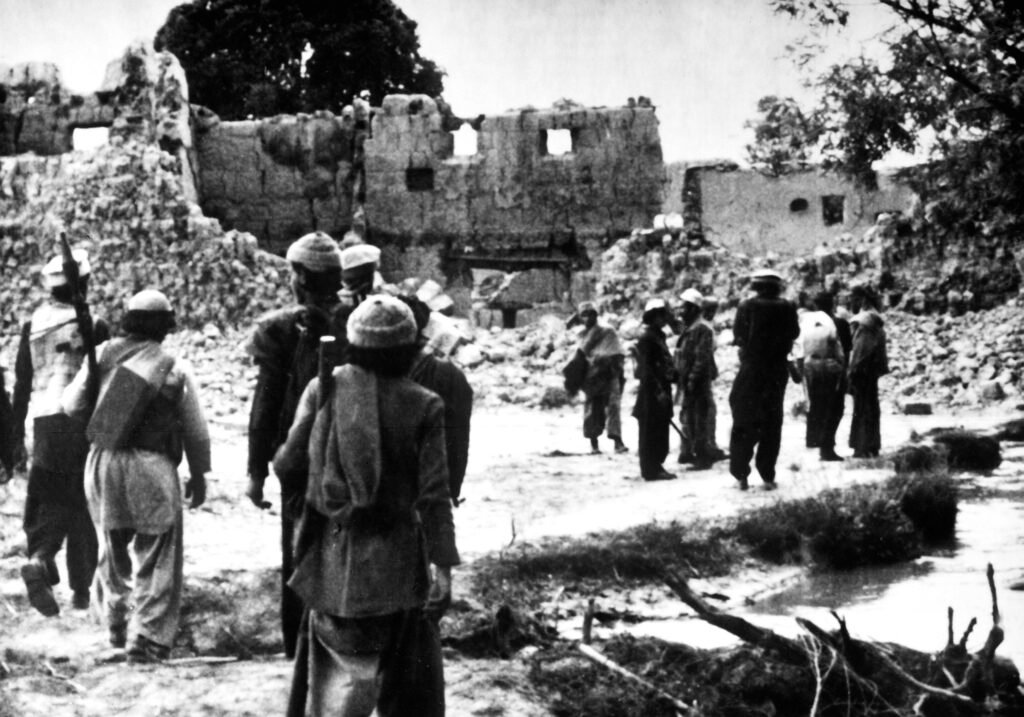
Overview
Asymmetric warfare describes conflict between parties with substantially unequal military resources, technology, or organizational strength. Rather than meeting a stronger opponent in open conventional battle, the weaker side adopts tactics designed to avoid its disadvantages while exploiting the stronger sides vulnerabilities.
Common tactics
Typical asymmetric approaches include guerrilla warfare, in which small, mobile units strike and withdraw rather than holding fixed positions; sabotage of infrastructure and supply lines; and the use of terrain, population, or civilian infrastructure to shield fighters from superior firepower. Terrorism is sometimes classified as an extreme form of asymmetric tactic, aimed at inflicting psychological and political effects disproportionate to the material damage caused.
Historical examples
Asymmetric strategies have appeared throughout history, from colonial era resistance movements to twentieth century anti colonial and revolutionary wars. The Vietnam War is frequently cited as an example in which a materially weaker force used protracted guerrilla tactics, political mobilization, and knowledge of local terrain to offset the conventional military superiority of a far stronger opponent.
Challenges for stronger militaries
Conventional militaries often struggle to adapt to asymmetric threats, since the doctrines, equipment, and training optimized for large scale conventional battles do not translate easily to counterinsurgency or counterterrorism environments. This has driven significant doctrinal change in many modern armed forces, emphasizing population centered strategies, intelligence gathering, and precision rather than mass firepower.
Technology and asymmetry
Advances in cheap, widely available technology have expanded the tools available to weaker actors engaged in asymmetric conflict. Improvised explosive devices, commercially available drones, and encrypted communications have allowed insurgent and non state groups to impose significant costs on far better funded conventional militaries, blurring older assumptions that technological superiority would automatically translate into battlefield dominance.
Psychological and political dimensions
Asymmetric warfare often targets the political will of a stronger opponent as much as its military capability. Prolonged, low intensity conflicts can erode public and political support for continued engagement, particularly for democratic states where sustained casualties and open ended commitments may become increasingly difficult to justify to domestic audiences over time, independent of the actual military balance on the ground.
State and non state actors
While asymmetric warfare is often associated with non state insurgent or terrorist groups, weaker states have also adopted asymmetric approaches when facing far stronger conventional adversaries, emphasizing mobile defense, dispersed forces, and attrition rather than attempting to match a stronger opponent directly in open battle. This has become increasingly relevant as the gap in conventional military capability between major powers and smaller states has widened.
Legal and ethical complications
Asymmetric warfare raises distinct legal and ethical questions, particularly regarding the status of fighters who do not wear uniforms or openly carry arms in the manner traditionally required to qualify for combatant protections under international law. Debates continue over how laws of armed conflict developed primarily with conventional interstate war in mind should apply to irregular fighters, civilians who provide support to insurgents, and conventional forces operating against adversaries who deliberately blend into civilian populations.
Countermeasures
Conventional militaries facing asymmetric threats have developed a range of countermeasures, including improved intelligence gathering focused on human networks rather than traditional order of battle analysis, specialized equipment designed to detect improvised explosive devices, and doctrine that places greater emphasis on protecting and engaging with local civilian populations rather than relying primarily on firepower and mass.
Information warfare dimension
Modern asymmetric conflicts increasingly extend into the information domain, where weaker actors use social media and online platforms to shape global perceptions of a conflict, sometimes achieving strategic effects through propaganda and narrative control that would be difficult to achieve through armed action alone against a materially far stronger opponent.
Economic dimensions
Asymmetric conflicts often carry an economic logic distinct from conventional warfare, since prolonged irregular conflicts can impose disproportionate financial costs on a materially stronger power even when that power suffers comparatively few casualties, as sustaining large deployed forces, intelligence operations, and security assistance over many years consumes resources far beyond what the weaker side spends to sustain its own, much smaller scale operations.
Continuing significance
As the gap in conventional capability between major military powers and smaller states or non state actors continues to widen in some respects while narrowing in others due to cheap technology, asymmetric approaches to warfare are likely to remain a persistent and significant feature of armed conflict for the foreseeable future.
Urban environments
Urban terrain has become an increasingly common setting for asymmetric conflict, since dense city environments offer irregular forces abundant cover, complicate the use of heavy weapons and airstrikes without causing extensive civilian harm, and allow fighters to blend into the surrounding population far more easily than would be possible in open rural terrain.
Closing note
These dynamics are expected to remain central to how conflicts between unevenly matched adversaries unfold for the foreseeable future.
Final observation
Military planners around the world continue to study past asymmetric conflicts closely, seeking lessons that might apply to future confrontations between unevenly matched adversaries in an increasingly unpredictable global security environment shaped by rapid technological diffusion and shifting alliances.
The pattern has repeated across many different regions and historical periods with notable consistency.
Closing thought
These recurring dynamics continue to shape how militaries prepare for the uncertain conflicts of the future, reinforcing the importance of adaptability over rigid adherence to any single doctrinal approach.
It continues to be studied closely by military planners around the world seeking durable lessons for the future.
This continues to inform how military academies structure their curricula for future officers.
Key facts
- Array
In the news
Quick checkWhy do weaker forces often turn to asymmetric tactics rather than conventional battle?Show answer
A materially weaker force cannot usually win a direct conventional confrontation, so it instead uses tactics such as ambush, sabotage, and hit and run attacks that avoid exposing itself to the stronger sides advantages in firepower and technology.
Sources
- Array
Editorially reviewed by Specialty Digest Editorial TeamLast reviewed November 4, 2026Researched and drafted with AI assistanceReport an issue