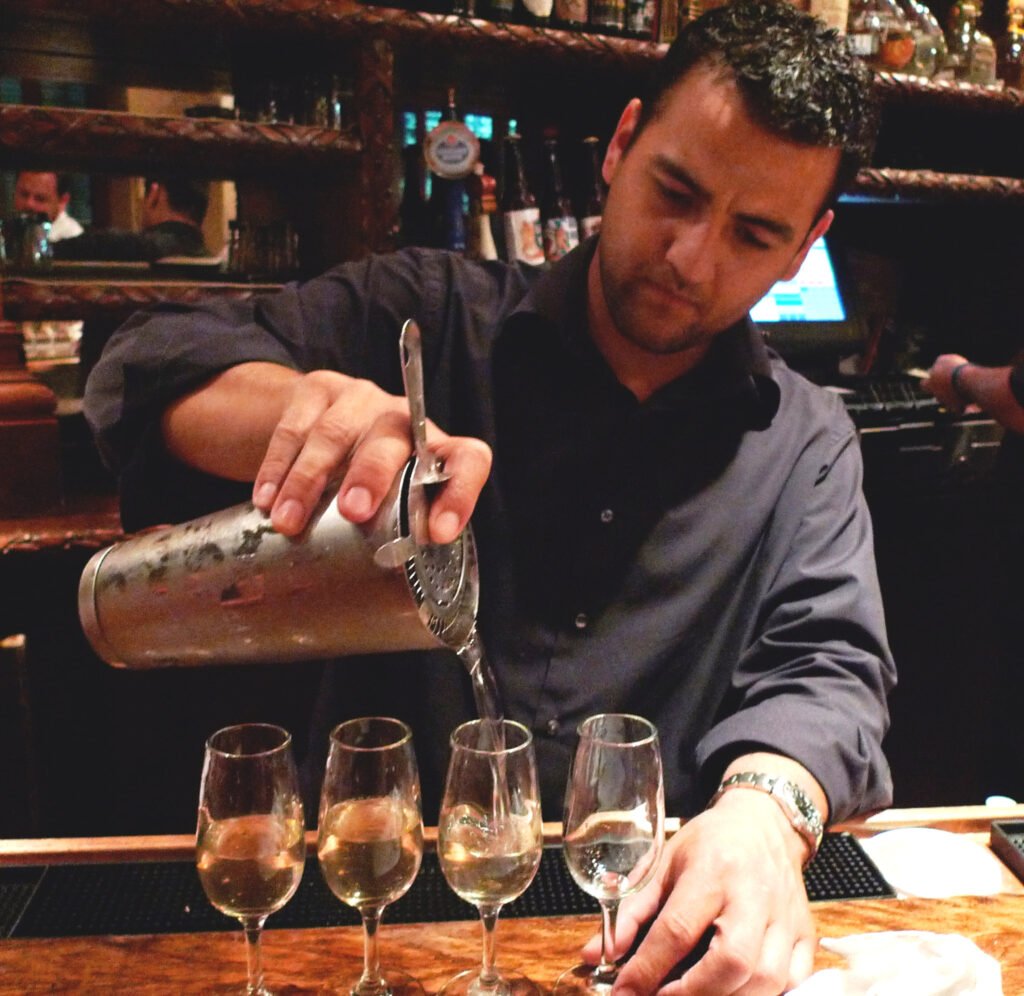
Mixology is the specialized craft of creating mixed drinks and cocktails, combining knowledge of spirits, flavor balancing, and technique with creative presentation. While bartending broadly covers all aspects of drink service, mixology specifically emphasizes the thoughtful construction and innovation behind a cocktail’s recipe and technique.
Core Techniques
Shaking combines ingredients, typically including ice, in a sealed shaker, both chilling and diluting the drink while incorporating air for texture, and is generally used for cocktails containing ingredients like citrus juice, egg white, or cream that need thorough integration. Stirring, used for cocktails made entirely of spirits without juice or dairy, such as a classic Martini, chills and dilutes the drink more gently, preserving a cleaner, silkier texture than shaking would produce. Muddling gently crushes ingredients like mint or fruit to release their essential oils and juices, a technique central to drinks like the mojito, while layering carefully pours ingredients of different densities to create a visually distinct striped effect in the glass.
Balance and Flavor Theory
Classic cocktail structure often balances a base spirit against sweet, sour, and sometimes bitter elements, a framework reflected in the simple but enduring sour template of spirit, citrus, and sweetener that underlies countless specific cocktail recipes. Modern mixologists frequently study flavor pairing principles borrowed from culinary science, applying techniques like infusion, house-made syrups, and even molecular gastronomy methods such as foams and spherification to push cocktail creativity beyond traditional recipes.
Professional Development and Competition
Professional mixologists often develop expertise through formal bartending programs, spirits brand ambassador training, and international cocktail competitions that showcase original recipes and technical skill before expert judging panels. The craft cocktail revival beginning in the early 2000s significantly elevated mixology’s public profile, reviving historical recipes and techniques from the pre-Prohibition era that had largely been forgotten during decades of simplified, high-volume bar service that followed.
Classic Cocktail Families
Most classic cocktails descend from a handful of structural templates: the sour, built from a spirit, citrus, and sweetener; the old fashioned, combining spirit, sugar, and bitters over ice; and the martini family, stirring spirit with vermouth and serving it straight up. Understanding these families lets bartenders improvise confidently, substituting ingredients while preserving the underlying balance that makes a given template work, rather than memorizing hundreds of recipes as isolated formulas disconnected from one another.
Tools of the Trade
A bartender’s core toolkit includes a shaker for combining and chilling ingredients with ice, a jigger for precise measurement, a bar spoon for stirring and layering, and strainers that separate ice and solids from the finished drink. Specialized tools such as muddlers for releasing oils from herbs and fruit, channel knives for citrus garnishes, and fine-mesh strainers for removing small ice shards reflect how technique and equipment work together to achieve consistent texture and presentation across repeated orders during a busy service.
Modern Mixology and Molecular Techniques
Contemporary mixology has borrowed techniques from molecular gastronomy, including clarification through fine filtration or milk washing, fat washing to infuse spirits with savory richness, and carbonation using pressurized equipment to create house-made sparkling cocktails. Some bars employ rotary evaporation or centrifuges borrowed from culinary and laboratory settings to extract flavors with precision unavailable through traditional steeping or shaking alone, pushing cocktail creation toward a more technical, research-driven discipline.
Cocktail Culture and Revival
The early twenty-first century saw a pronounced revival of pre-Prohibition cocktail culture, with bartenders researching historical recipe books and reviving forgotten liqueurs and techniques that had fallen out of commercial production. This craft cocktail movement elevated bartending from a service role toward a recognized culinary discipline, complete with its own competitions, publications, and apprenticeship traditions that mirror those found in professional kitchens.
Garnish and Presentation
Garnishes serve functions beyond decoration, often contributing aroma through citrus oils expressed over a glass or flavor through edible elements like brined cherries or herb sprigs. Presentation choices, including glassware selection and ice format, communicate a drink’s intended character before the first sip, with a rocks glass and large ice cube signaling a slow, contemplative sipping drink compared to a chilled coupe signaling a crisp, quickly consumed cocktail.
Low-Alcohol and Zero-Proof Mixology
As demand for moderation has grown, bartenders have adapted classic templates to low-alcohol and alcohol-free contexts, using acids, bitters, tannins, and savory elements to recreate the structural balance of a cocktail without relying on spirit for body and complexity. This has driven innovation in house-made shrubs, fermented sodas, and complex non-alcoholic bitters that give zero-proof drinks a sophistication once reserved for their alcoholic counterparts.
Competitions and Professional Recognition
Bartending competitions, judged on technical execution, originality, and presentation, have become a significant pathway for recognition within the industry, often sponsored by spirits brands seeking to showcase their products through skilled ambassadors. These events, alongside industry publications and awards, have helped formalize bartending as a career with defined expertise levels rather than a transient service job, mirroring the professionalization seen in cooking and winemaking.
Bar Management and Team Training
Beyond individual drink-making skill, senior bartenders and bar managers oversee inventory, batch-prep high-volume cocktail components, and train junior staff on consistent recipes and technique, ensuring a guest receives the same quality drink regardless of which bartender is working a given shift. This operational layer of mixology, often invisible to guests, determines whether a bar can maintain its standards during peak volume rather than only when a star bartender is personally behind the stick.
Taken together, these layers of craft, technique, and showmanship explain why mixology has grown from a service trade into a recognized discipline studied and celebrated in its own right.
Key facts
- Shaking is used for drinks with juice, egg, or cream; stirring for spirit-only drinks.nThe sour template, spirit, citrus, sweetener, underlies many classic cocktails.nModern mixologists borrow techniques from culinary science and molecular gastronomy.nThe craft cocktail revival of the early 2000s elevated mixology's public profile.
Quick checkWhen should a cocktail be shaken instead of stirred?Show answer
A cocktail should be shaken when it contains ingredients like citrus juice, egg white, or cream that need thorough integration; spirit-only drinks are stirred.
Sources
- United States Bartenders' Guild, Difford's Guide cocktail resources
Editorially reviewed by Specialty Digest Editorial TeamLast reviewed November 3, 2026Researched and drafted with AI assistanceReport an issue