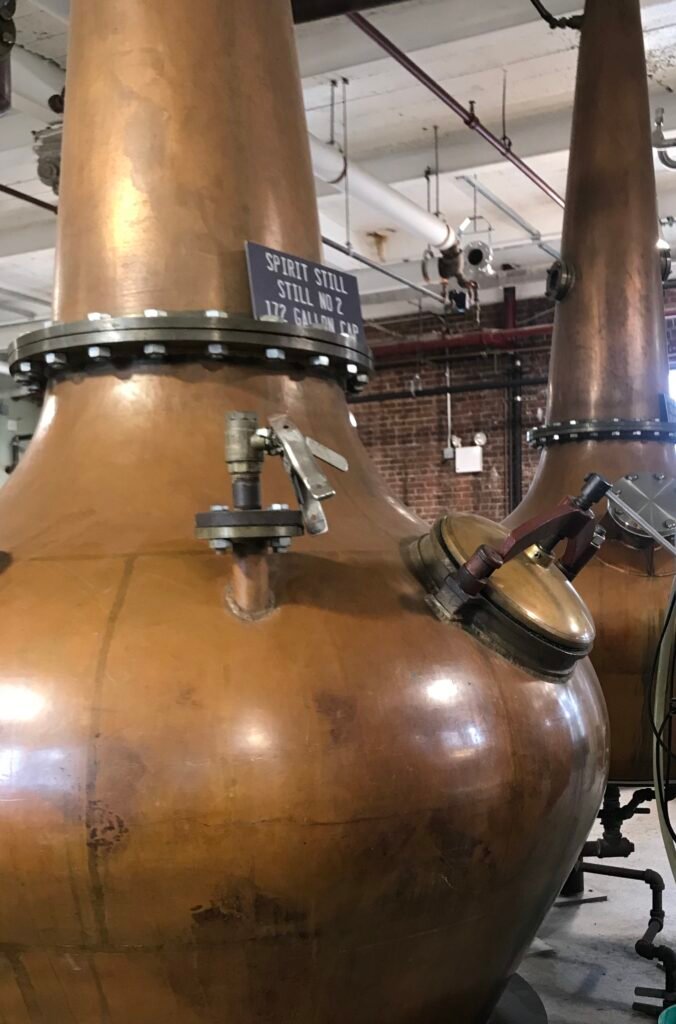
Distillation is the process of separating and concentrating alcohol from a fermented liquid by heating it to exploit the different boiling points of water and ethanol, producing spirits with substantially higher alcohol content than the original fermented base. Nearly all hard liquors, including whiskey, vodka, rum, gin, and brandy, begin as a fermented liquid before distillation concentrates and refines it.
The Basic Principle
Ethanol boils at a lower temperature than water, so heating a fermented liquid, called the wash or mash, causes alcohol vapor to evaporate preferentially before the liquid reaches a full boil, and that vapor is then captured and cooled back into liquid form, producing a more concentrated alcoholic product. Because the separation is never perfectly complete, a single distillation run yields a spirit of moderate strength, and master distillers typically run the process multiple times or use more sophisticated column stills to reach higher purity and strength.
Pot Stills Versus Column Stills
Pot stills, the older and simpler technology, distill in individual batches and tend to carry over more flavor compounds from the original fermented mash, producing spirits with pronounced, characterful flavor, favored for products like single malt Scotch whisky where flavor retention is prized. Column stills, a more modern continuous process, can achieve much higher purity and efficiency, commonly used for producing vodka and grain neutral spirits where a cleaner, less characterful final product is the specific goal.
The Cuts: Heads, Hearts, and Tails
During distillation, distillers separate the output into fractions called heads, hearts, and tails, with the heads containing volatile, often harsh or even toxic compounds like methanol that evaporate first, the hearts containing the desirable, cleaner ethanol collected as the final product, and the tails containing heavier, less desirable compounds that evaporate last. Skilled timing of these cuts is one of the most critical skills in distillation, since collecting too much of the heads or tails can introduce off-flavors or even safety concerns into the final spirit.
Historical Development
Distillation techniques trace back over a thousand years to alchemists in the Islamic world and medieval Europe who refined the process for medicinal and perfume purposes before it was widely adapted for beverage alcohol. The spread of distilled spirits followed trade routes and colonial expansion, with regional grains, fruits, and sugarcane giving rise to distinct spirit categories such as whisky, brandy, and rum rooted in locally available raw materials.
Aging and Barrel Influence
Many distilled spirits are aged in wooden barrels, most commonly oak, which imparts color, vanilla and caramel notes from compounds like vanillin and tannins, and softens harsh alcohol character through slow oxidation and evaporation. Charred barrels, required for American bourbon, contribute deeper caramelized sugars, while previously used barrels, such as former sherry or wine casks, impart secondary flavors prized in Scotch whisky finishing.
Regulation and Categories
Spirit categories are often legally defined by raw material, production method, and minimum aging requirements; bourbon, for instance, must be made from at least fifty-one percent corn and aged in new charred oak barrels within the United States. These regulations protect regional identity much as wine appellations do, while also establishing quality floors that distinguish traditional categories from unaged or lightly processed neutral spirits.
Craft Distilling and Flavored Spirits
A craft distilling movement parallel to craft brewing has produced small, independent distilleries experimenting with local grains, unusual botanicals, and traditional methods revived from historical recipes. These producers often emphasize transparency about sourcing and production, distinguishing themselves from large industrial distillers that blend from purchased bulk spirit. Flavored and infused spirits, including gin’s reliance on juniper and other botanicals redistilled or steeped into neutral spirit, demonstrate how distillation serves as a platform for flavor engineering beyond simple alcohol production. Liqueurs extend this further by combining distilled spirit with sugar and flavoring agents such as fruit, herbs, or cream, creating an entirely separate category of sweetened, lower-proof products used widely in cocktails and after-dinner service.
Safety and the Science of Proof
Distillation concentrates alcohol to levels that can be hazardous if mishandled, and distillers must separate the toxic methanol-rich early vapors, known as the heads, from the desirable ethanol-rich heart of the run, discarding or redistilling material that falls outside safe and flavorful ranges. Alcohol content is measured as proof, historically defined by whether a spirit would sustain a flame when soaked into gunpowder, though modern measurement relies on precise hydrometers and alcohol-by-volume labeling. Regulatory agencies in most countries require licensing, safety inspections, and tax stamps for commercial distillation, reflecting both the health risks of unregulated production and the long history of alcohol taxation as a government revenue source.
Cultural Identity Through Spirit Categories
Many nations treat their signature spirit as a point of cultural pride and economic protection, from Mexico’s tequila and mezcal to Japan’s shochu and whisky, each carrying geographic indication protections comparable to wine appellations. These protections preserve traditional production knowledge while giving producers legal recourse against imitation products made outside the recognized region.
Modern Analytical Methods
Contemporary distilleries increasingly rely on gas chromatography and other analytical instruments to track congener profiles throughout the production run, supplementing traditional sensory cuts made by experienced stillmen. This blend of old craft knowledge and modern laboratory precision allows distillers to maintain consistency across large production volumes while still preserving the sensory judgment that defines a house style passed down through generations of distillers.
As a result, the distillation process remains both an ancient craft and an actively evolving technical discipline, bridging centuries-old copper pot stills with precision instrumentation used in today’s largest production facilities.
Key facts
- Ethanol boils at a lower temperature than water, enabling separation.nPot stills retain more flavor; column stills achieve higher purity.nHeads, hearts, and tails are the three fractions separated during distillation.nMost hard liquors begin as a fermented liquid before distillation.
Quick checkWhat are the heads, hearts, and tails in distillation?Show answer
They are the three fractions separated during distillation, with heads containing harsh volatile compounds, hearts the desirable ethanol, and tails heavier compounds.
Sources
- Distilled Spirits Council, American Distilling Institute
Editorially reviewed by Specialty Digest Editorial TeamLast reviewed November 3, 2026Researched and drafted with AI assistanceReport an issue