Nairobi is the capital and largest city of Kenya, built on a highland plateau in the country’s south-central interior. Founded in 1899 as a railway depot, Nairobi grew within a few decades into the administrative center of British East Africa and, after Kenyan independence in 1963, the national capital, and it is now East Africa’s largest commercial and diplomatic hub.
Where Is Nairobi Located?
Nairobi sits at roughly 1,700 meters above sea level on Kenya’s southern highlands, which gives it a notably cooler climate than many other African cities near the equator. Nairobi National Park, a fenced wildlife reserve home to lions, giraffes, and rhinos, lies just south of the city center, placing large wild animals within sight of Nairobi’s downtown skyline.
A Brief History of Nairobi
Nairobi did not exist as a settlement before 1899, when British colonial engineers building the Uganda Railway chose the site as a railway depot, valuing its elevation, climate, and water supply over the hotter coastal route through Mombasa. The name is usually traced to a Maasai phrase describing the area’s cold water sources. The town grew quickly as a colonial administrative center and became the capital of the British East Africa Protectorate in 1907, replacing Mombasa.
Capital of Independent Kenya
Kenya gained independence from Britain in 1963, and Nairobi became the capital of the new nation under its first president, Jomo Kenyatta. The city subsequently became home to several major United Nations agencies, including the UN Environment Programme (UNEP) and UN-Habitat, making Nairobi one of only a handful of cities worldwide, and the only one in Africa, to host a major UN headquarters complex.
Nairobi Today: Economy and Growth
Nairobi anchors Kenya’s economy as its financial, commercial, and technology center, a role reflected in the city’s nickname as East Africa’s hub for banking and startups. Kenya’s broader economic picture, per the World Bank, shows “improved macroeconomic management” with inflation inside the Central Bank’s target range, even as “public debt is elevated at 70.6% of GDP,” leaving fiscal pressures that affect national investment in the capital’s infrastructure.[1]
What Is Nairobi Known For?
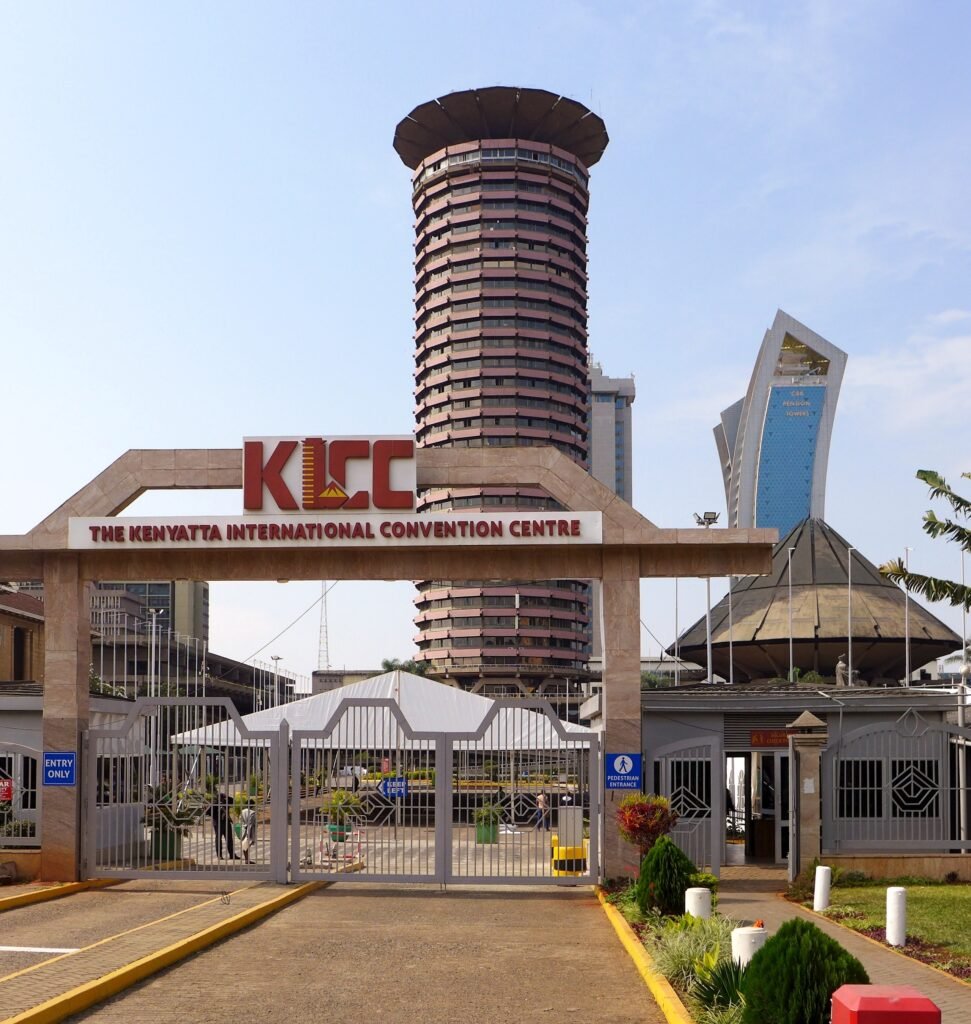
Nairobi’s best-known landmark is the Kenyatta International Convention Centre (KICC), a distinctive cylindrical tower with a rooftop helipad completed in 1973 in the city center; for decades it was one of East Africa’s tallest buildings and remains a recognizable symbol of the capital’s skyline, used for major conferences and as a public viewing platform over the city. Nairobi is equally known internationally for Nairobi National Park’s unusual juxtaposition of wild animals and a modern skyline, a combination found almost nowhere else in the world. The city’s nickname, “Green City in the Sun,” reflects both its park system and its highland climate.
Why Nairobi Matters
Nairobi matters as East Africa’s leading commercial, diplomatic, and technology center and as a rare case of a major capital with a functioning national park at its edge. Its role hosting UN Environment Programme and UN-Habitat headquarters also gives it an outsized role in global environmental and urban policy discussions relative to its size.
Key Takeaways
- Nairobi is Kenya’s capital and largest city, founded in 1899 as a railway depot on the Uganda Railway.
- It became the capital of British East Africa in 1907 and of independent Kenya in 1963.
- Nairobi hosts the headquarters of the UN Environment Programme and UN-Habitat, unique for Africa.
- The Kenyatta International Convention Centre, completed in 1973, is the city’s best-known landmark.
- Nairobi National Park, bordering the city, places wild lions and giraffes within sight of its skyline.
Sources
- World Bank | “Kenya Overview” | 2026 | worldbank.org/en/country/kenya/overview
Key facts
- Nairobi is Kenya's capital and largest city, founded in 1899 as a railway depot.1
- It became the British East Africa Protectorate's capital in 1907 and independent Kenya's capital in 1963.
- Nairobi hosts UN Environment Programme and UN-Habitat headquarters, unique for Africa.
- The Kenyatta International Convention Centre, completed 1973, is Nairobi's best-known landmark.
- Nairobi National Park borders the city, placing lions and giraffes within view of its skyline.
Quick checkWhy is Nairobi unusual among major world capitals?Show answer
It borders Nairobi National Park, so wild lions, giraffes and rhinos live within sight of the city's downtown skyline.
Sources
- World Bank. Kenya Overview. 2026 (accessed Accessed 2026-10-21)
Editorially reviewed by Specialty Digest Editorial TeamLast reviewed October 21, 2026Researched and drafted with AI assistanceReport an issue