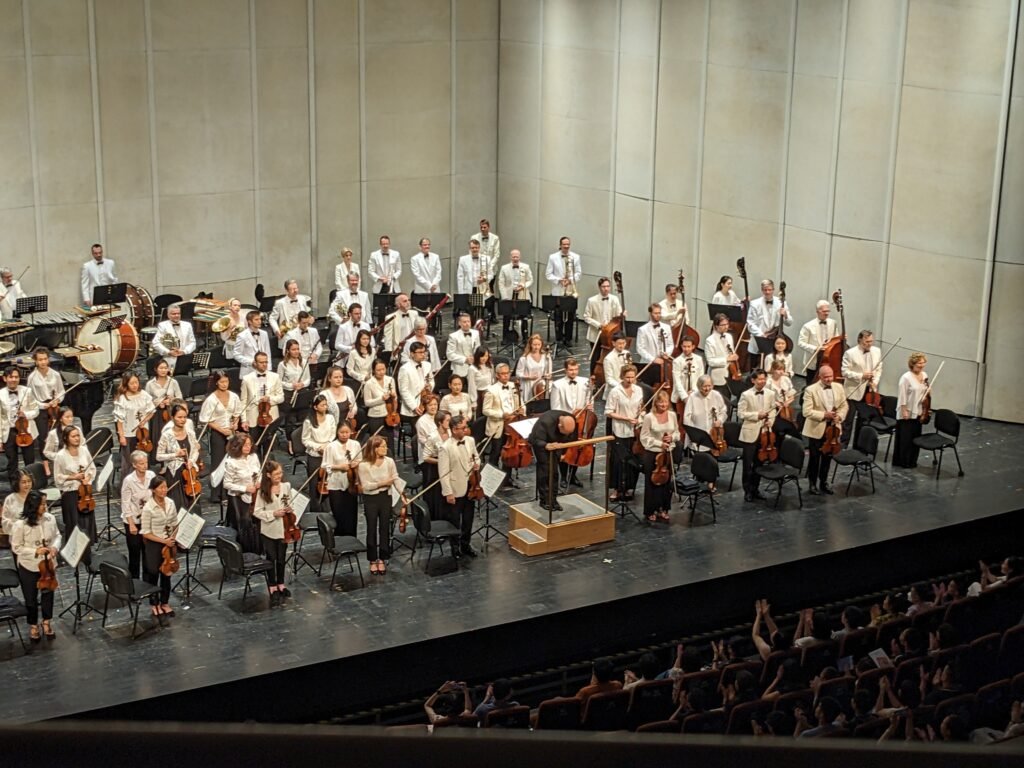
An orchestra is a large ensemble of musicians, typically combining string, woodwind, brass, and percussion sections, who perform complex compositions together, usually under the direction of a conductor. A full symphony orchestra can include close to one hundred musicians, making careful coordination essential to keeping such a large group playing precisely together.
Origins
Modern orchestras are generally considered to be roughly four hundred years old; before that, composers often did not specify exactly which instruments should perform a given piece of music, leaving instrumentation largely to local custom or whatever musicians happened to be available. Composer Claudio Monteverdi marked an important turning point in 1607 by precisely specifying the instruments required for his opera Orfeo, ensuring the work would sound consistent across different performances rather than varying with whatever musicians a particular theater had on hand.
The rise of the conductor
Over the following two centuries, instrumental groups called consorts grew larger, and string instruments became increasingly central to ensemble music. As these groups expanded, a dedicated leader became necessary to keep everyone together: originally the first violinist, known as the concertmaster, kept time for the group, before visible batons and raised podiums improved coordination for larger ensembles, leading to the fully independent conductor role that had become standard by the twentieth century.
Sections and instrumentation
The string section, usually an orchestra’s largest, includes violins, violas, cellos, and double basses, producing sound through bowing, plucking, or strumming across a wide pitch range. The brass section, including trumpets, trombones, French horns, and tubas, produces sound as players buzz their lips into a mouthpiece while valves adjust the length of tubing to change pitch, while the woodwind section, including flutes, clarinets, and bassoons, is powered mainly by breath through a vibrating reed, with flutes and piccolos grouped here for historical reasons even though they use no reed. The percussion section, including drums, cymbals, and mallet instruments such as xylophones, produces sound through striking and primarily establishes rhythm and dramatic emphasis.
Orchestra sizes
Ensemble size varies considerably by type and repertoire: a chamber orchestra typically numbers around fifty musicians, a sinfonietta around seventy-five, and a full symphony or philharmonic orchestra can reach close to one hundred, with the basic instrumental makeup of the modern symphony orchestra having largely stabilized by the nineteenth century and remained fairly consistent ever since.
The orchestra today
Beyond performing the traditional classical and Romantic symphonic repertoire in concert halls, orchestras today also regularly record film scores, collaborate with popular musicians, and perform in outdoor and broadcast settings, extending the ensemble’s reach well beyond the formal concert tradition that shaped its basic instrumentation centuries ago.
Chamber music versus orchestral music
Orchestral music is generally distinguished from chamber music, which involves a much smaller group of musicians, often just two to around eight players, performing without a conductor and relying on close mutual listening rather than centralized direction. While a string quartet or piano trio can rehearse and adjust its interpretation through direct discussion among equal players, an orchestra’s much larger scale makes a conductor’s unifying interpretive and coordinating role essential to keeping dozens or close to a hundred musicians playing together with a single coherent musical vision.
Famous orchestras
Certain orchestras have achieved particularly strong international reputations over long histories, including the Vienna Philharmonic and Berlin Philharmonic in Europe and the Chicago Symphony Orchestra and New York Philharmonic in the United States, each cultivating a distinctive collective sound shaped by its musicians, concert hall acoustics, and conducting history across generations. Many of these ensembles tour internationally and record extensively, extending their influence and reputation well beyond the cities where they are based.
Joining an orchestra
Professional orchestral musicians typically win their positions through a competitive formal audition process, performing prepared repertoire and orchestral excerpts behind a screen that conceals the player’s identity from the judging panel, a practice intended to keep hiring decisions focused strictly on musical quality. Many musicians train for years at conservatories specifically to prepare for these auditions, reflecting how demanding and specialized professional orchestral performance has become.
Orchestral seating
A standard seating arrangement places string sections across the front of the stage closest to the audience and conductor, with woodwinds behind them, brass further back, and percussion typically at the rear, an arrangement designed to balance each section’s natural volume and let the conductor coordinate the ensemble’s overall sound as efficiently as possible.
The score and the conductor’s interpretation
Although a printed musical score specifies notes, rhythms, and dynamics, a conductor still makes countless interpretive decisions about tempo, balance, and phrasing that shape how an orchestra ultimately sounds, meaning the same written symphony can sound noticeably different depending on which conductor leads a given performance.
Youth and community orchestras
Beyond professional ensembles, youth orchestras and community orchestras give students and amateur musicians valuable experience playing large-ensemble repertoire, often serving as an important training ground before a young musician auditions for conservatory study or a professional career.
FAQs
What is the difference between an orchestra and a symphony? An orchestra is the ensemble of musicians itself, while a symphony is a specific type of multi-movement musical composition that an orchestra performs, alongside many other kinds of works such as concertos and overtures.
Why was Monteverdi’s 1607 opera Orfeo significant for the orchestra’s development? Monteverdi specified exactly which instruments should perform the work, a departure from the earlier common practice of leaving instrumentation unspecified, helping establish the idea of a deliberately chosen, consistent instrumental ensemble.
Key facts
- Modern orchestras are roughly 400 years old
- Monteverdi's 1607 opera Orfeo specified exact instrumentation, a key early milestone
- A full symphony orchestra can include close to 100 musicians
- The conductor role became fully standard only by the 20th century
Related concepts
Quick checkWhat four main sections make up a modern orchestra?Show answer
Strings, woodwinds, brass, and percussion.
Sources
- EBSCO Research Starters, Orchestra
- The Violin Channel, Sections of the Orchestra
- LiveAbout, History and Definition of the Musical Term Orchestra
Editorially reviewed by Specialty Digest Editorial TeamLast reviewed November 1, 2026Researched and drafted with AI assistanceReport an issue