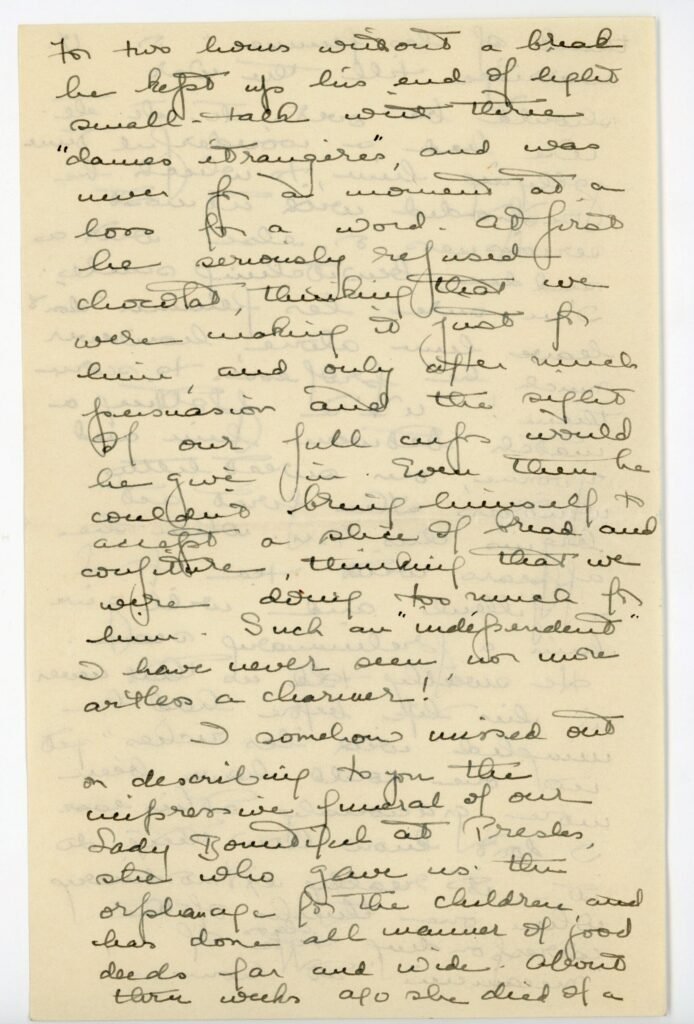
In simple terms
A primary source is firsthand evidence created at the time of an event, or recalled later by someone who was there. A letter, a birth register, a photograph, a court transcript and an oral history interview are all primary sources. Nothing stands between the event and the record, which is why researchers treat such material as the raw evidence a claim about the past has to rest on.
Its counterpart is the secondary source, a work that discusses an event using accounts gathered by other people. A biography of a general is a secondary source. The general’s own diary is a primary one.
How it works
Whether something counts as primary depends on the question being asked, not on the format of the document. Scholars state this plainly: the same item can be a primary source in one investigation and a secondary source in another, so no category of record is automatically included or excluded. [2] A school textbook from 1975 is a secondary source on the Second World War and a primary source on how the war was taught.
Archivists define a primary source as material that contains firsthand accounts of events and was created at the same time as those events, or later recalled by an eyewitness. [1] Newspaper articles published alongside an event are traditionally treated as primary, even though the reporter may have assembled the story from witnesses rather than seeing it. [1] Objects and specimens qualify too, when the object itself is what is being studied.
Why it matters
Primary sources are what make a claim about the past checkable. A reader can follow the reference to the same ledger or recording and judge it independently, which is the difference between history and assertion. They also force honesty about bias: a primary source speaks from one position and is not neutral, so one can contradict another. [2] Weighing those contradictions, rather than quoting the most convenient witness, is most of the work.
Where you’ll see it
- School and university assignments that require a set number of primary sources
- Archive and library catalogs, which separate original records from published commentary
- Court, land and civil registers used in legal research and genealogy
- Journalism and fact-checking, where a document or recording outranks a summary of it
Example
To study a factory strike, a researcher reads the union’s meeting minutes and the workers’ petitions as primary sources, then compares them with a history of the dispute written decades later.
Often confused with
A secondary source describes an event using evidence collected by others. The line between the two is often indistinct, because a single document can be a primary source on some matters and a secondary source on others. [2]
Key facts
- Archivists define a primary source as material containing firsthand accounts created at the time of the events, or later recalled by an eyewitness.1
- The same document can be a primary source in one investigation and a secondary source in another, so no category of record is automatically primary.2
- Newspaper articles contemporaneous with an event are traditionally counted as primary sources, even when the reporter was not an eyewitness.1
- Primary sources often carry a point of view, so they are not always neutral and one can contradict another.2
Quick checkWhat decides whether a document is a primary source?Show answer
The question being investigated, not the format of the document.
Sources
- New York University Libraries. Primary Sources: Definitions (research guide). Undated (accessed Accessed 7 October 2026)
- University of North Texas Libraries. Scholars' Definitions of Primary Sources. Undated (accessed Accessed 7 October 2026)
Editorially reviewed by Specialty Digest Editorial TeamLast reviewed October 7, 2026Researched and drafted with AI assistanceReport an issue