Fare Structure Choices
Transit agencies choose among several basic fare structure models, including flat fares that charge the same amount regardless of trip length, distance-based or zone-based fares that charge more for longer trips, and time-based passes that let riders travel unlimited within a defined period for a fixed price. Each model carries trade-offs: flat fares are simple to understand and collect but can be viewed as inequitable since short-distance riders subsidize long-distance ones, while distance-based fares better match price to the cost of providing service but require more complex fare collection technology to calculate and charge correctly.
Technology Evolution in Fare Collection
Fare collection technology has evolved from cash and paper tickets through magnetic stripe cards to contactless smart cards and, increasingly, open-loop systems that let riders pay directly with a contactless bank card or smartphone rather than a transit-specific card. This evolution has reduced the operating cost and fraud associated with cash handling while enabling more sophisticated fare policies, such as automatic transfers between modes within a time window and fare capping, in which a rider’s charges automatically stop accumulating once they reach the cost of a daily or weekly pass, giving occasional pass-level benefits without requiring the rider to purchase a pass upfront.
Fare Revenue and Subsidy Balance
In most transit systems worldwide, fare revenue covers only a fraction, often well under half, of total operating costs, with the remainder funded through government subsidy, making fare policy as much a question of equity and ridership goals as of revenue generation. Some transit agencies have experimented with fare-free service on selected routes or systemwide, finding that eliminating fares can meaningfully increase ridership and speed up boarding, though the lost fare revenue must then be replaced through other funding sources for the policy to be sustainable long term.
Integrated Regional Fare Systems
Metropolitan areas served by multiple separate transit agencies, each historically operating its own fare system, have increasingly moved toward integrated regional fare cards or apps that let a single payment method work seamlessly across buses, trains, and ferries operated by different agencies, removing a major friction point for riders making multi-agency trips. Building these integrated systems requires significant technical coordination and often political negotiation over how fare revenue collected through the shared system should be divided among the participating agencies.
Discount fare programs for seniors, students, and low-income riders add further complexity to fare system design, requiring verification mechanisms that balance ease of enrollment against the risk of fraud, with some agencies now using income-based digital verification integrated directly into their smart card or app platforms.
Account-Based Ticketing Trends
Many transit agencies have transitioned from card-based systems, where fare rules and balance are stored on the physical card itself, to account-based ticketing, where the card or phone merely identifies the rider while all fare calculation, balance, and transaction history are managed on a central server. This shift simplifies fare policy changes, since updating a rule on the central system applies instantly to every rider rather than requiring reprogramming of fare gates or card logic, and it also makes fare capping and multi-agency integration considerably easier to implement than under older card-based architectures.
Dynamic pricing experiments, varying fares by time of day or even real-time demand similar to ridehailing surge pricing, remain rare in public transit fare systems but have drawn growing research interest as a potential tool for spreading peak demand.
Fare Policy as a Ridership Lever
Beyond simply generating revenue, fare policy functions as one of the most direct levers transit agencies have for shaping ridership behavior, with research consistently showing that fare increases reduce ridership somewhat while fare reductions or free-fare periods increase it, though the size of this effect varies by rider income, trip purpose, and the availability of alternative transportation. This has made fare policy decisions a recurring point of political negotiation between the goal of maximizing ridership and transit’s broader social benefits versus the practical need to fund operations, particularly during periods of budget strain when agencies must weigh service cuts against fare increases as alternative ways to close funding gaps.
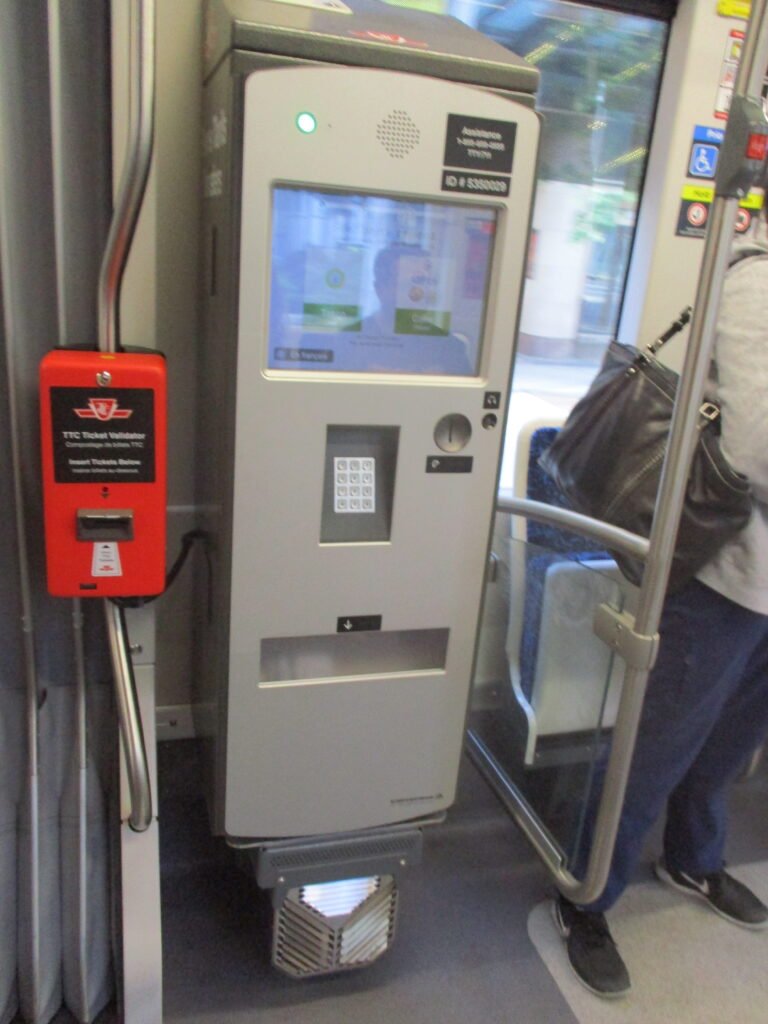
Fare gate and validator maintenance represents an often underappreciated ongoing cost of fare systems, since malfunctioning equipment can both lose legitimate revenue and frustrate riders attempting to pay correctly.
Cash Handling Decline and Equity Concerns
As transit agencies increasingly favor cashless or largely cashless fare systems to reduce the cost and security risk of handling physical currency, advocates for unbanked and underbanked riders have raised concerns that eliminating cash options entirely can exclude riders without bank accounts or smartphones from using transit at all, prompting many agencies to preserve at least limited cash reload options at retail locations or vending machines even as they shift most transactions toward digital payment.
Interagency data sharing agreements underpin most successful regional fare integration efforts, requiring sustained technical cooperation well beyond the initial system rollout itself.
Multi-year fare system replacement projects require careful transition planning so that riders are never left without a valid way to pay during the changeover period between old and new technology.
Youth and Student Pass Programs
Many transit agencies partner directly with school districts and universities to offer discounted or fully subsidized student passes, recognizing that building transit habits early in young riders can translate into lasting ridership well beyond their school years.
Lost card replacement fees are generally kept low to avoid discouraging continued transit use after a card is misplaced.
Clear signage explaining fare rules helps reduce accidental non-payment at stations.
Key facts
- Array
Quick checkWhat is fare capping and why have transit agencies adopted it?Show answer
Fare capping automatically limits the total fare a rider pays within a day or week once they have taken enough trips, giving frequent riders the benefit of a pass without requiring upfront purchase.
Sources
- Array
Editorially reviewed by Specialty Digest Editorial TeamLast reviewed November 4, 2026Researched and drafted with AI assistanceReport an issue