Overview
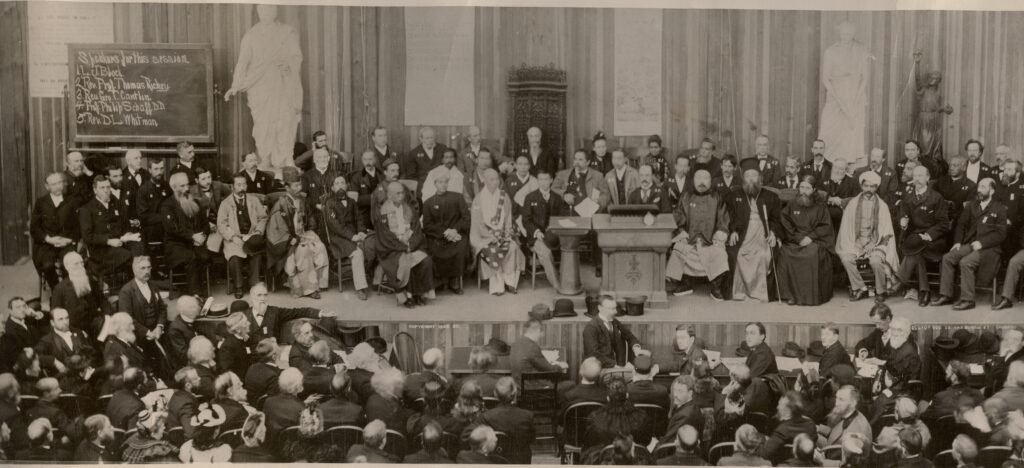
Religious pluralism refers both to the social fact that multiple religious traditions exist within a shared society and, in a stronger philosophical sense, to the position that several traditions can offer genuinely legitimate paths toward truth, salvation, or ultimate meaning. This second, normative sense distinguishes pluralism from the merely descriptive observation that religious diversity exists.
Philosophical Foundations
Philosopher John Hick developed one of the most influential pluralist frameworks, proposing that the great world religions represent different culturally conditioned responses to a single underlying ultimate reality that no single tradition can fully capture or exhaust. This hypothesis attempts to account for both the deep differences between traditions and their shared transformative effects on believers.
Comparison with Other Positions
Pluralism is typically contrasted with exclusivism, the view that only one tradition holds true or saving knowledge, and inclusivism, which holds that truth found in other traditions ultimately derives from or points toward the inclusivist own tradition. Each position carries distinct implications for how believers approach interreligious encounter and dialogue with those outside their own community.
Criticisms
Critics have challenged pluralist frameworks on multiple fronts, arguing that they can understate genuine and sometimes contradictory differences between traditions, or that they implicitly impose a foreign philosophical framework onto traditions that do not share pluralist assumptions about ultimate reality. Some theologians within specific traditions view pluralism as requiring an unacceptable dilution of core doctrinal claims.
Social and Political Dimensions
Beyond philosophy and theology, religious pluralism also describes a social and political arrangement in which a state or society extends legal recognition and protection to multiple religious communities without privileging one as officially correct. This practical dimension has become increasingly significant in religiously diverse modern societies navigating questions of law, education, and public life.
Role Today
Religious pluralism continues to shape academic theology, interfaith initiatives, and public policy debates over how religiously diverse societies can sustain mutual respect and civic cooperation amid genuine and sometimes deep disagreement about ultimate questions. It remains a central and contested concept within the philosophy of religion.
Scriptural and Doctrinal Tensions
Many traditions contain scriptural passages that appear to support exclusive truth claims, creating considerable tension for theologians within those traditions who wish to affirm a pluralist stance while remaining faithful to foundational texts. Pluralist theologians have developed varied strategies for reinterpreting such passages in ways consistent with a more open stance toward other traditions.
This tension has produced extensive internal debate within several major religious communities, with some theologians arguing that pluralism represents a necessary development suited to an interconnected modern world, and others insisting that it compromises commitments central to the tradition own self-understanding and historic identity.
Practical Implications
Beyond academic theology, pluralist commitments shape practical decisions in areas such as religious education curricula, interfaith marriage counseling, and public policy governing religious accommodation in diverse societies, making the debate relevant well beyond purely philosophical discussion among specialists.
Pluralism and Interfaith Practice
Pluralist commitments often underpin interfaith dialogue initiatives, since participants who hold a pluralist view may find it easier to engage openly with other traditions without feeling that doing so threatens or undermines their own faith commitments, though participants holding more exclusivist views can and often do still engage respectfully in dialogue.
This connection between pluralist theology and practical interfaith engagement has made pluralism an influential, though contested, framework within many organizations dedicated to promoting cooperation and mutual understanding among religiously diverse communities around the world.
Alternative Pluralist Models
Beyond Hick influential framework, other scholars have proposed alternative pluralist models, including approaches that emphasize ethical commonality across traditions rather than shared metaphysical reference to a single ultimate reality, offering a somewhat different route toward affirming the value of multiple traditions without requiring agreement on contested metaphysical questions.
Closing Note
Debate over pluralism shows no sign of settling, and the position continues to generate rich philosophical and theological reflection across traditions worldwide.
Pluralism Outside Christianity
While much academic discussion of pluralism has developed within a Christian theological context, comparable debates occur within other traditions as well, with scholars examining how concepts already present within Hindu, Buddhist, or Islamic thought might support or resist pluralist conclusions drawn from within those traditions own historical and textual resources.
Future Directions
As religious diversity continues to increase within many societies through migration and changing demographics, pluralist theology is likely to remain an active and evolving area of reflection, continuing to draw contributions from a widening range of traditions beyond its originally Christian theological starting point.
It remains one of the most actively contested and consequential questions within contemporary philosophy of religion and theology.
Closing Note
Its implications reach well beyond academic theology into how religiously diverse societies actually function day to day.
Pluralism and Education
Many religious education programs now incorporate pluralist awareness into their curricula, helping students understand the existence of multiple serious truth claims without necessarily requiring them to adopt a pluralist conclusion themselves, a pedagogical approach distinct from pluralism as a personal theological commitment.
This educational approach helps prepare students for engaged citizenship within religiously diverse societies.
It remains a rich area for continued reflection.
Closing Thought
Few questions in the philosophy of religion carry greater practical stakes for how diverse societies actually live together day to day.
Theologians, philosophers, and ordinary believers alike continue to wrestle with its demands and its promise in equal measure.
The conversation shows no sign of concluding anytime soon.
It remains one of the defining questions of the age.
Readers will keep returning to it.
It endures.
It shapes much still.
Key facts
- Array
Quick checkHow does religious pluralism differ from simple religious diversity?Show answer
Diversity describes the empirical fact that multiple religions exist side by side, while pluralism makes the further normative claim that multiple traditions can hold legitimate access to truth or salvation.
Sources
- Array
Editorially reviewed by Specialty Digest Editorial TeamLast reviewed November 4, 2026Researched and drafted with AI assistanceReport an issue