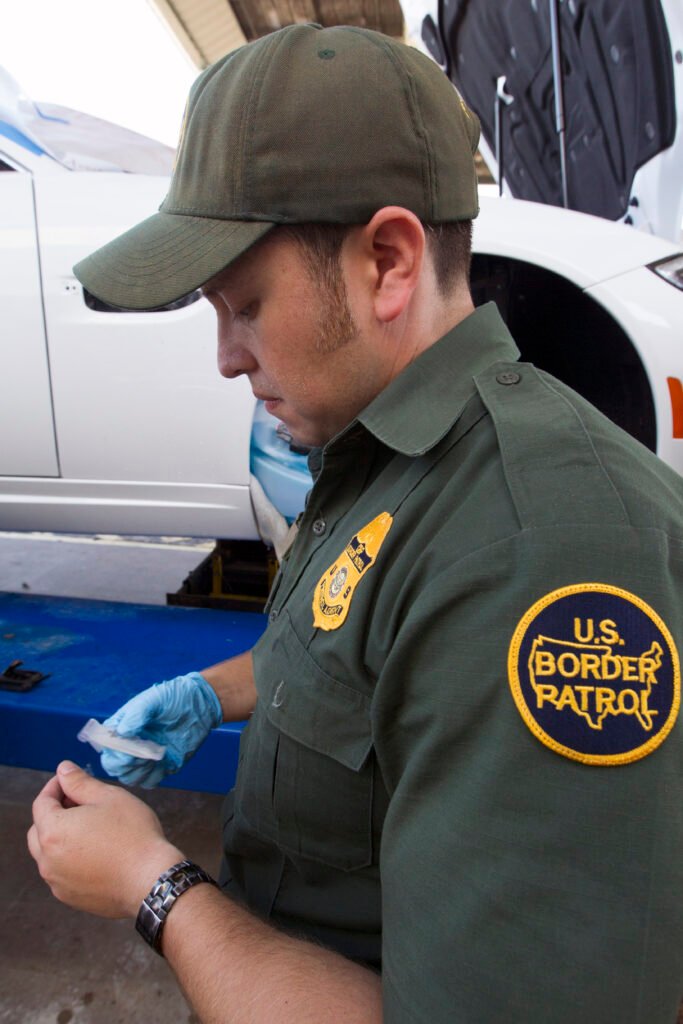
Overview
Search and seizure law governs the circumstances under which government officials, most commonly police, may examine a persons body, vehicle, home, or belongings and take possession of items found during that examination. In the United States, this area of law is rooted primarily in the Fourth Amendment to the Constitution, which protects against unreasonable searches and seizures.
Warrant requirement and exceptions
The general rule requires police to obtain a warrant, issued by a judge upon a showing of probable cause, before conducting a search. However, courts have recognized numerous exceptions to this requirement, including searches conducted with voluntary consent, searches incident to a lawful arrest, searches of items in plain view, and searches justified by emergency or exigent circumstances where obtaining a warrant beforehand is impractical.
Reasonable suspicion and brief stops
A lower legal standard, reasonable suspicion, permits police to briefly detain and pat down an individual for weapons when specific facts suggest criminal activity may be occurring, even without the probable cause required for a full search, a practice generally traced to a landmark Supreme Court decision establishing this limited exception.
Exclusionary rule
Evidence obtained through a search that violates these legal standards can generally be excluded from use at trial under what is known as the exclusionary rule, a remedy intended to deter police misconduct by removing the incentive to conduct illegal searches, though the rule itself remains subject to ongoing legal and political debate about its scope and effectiveness.
Vehicle searches
Courts have developed distinct rules for searches of vehicles, recognizing that the mobility of automobiles can create practical difficulties in obtaining a warrant before evidence could be moved or destroyed. Under what is sometimes called the automobile exception, police with probable cause may search a vehicle without first obtaining a warrant, reflecting a long standing judicial recognition that vehicles present different privacy and practical considerations than a persons home.
Digital privacy
The expansion of search and seizure law into digital contexts, including smartphones and cloud stored data, has raised novel legal questions, since courts have had to determine how traditional Fourth Amendment principles developed for physical searches should apply to the vast amounts of personal information stored on modern electronic devices, with some courts requiring a warrant even in situations where a warrant might not traditionally have been required for physical evidence.
Border searches
Search and seizure rules are generally relaxed at international borders, where courts have recognized a lower expectation of privacy and a strong governmental interest in controlling who and what enters the country, allowing border officials considerably broader search authority than would typically be permitted for searches conducted elsewhere within the country.
Administrative searches
A distinct category of administrative searches, such as airport security screening or regulatory inspections of certain licensed businesses, operates under relaxed standards compared to criminal investigations, reflecting a judicial judgment that these searches serve important regulatory or safety purposes distinct from the ordinary law enforcement context in which traditional Fourth Amendment protections are most fully applied.
Technology and surveillance
The proliferation of surveillance technologies, including facial recognition systems, automated license plate readers, and cell phone location tracking, has generated new legal questions about when the use of such technology constitutes a search requiring a warrant, with courts gradually developing new doctrine to address technologies that did not exist when the foundational search and seizure principles were originally established.
State variation
While federal constitutional law sets a baseline level of protection against unreasonable searches, individual states can and often do provide broader protections under their own state constitutions, resulting in meaningful variation across the country in exactly how search and seizure rules are applied in practice, even though the underlying federal constitutional framework remains uniform nationwide.
School searches
Courts have also developed distinct, somewhat relaxed standards for searches conducted by school officials of students on school property, reflecting a balance between studentsretained privacy interests and the practical need for schools to maintain safety and order, a context courts have treated differently from both ordinary police searches and fully unregulated private searches.
Consent searches in practice
Consent searches remain common in everyday policing, since officers frequently ask individuals for permission to search a vehicle or belongings during routine stops, though courts have scrutinized whether consent given during a tense police encounter is truly voluntary, leading to ongoing legal debate about how genuinely free such consent can be under inherently coercive circumstances.
Closing observation
As technology continues to generate new forms of personal data, search and seizure law will likely continue evolving to determine how long settled constitutional principles apply to information and devices that previous generations of judges could not have anticipated.
Balancing effective law enforcement against individual privacy will remain a central and unresolved tension in this area of law.
Final note
Legal scholars continue to debate how existing doctrine should adapt to emerging technologies, ensuring that long standing constitutional protections remain meaningful even as the practical nature of searches and the information they can reveal continues to change substantially.
This ongoing adaptation is expected to continue as new technologies emerge in the years ahead.
Courts will likely continue issuing incremental rulings rather than sweeping doctrinal overhauls as each new technology presents its own distinct questions.
It remains one of the most actively litigated areas of constitutional law today.
It is likely to remain so as new technologies keep raising fresh constitutional questions.
Few expect that to change anytime soon.
Few expect that to change anytime soon.
Its basic principles have outlasted many generations of changing technology and tactics.
Key facts
- Array
Quick checkWhat is the general legal requirement for police to conduct a search in the United States?Show answer
Police generally need a warrant supported by probable cause issued by a judge, though several recognized exceptions, such as consent, emergency circumstances, or a search incident to a lawful arrest, allow searches to proceed without a warrant in specific situations.
Sources
- Array
Editorially reviewed by Specialty Digest Editorial TeamLast reviewed November 4, 2026Researched and drafted with AI assistanceReport an issue