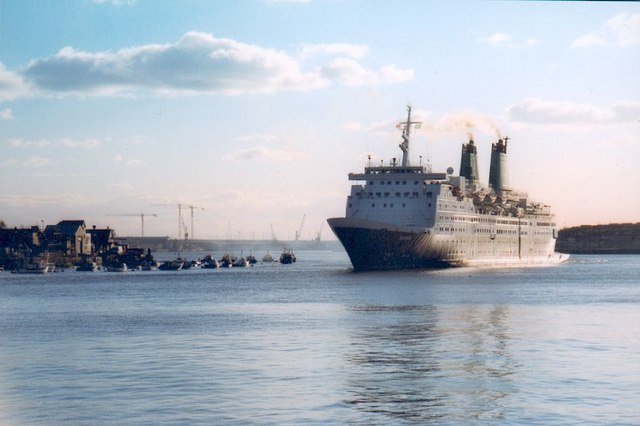
What Short Sea Shipping Covers
Short sea shipping refers to the movement of cargo and passengers by sea over relatively short distances, typically along a single coastline or between nearby countries, rather than the long transoceanic voyages associated with major international container shipping. It serves as an alternative to road or rail transport for regions with suitable coastal geography.
Benefits of Short Sea Shipping
Short sea shipping can relieve congestion on crowded road and rail corridors by shifting freight volume onto underutilized coastal waterways, while also offering lower emissions per ton of cargo moved compared with trucking, particularly for routes connecting coastal cities that would otherwise require long overland journeys around geographic obstacles.
Challenges Facing Short Sea Shipping
Despite its potential benefits, short sea shipping often struggles to compete with trucking on speed and door-to-door convenience, and requires sufficient port infrastructure and handling efficiency at both ends of a route to avoid delays that would offset its cost and environmental advantages over road transport.
Government Support for Short Sea Shipping
Many governments, particularly in regions with extensive coastlines, have introduced subsidies, infrastructure investment, or regulatory incentives aimed at growing short sea shipping volume, viewing it as a tool for reducing road congestion and transportation emissions without requiring the same scale of infrastructure investment that new rail or highway capacity would demand.
Short Sea Shipping Vessel Types
Short sea shipping often uses smaller, more maneuverable vessels suited to shorter routes and potentially shallower or more constrained ports than the massive vessels used in long-distance international trade, including roll-on roll-off ferries that can carry both freight trailers and passenger vehicles on the same crossing.
Short Sea Shipping in Europe
Short sea shipping has received particularly strong policy support in Europe, where extensive coastlines and congested road networks between neighboring countries make coastal shipping an attractive alternative for certain freight flows, supported by European Union initiatives aimed at shifting freight from road to more sustainable transportation modes.
Comparing Short Sea Shipping to Trucking
While short sea shipping typically takes longer than direct trucking for a given route, it can still prove competitive on total cost and reliability for freight that is not highly time-sensitive, particularly when road congestion or cross-border trucking regulations add significant delay and expense to the equivalent overland journey.
Economic Role in Regional Trade
Short sea shipping carries a disproportionate share of regional freight in parts of the world where coastlines, islands, and river systems create natural maritime corridors between nearby countries. In the European Union, short sea routes connecting the Mediterranean, Baltic, and North Sea states move a substantial share of intra-European freight tonnage, often competing directly with road haulage over medium distances. Policymakers have promoted these routes as “motorways of the sea” through subsidies and infrastructure investment, arguing that diverting freight from congested highways onto coastal vessels reduces road wear, accident rates, and fuel consumption per tonne-kilometer moved. Shipping lines operating short sea services typically use smaller, more maneuverable vessels than deep sea carriers, often fitted with roll-on/roll-off capability so that loaded trailers can drive directly on and off without separate container handling equipment at each port.
Competing with Road and Rail
Whether short sea shipping gains freight share from road transport depends heavily on total transit time, including the hours trucks spend waiting at port terminals for loading and customs clearance, not just the sailing time between ports. A short sea crossing that saves driving distance can still lose out to a direct road route if port handling adds enough delay, which is why many successful short sea corridors pair frequent sailings with streamlined customs processing and dedicated terminal lanes for ro-ro traffic. Where these conditions are met, shippers gain a lower-emission, often lower-cost alternative for medium-distance freight that would otherwise travel entirely by truck, making short sea shipping an important component of multimodal transport policy in coastal regions.
Role in Island and Peripheral Economies
Short sea shipping often provides the only cost-effective freight connection for islands and peripheral coastal regions that lack direct road or rail links to major markets, making these services an economic lifeline rather than simply one transport option among several. Governments in archipelagic nations and regions with numerous inhabited islands frequently subsidize short sea freight and passenger services explicitly to maintain economic viability and population retention in areas that private operators would otherwise find unprofitable to serve at affordable rates. The vessels used on these lifeline routes tend to be smaller and more specialized than those on high-volume commercial corridors, often combining passenger, vehicle, and general cargo capacity on a single hull to make limited traffic volumes economically viable.
Environmental Comparisons with Other Modes
Short sea shipping generally produces lower greenhouse gas emissions per tonne-kilometer than road haulage, though the comparison narrows when a ship burns heavy fuel oil without emissions controls, which is why regulators have paired short sea promotion policies with parallel rules limiting sulfur content in marine fuel within coastal emission control areas. Shipping lines operating short sea services within these designated zones have increasingly adopted scrubber technology or switched to lower-sulfur fuels to comply, adding operating cost but preserving the environmental case that originally justified policy support for coastal shipping over long-haul trucking.
Intermodal terminals linking short sea ports directly to rail and inland waterway networks further extend the reach of coastal shipping well beyond the immediate port city itself.
Port call frequency on short sea routes is typically much higher than on deep sea services, often daily or several times weekly.
Key facts
- Array
Quick checkWhy do governments often promote short sea shipping?Show answer
To shift freight off congested roads and reduce transportation emissions by using existing coastal and regional sea routes instead.
Sources
- Array
Editorially reviewed by Specialty Digest Editorial TeamLast reviewed November 4, 2026Researched and drafted with AI assistanceReport an issue