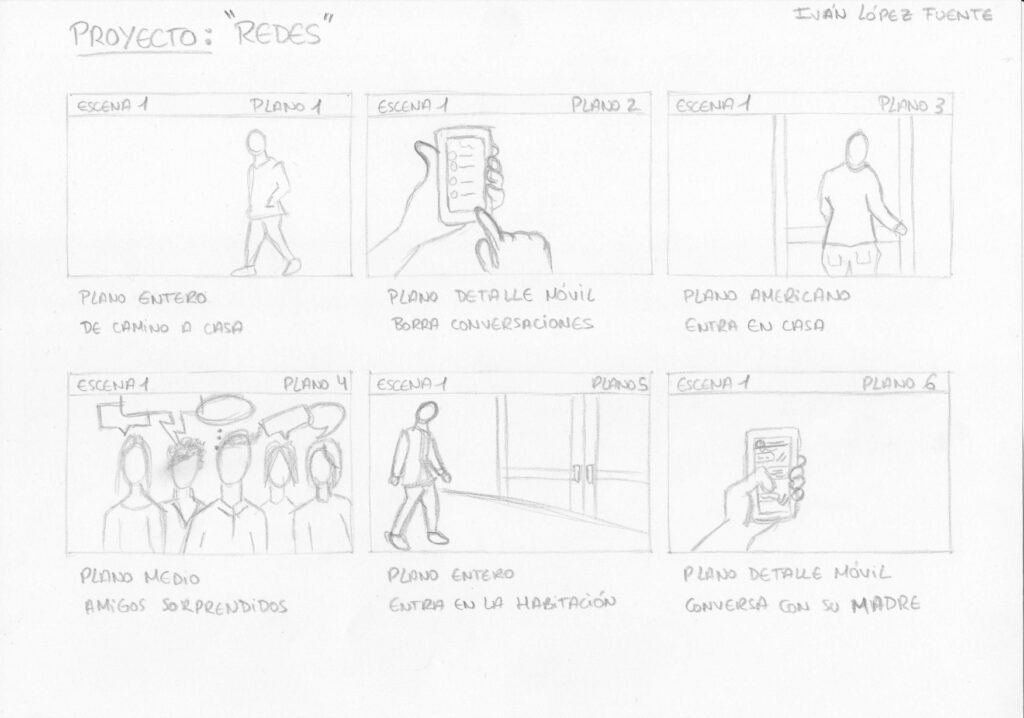
A storyboard is a sequence of sketches, arranged in order, that maps out a story’s key scenes and visual flow before a film, television show, or animated production is actually shot or animated. Filmmakers use storyboards to plan camera angles and shot composition, check whether a story reads clearly, and catch plot holes or continuity problems while changes are still cheap to make.
Origins at Disney
Historians do not fully agree on who first had the idea of pinning sequential story drawings to a board. The Walt Disney Studios themselves credited animator Webb Smith with the practice of drawing individual scenes on separate sheets of paper and pinning them to a bulletin board so the whole team could review a story’s flow at a glance, while animator Dick Huemer separately credited Ted Sears with inventing the approach while working at Fleischer Studios, which showed little interest before Sears brought the idea to Disney, where it was quickly embraced. The first complete storyboards in the modern sense were produced for Disney’s 1933 short film Three Little Pigs.
Spread across animation and live action
Storyboarding spread quickly through the American animation industry after its adoption at Disney, with Walter Lantz Productions taking up the practice in 1935, followed by Harman-Ising and Leon Schlesinger’s studio by 1936, so that by 1937 and 1938 virtually every American animation studio storyboarded its productions. Live-action filmmaking followed shortly after; Gone with the Wind, released in 1939, is often cited as one of the first fully storyboarded live-action films, and detailed storyboarding became a standard part of live-action production by the early 1940s.
What storyboards do
Beyond simply visualizing a story, storyboards let directors and cinematographers plan specific camera angles and shot compositions in advance, estimate production costs and schedules more accurately, and keep track of a complex shoot when scenes are filmed out of their final story order, a near-universal practice in live-action production. In animation and visual-effects work specifically, storyboards often evolve into animatics, which are timed sequences of the storyboard images combined with rough temporary audio, letting a team evaluate a scene’s pacing before committing to costly final animation.
Beyond film
Storyboarding has spread well beyond filmmaking into advertising, where agencies use similar presentation boards, photomatics, and rip-o-matics to pitch commercial concepts, as well as into comics scripting, theatre production planning, and software and web interface design, where designers sketch out a user’s step-by-step path through a digital product in essentially the same sequential, scene-by-scene way a film storyboard maps out a story.
Storyboard artists as a profession
Storyboarding grew into a specialized creative profession in its own right, distinct from both directing and final animation or cinematography, with dedicated storyboard artists trained to translate a script into clear, well-composed sequential images that communicate camera angle, character staging, and story beats at a glance. Major studios and visual-effects houses today employ storyboard departments that work closely with directors throughout pre-production, and the skill has become a recognized specialty taught in dedicated art and film school courses rather than something animators simply picked up informally on the job, as the earliest Disney artists largely did.
Digital tools and previsualization
Digital software has largely replaced hand-drawn paper storyboards in professional production, letting artists draw directly on tablets, quickly rearrange panels, and attach timing and sound more precisely than older pin-board methods allowed. Large action and visual-effects-heavy productions increasingly extend storyboarding into full previsualization, or previs, in which an entire sequence is built as rough three-dimensional computer animation before filming begins, letting directors and effects teams plan complex camera moves, stunts, and digital effects shots with far greater precision than static drawings alone could provide.
Storyboards and collaborative filmmaking
Because storyboards translate a script into a shared visual reference everyone on a production can review together, they function as a crucial communication tool between directors, cinematographers, production designers, and visual-effects supervisors, letting a large creative team align on a shared vision for a scene well before the far more expensive stages of filming or final animation begin.
Storyboards in television and streaming production
Television production, including both animated series and increasingly complex live-action shows, relies on storyboarding just as heavily as feature filmmaking, with tight weekly production schedules making the ability to plan shots efficiently in advance especially valuable. Serialized streaming productions with large effects budgets have further expanded demand for skilled storyboard and previs artists capable of working quickly across many episodes.
Storyboards and game development
Video game studios have also adopted storyboarding to plan cutscenes, cinematic sequences, and key gameplay moments, borrowing directly from film production practice to communicate a scene’s visual intent to animators, level designers, and programmers working together on a single interactive project.
Thumbnail sketches
Many artists begin with small, rapidly drawn thumbnail sketches before producing more finished storyboard panels, using the loose, quick format to explore several possible compositions or staging options for a scene before committing time to a more polished drawing.
Storyboards and shot lists
Storyboards are often paired on set with a more detailed shot list, a written document specifying each individual camera setup, lens choice, and movement needed to capture the scenes a storyboard has already visualized, together giving a production crew both a visual and a practical technical plan for the day’s filming.
FAQs
Who really invented the storyboard? Sources disagree; Disney credited animator Webb Smith, while Dick Huemer credited Ted Sears, who reportedly developed the idea at Fleischer Studios before bringing it to Disney, where it was adopted and refined into its now-familiar modern form.
What is an animatic? A timed sequence of storyboard drawings combined with rough temporary audio, used especially in animation and visual-effects work to judge a scene’s pacing and timing before committing to expensive final animation or shooting.
Key facts
- Disney credited animator Webb Smith with pinning story drawings to a board
- First complete modern storyboards were made for Disney's Three Little Pigs (1933)
- Gone with the Wind (1939) is often cited as an early fully storyboarded live-action film
- Evolved into 'animatics', timed sequences used to test pacing before final animation
Related concepts
Quick checkWhat 1933 Disney short is credited with the first complete modern storyboards?Show answer
Three Little Pigs.
Sources
- Wikipedia, Storyboard
- D23, Storyboards
- Walt Disney Family Museum, Open Studio: Storyboards
Editorially reviewed by Specialty Digest Editorial TeamLast reviewed November 1, 2026Researched and drafted with AI assistanceReport an issue