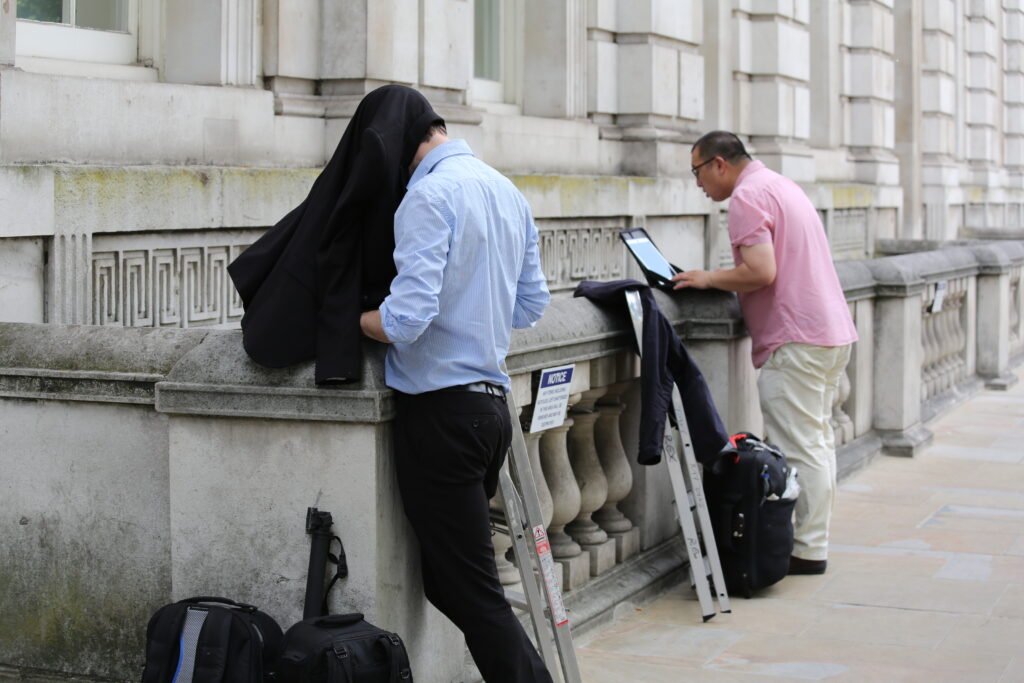
Beat reporting refers to the practice of assigning a journalist to cover a specific subject area, institution, or geographic region on an ongoing basis, allowing the reporter to develop deep expertise and a network of sources within that area over time. Common beats include politics, health, education, business, and crime, though specific beat structures vary
Beat Reporting Read More »
The practice of assigning a journalist to cover a specific subject area or institution on an ongoing basis.
The editorial process refers to the series of steps a news story or article goes through from initial pitch or assignment to final publication, including drafting, review, fact-checking, and revision. This process exists to catch errors, improve clarity, and ensure a publication consistent standards are applied before content reaches readers. Stages of the Process A
Editorial Process Read More »
The sequence of drafting, review, and revision a story undergoes before publication.
Fact-checking is the process of verifying the accuracy of claims, statements, or published content by comparing them against reliable sources, original documents, and expert knowledge before or after publication. It has become an increasingly formalized practice within journalism, with many news organizations employing dedicated fact-checkers and some outlets focusing entirely on verifying public statements and
Fact-Checking Read More »
The process of verifying the accuracy of claims against reliable sources before or after publication.
Investigative journalism is a form of reporting that involves in-depth research, often over weeks or months, to uncover information that individuals or institutions may be actively trying to conceal, such as corruption, fraud, or abuses of power. It differs from routine daily reporting in its scope, resource commitment, and focus on revealing hidden wrongdoing rather
Investigative Journalism Read More »
In-depth reporting that uncovers hidden wrongdoing such as corruption or abuse of power.
Journalistic objectivity is a professional standard calling for reporters to present news fairly and without personal bias, allowing facts rather than the journalist own opinions to shape how a story is told. The concept has shaped mainstream journalistic practice for much of the past century, though it remains a subject of ongoing debate within the
Journalistic Objectivity Read More »
A professional journalism standard calling for fair, unbiased reporting based on facts rather than personal opinion.
News sourcing refers to the practice of identifying, cultivating, and attributing information to the people, documents, or data that provide the factual basis for a news story. Sound sourcing practices are central to journalistic credibility, since readers rely on clear attribution to judge the reliability of the information presented. Types of Sources Sources range from
News Sourcing Read More »
The practice of identifying and attributing information to the people or documents that support a news story.
News writing is the craft of presenting factual information clearly, concisely, and in a structure that allows readers to quickly grasp the most important details of a story. Unlike other forms of writing, news writing typically prioritizes the most newsworthy facts at the very beginning rather than building toward a conclusion. The Inverted Pyramid Most
News Writing Read More »
The craft of writing factual news stories clearly and concisely, prioritizing key information first.
Photojournalism is the practice of telling news stories primarily through photographs, capturing significant moments, events, and conditions in ways that convey information and emotional impact that text alone may not fully achieve. It spans a wide range of subjects, from breaking news and conflict coverage to documentary projects exploring social issues over extended periods. Ethical
Photojournalism Read More »
The practice of telling news stories primarily through photographs.
Press freedom refers to the right of journalists and media organizations to report news and express opinions without government censorship, retaliation, or undue restriction. It is widely regarded as a cornerstone of democratic governance, enabling citizens to access information needed to hold powerful institutions accountable. Legal and Constitutional Protections Many countries enshrine press freedom in
Press Freedom Read More »
The right of journalists to report news without government censorship or undue restriction.
Sports journalism is a specialized branch of reporting focused on covering athletic competitions, teams, athletes, and the broader business and culture surrounding sports. It encompasses a range of formats, from live game coverage and post-match analysis to long-form features on athletes and investigative reporting on issues within sports organizations. Coverage Formats Sports journalists produce game
Sports Journalism Read More »
A specialized branch of journalism covering athletic competitions, athletes, and the business of sports.