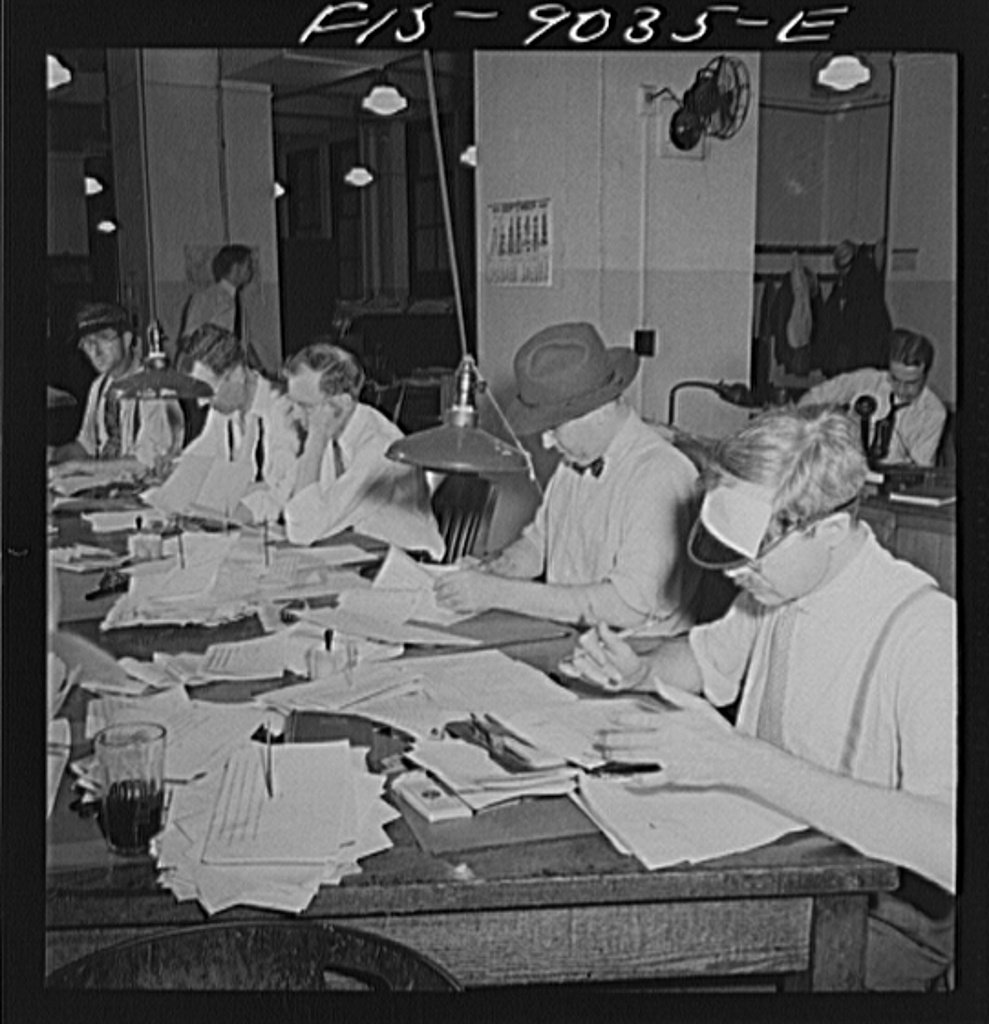
News writing is the craft of presenting factual information clearly, concisely, and in a structure that allows readers to quickly grasp the most important details of a story. Unlike other forms of writing, news writing typically prioritizes the most newsworthy facts at the very beginning rather than building toward a conclusion.
The Inverted Pyramid
Most news writing follows a structure known as the inverted pyramid, placing the most critical information, often summarized as who, what, when, where, why, and how, in the opening paragraph, with supporting details and background following in decreasing order of importance. This structure allows editors to trim a story from the bottom without losing essential facts, and allows readers to stop reading at any point while still having absorbed the core information.
Style and Standards
News writing emphasizes clarity, neutrality, and attribution, requiring writers to source claims to specific people, documents, or data rather than presenting unverified assertions as fact. Most newsrooms follow a specific style guide governing grammar, punctuation, and formatting conventions, helping ensure consistency across different writers and sections of a publication.
Leads and Headlines
The opening sentence of a news story, known as the lead, carries outsized importance because it often determines whether a reader continues past the first few words, and writing an effective lead requires distilling a complex story into a single compelling sentence without sacrificing accuracy. Headlines serve a related but distinct function, needing to capture attention and convey the core of a story within a very limited space, a skill that has become even more valuable as headlines are frequently shared and read independently of the full article on social media platforms.
Adapting for Digital Formats
Online news writing has introduced additional considerations beyond traditional print conventions, including search engine optimization, the use of subheadings to aid scanning on screens, and the need to write headlines and summaries that work well when shared across different social platforms. Many newsrooms now train writers specifically in digital-first writing techniques, recognizing that reading behavior on a phone screen differs meaningfully from reading a printed newspaper page.
Common Pitfalls
New writers often struggle with burying the most important information too deep in a story, using overly complex sentence structures, or failing to attribute claims clearly to their source, all of which can confuse readers or undermine credibility. Editors and journalism educators place significant emphasis on simplicity and clarity, encouraging writers to favor short, direct sentences over dense prose that might work in academic or literary writing but tends to obscure meaning in a fast-paced news context.
Looking Ahead
As audiences increasingly consume news through mobile devices and social platforms, news writing continues to adapt toward shorter formats, more visual storytelling elements, and headlines optimized for sharing, while still trying to preserve the core commitment to accuracy and clarity that has long defined the craft. Artificial intelligence tools are also beginning to assist with routine news writing tasks such as summarizing data-heavy reports, though most newsrooms maintain human oversight for anything requiring judgment or verification.
Related Specialties
News writing connects closely to editorial process, since drafts move through review and revision before reaching readers. It also overlaps with digital media production, as writers increasingly need to understand how their work will be formatted, headlined, and distributed across different platforms.
Training and Education
Journalism schools and in-house newsroom training programs typically emphasize news writing fundamentals early in a reporter development, often using exercises that require condensing complex information into tight word counts to build the discipline needed for effective daily reporting. Many successful news writers describe their craft as a skill refined continuously through practice and feedback rather than something mastered quickly, since writing clearly and efficiently under deadline pressure takes sustained repetition to develop fully.
Writing for Different Story Types
While hard news typically follows the inverted pyramid closely, other story formats such as features, profiles, and narrative journalism allow for more flexible structures that build toward a conclusion rather than frontloading all key information. Skilled writers learn to recognize which structure best serves a given story, since a feature piece written like a breaking news brief, or a breaking news story written like a leisurely feature, can both fail to serve reader needs effectively.
Collaboration With Visuals and Data
Modern news writing increasingly happens alongside visual elements such as photographs, charts, and embedded video, requiring writers to think about how text and visual components work together rather than treating writing as a standalone task. Reporters working on data-heavy stories often collaborate closely with graphics teams to determine which information is best conveyed through prose versus a chart or interactive element, a division of labor that has become increasingly common in digital newsrooms.
Writing for Broadcast
News writing for radio and television differs notably from print, since broadcast scripts must sound natural when read aloud and typically favor shorter sentences and simpler vocabulary to aid comprehension for listeners who cannot reread a confusing passage. Broadcast writers also must write to precise time constraints, carefully pacing a script to match available airtime while still conveying essential information clearly.
Writers are generally encouraged to read their work aloud as a final check, since awkward phrasing or confusing sentence structure often becomes more apparent when heard rather than only read silently on a screen.
Consistent practice with deadline pressure, whether through internships or classroom simulations, helps aspiring writers build the speed and confidence needed to produce clear, accurate copy under real-world time constraints.
Style guides evolve over time to reflect changing language norms, and writers are generally expected to stay current with their publication latest guidance on terminology and usage.
Key facts
- Follows the inverted pyramid structure; emphasizes attribution and neutrality; guided by newsroom style guides.
Quick checkWhat is the inverted pyramid structure in news writing?Show answer
A structure that places the most important information first, with details following in decreasing order of importance.
Sources
- Based on general journalism practice and newswriting style literature.
Editorially reviewed by Specialty Digest Editorial TeamLast reviewed November 3, 2026Researched and drafted with AI assistanceReport an issue