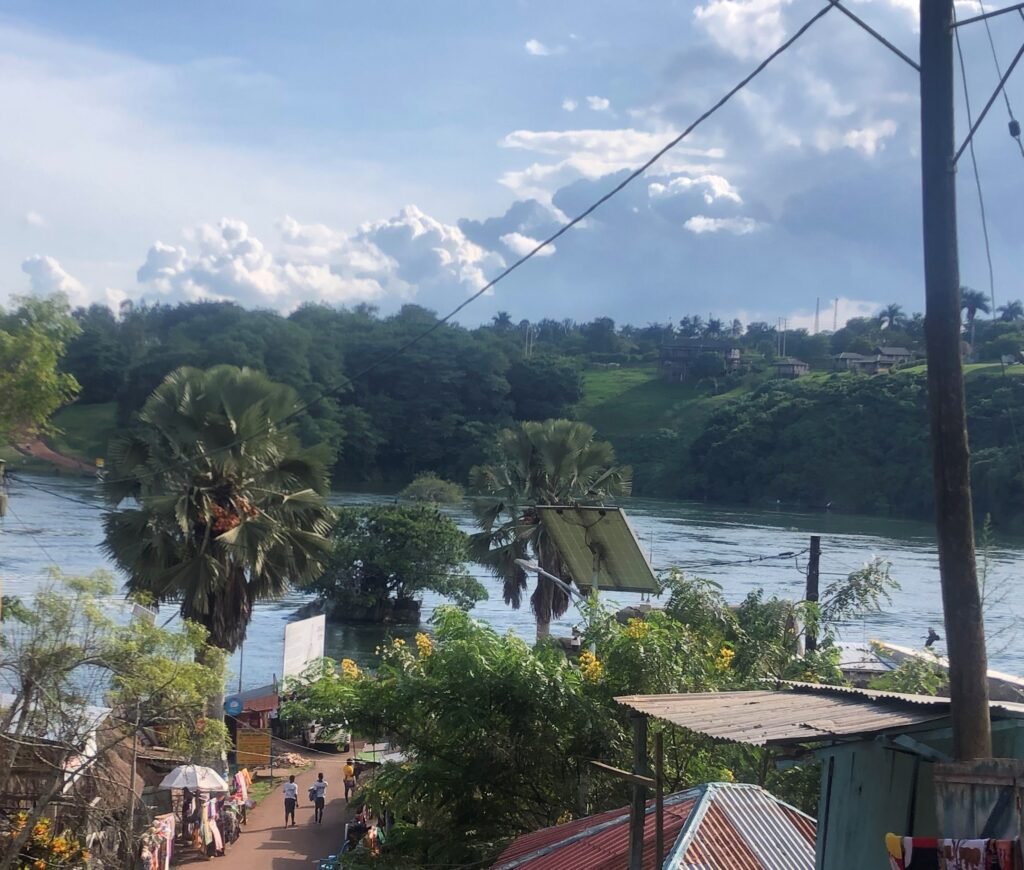
Uganda is a landlocked country in East Africa, known as the Pearl of Africa for its lakes, forests, and mountain gorillas, and historically famous as the site where the source of the White Nile was identified by nineteenth century European explorers. The equator crosses the country just south of the capital, Kampala, and much of its southern border runs along Lake Victoria, the largest lake in Africa.
Where Is Uganda Located?
Uganda sits in East Africa’s Great Lakes region, bordered by South Sudan to the north, Kenya to the east, Tanzania and Rwanda to the south, and the Democratic Republic of the Congo to the west. It has no coastline but borders several of the region’s major lakes, including Lake Victoria, Lake Albert, and Lake Edward.
Geography of Uganda
Uganda’s landscape ranges from the fertile, well watered plateau around Lake Victoria to the Rwenzori Mountains on the border with the Democratic Republic of the Congo, whose glaciated peaks rise above 5,000 meters. The Nile River begins its journey to the Mediterranean at the point where Lake Victoria drains near the town of Jinja, flowing north through Lake Kyoga and Lake Albert before leaving Uganda toward South Sudan and Sudan. Uganda is also home to Bwindi Impenetrable National Park and Mgahinga Gorilla National Park, among the last strongholds of the mountain gorilla.
A Brief History of Uganda
Before European contact, the territory now called Uganda contained several organized kingdoms, most notably the Kingdom of Buganda, along with Bunyoro, Ankole, and Toro. The British explorer John Hanning Speke reached the point where the Nile exits Lake Victoria in 1862 and identified it as the long sought source of the river, a claim that was disputed for years but is now broadly accepted for the Nile’s principal headwaters. Britain established the Uganda Protectorate in 1894, and the country gained independence on October 9, 1962.
Independence and Its Aftermath
Uganda’s early post independence years were marked by political instability, including the 1971 to 1979 dictatorship of Idi Amin, during which tens of thousands of people were killed and the country’s economy and infrastructure suffered severe damage. Since the 1980s, Uganda has pursued economic recovery and relative political stability under a series of governments, while continuing to navigate regional conflicts and large scale refugee movements from neighboring countries.
Government and Economy
Uganda is classified by the World Bank as a low income country, with a population estimated at 45.9 million in 2024, though the United Nations Population Division puts the figure closer to 50 million.[1] Roughly half of Uganda’s population is under 18, making it one of the youngest countries in the world by median age.[1] Uganda is also Africa’s largest refugee hosting country, with its refugee population rising from about 1.4 million in 2021 to more than 1.9 million in subsequent years, driven largely by conflict in neighboring South Sudan and the Democratic Republic of the Congo.[1] The economy remains heavily based on agriculture, though the government has pursued urban construction and, more recently, oil development as additional engines of growth.[1]
Culture and People
Uganda is home to dozens of ethnic groups speaking Bantu, Nilotic, and Central Sudanic languages, with Buganda, the kingdom surrounding Kampala, historically the most influential. English and Swahili are official languages, alongside widely spoken local languages such as Luganda. Traditional kingdoms such as Buganda, Busoga, and Toro retain cultural, and in some cases ceremonial, authority alongside the national government, and music, dance, and craft traditions vary significantly among the country’s many communities.
What Is Uganda Known For?
Uganda is best known for the source of the Nile at Jinja, where Lake Victoria’s outflow begins the river’s roughly 6,650 kilometer journey to the Mediterranean Sea. The original rapids that marked the spot, known as Ripon Falls, were submerged in 1954 by the construction of the Nalubaale hydroelectric dam, and a monument and riverside gardens at Jinja now mark the location for visitors. Uganda is equally well known for its mountain gorillas, protected in the UNESCO listed Bwindi Impenetrable National Park, and for its position straddling the equator.
Why Uganda Matters
Uganda’s location at the headwaters of the Nile gives it long standing geopolitical significance for Nile basin water management, a subject of ongoing negotiation among the ten countries the river passes through. Its role as the largest refugee hosting country in Africa also makes it a key player in regional humanitarian response, while its biodiversity, including some of the world’s remaining mountain gorilla population, gives it outsized importance in global conservation efforts.
Key Takeaways
- Uganda is a landlocked East African country bordering Lake Victoria, Africa’s largest lake, and the source of the White Nile.
- It gained independence from Britain on October 9, 1962, after decades as a protectorate built around the historic Kingdom of Buganda.
- Uganda is Africa’s largest refugee hosting country, with more than 1.9 million refugees as of recent years.
- The country’s best known landmark, the source of the Nile at Jinja, marks where Lake Victoria begins the river’s journey north.
- Uganda’s Bwindi Impenetrable National Park is one of the last strongholds of the mountain gorilla.
Sources
- World Bank, “Uganda Overview” (accessed October 5, 2026)
- Encyclopaedia Britannica, “Uganda” (accessed October 5, 2026, used as a tertiary reference for uncontroversial chronology)
Key facts
- Population: approximately 45.9 million by World Bank estimate, closer to 50 million per UN estimate (2024)1
- Capital: Kampala
- Independent from the United Kingdom since October 9, 1962
- Africa's largest refugee hosting country, with more than 1.9 million refugees1
- Home to the source of the Nile at Jinja and the mountain gorillas of Bwindi Impenetrable National Park
Quick checkWhat makes Jinja, Uganda, historically significant?Show answer
Jinja marks the point where the Nile River begins its journey from Lake Victoria, identified by explorer John Hanning Speke in 1862 as the source of the White Nile.
Sources
- World Bank. Uganda Overview. Undated (accessed Accessed October 5, 2026)
- Encyclopaedia Britannica. Uganda. Undated (accessed Accessed October 5, 2026)
Editorially reviewed by Specialty Digest Editorial TeamLast reviewed October 5, 2026Researched and drafted with AI assistanceReport an issue