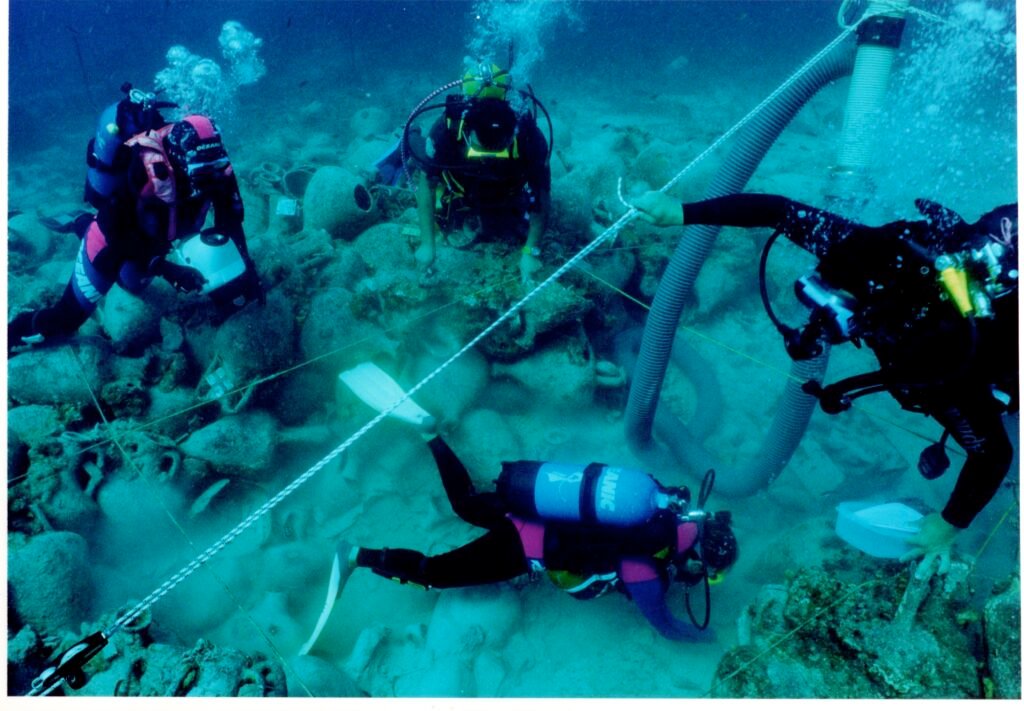
Underwater archaeology is the branch of archaeology devoted to the study of human activity through physical remains preserved underwater, including shipwrecks, submerged settlements, sunken ports, and artifacts lost or deliberately placed in rivers, lakes, and seas. It applies the same basic principles as archaeology on land, such as careful recording of context and stratigraphy, but requires specialized techniques and equipment suited to working in an aquatic environment, from scuba and technical diving gear to remotely operated vehicles and sonar mapping systems for sites too deep or hazardous for divers to reach directly.
The field developed significantly in the twentieth century alongside advances in diving technology, particularly the invention of the Aqua-Lung self-contained underwater breathing apparatus in the 1940s, which made it possible for archaeologists to spend extended periods working directly at submerged sites rather than relying solely on dredging or diving bells. Pioneering, methodically rigorous projects in the 1960s, including George Bass’s excavation of a Bronze Age shipwreck off Cape Gelidonya in Turkey, helped establish underwater archaeology as a rigorous scientific discipline rather than an extension of treasure hunting, by insisting on the same standards of documentation, publication, and systematic recording that land excavation had already adopted decades earlier.
What Water Preserves That Land Does Not
Underwater environments, particularly those low in oxygen or buried quickly in sediment, can preserve organic materials that almost never survive on land, including wood, rope, textiles, leather, and foodstuffs. Shipwrecks in particular often function as time capsules, since a ship that sinks quickly can seal an entire cargo, along with the tools and personal belongings of its crew, in a single moment, offering archaeologists an unusually complete snapshot of trade goods, shipbuilding techniques, and daily life aboard. The Mary Rose, a Tudor warship that sank in 1545 and was raised from the seabed in 1982, and the Vasa, a Swedish warship that sank in 1628, are both famous examples of wooden hulls and thousands of associated artifacts preserved in far greater completeness than any comparable land site from the same periods.
Shipwrecks, Ports, and Submerged Settlements
Underwater archaeologists study a wide range of site types beyond individual shipwrecks. Submerged ports and harbor installations, such as those found at the ancient Egyptian city of Thonis-Heracleion off the coast of Alexandria, reveal how coastlines and sea levels have shifted over centuries or millennia, sometimes burying entire settlements beneath the waves through earthquakes, subsidence, or gradually rising water levels over the centuries. Lakes and rivers also preserve significant sites, including prehistoric pile dwellings in the Alpine lakes of Switzerland and submerged crossing points where ancient peoples deposited weapons, tools, and other offerings, apparently for ritual rather than practical reasons.
Legal Protection and Looting
Underwater sites face distinctive threats, including looting by treasure hunters seeking valuable cargo rather than historical knowledge, and damage from fishing trawlers, anchors, and coastal development. The 2001 UNESCO Convention on the Protection of the Underwater Cultural Heritage established international standards aimed at protecting underwater sites from commercial exploitation and encouraging in-situ preservation, meaning leaving significant finds in place underwater, as the preferred first option, rather than automatically recovering everything to the surface. Enforcement remains uneven in practice, since many underwater sites lie in international waters or in the territorial waters of countries with limited resources for monitoring and patrolling remote coastlines, and commercial salvage companies have at times recovered historically significant wrecks primarily for the value of their cargo, leading to ongoing disputes between archaeologists, governments, and salvors over who holds legitimate rights to a given wreck and its contents.
Recording and Interpreting Underwater Sites
Documenting an underwater site presents challenges that land excavation does not. Limited visibility, currents, and the physical demands of diving mean that archaeologists must work in short, carefully planned sessions, often mapping a site using grids, photogrammetry, and increasingly detailed 3D photographic reconstruction built from thousands of overlapping images taken by divers or remotely operated vehicles. Because moving an artifact even slightly can destroy information about how it relates to the rest of the site, underwater archaeologists record position and context with the same rigor land archaeologists apply, despite working in far more difficult physical conditions.
Conservation after recovery is equally demanding. Waterlogged wood, leather, and metal can disintegrate rapidly once removed from the stable underwater environment that preserved them, so recovered artifacts typically require years of careful conservation treatment, such as gradual, controlled drying or chemical stabilization, before they can be safely displayed or stored. The Mary Rose’s timbers, for example, underwent decades of sustained conservation after their recovery, including a lengthy period of controlled spraying to prevent the wood from cracking and collapsing as it dried.
FAQs
What makes underwater sites valuable to archaeologists?
Underwater environments can preserve organic materials like wood, rope, and textiles that rarely survive on land, and shipwrecks in particular can capture an entire cargo and crew’s belongings in a single moment.
What equipment do underwater archaeologists use?
Scuba and technical diving gear, remotely operated vehicles, and sonar mapping systems, depending on a site’s depth and conditions.
What is in-situ preservation?
The practice of leaving significant underwater finds in place rather than automatically recovering them to the surface, now favored under international standards when it will not endanger the site.
Why are shipwrecks considered especially valuable archaeological sites?
A ship that sinks quickly can preserve its entire cargo, tools, and crew’s belongings together, offering a more complete snapshot of trade and daily life than most land sites provide.
Key facts
- Developed as a rigorous discipline following advances in scuba diving technology in the 1940s-1960s.
- Water, especially low-oxygen environments, can preserve organic materials rarely found on land.
- The Mary Rose and the Vasa are famous examples of well-preserved shipwrecks.
- The 2001 UNESCO Convention promotes in-situ preservation of underwater cultural heritage.
Quick checkWhy can underwater sites preserve materials that almost never survive on land?Show answer
Low-oxygen underwater environments can preserve organic materials like wood, rope, and textiles, and a ship that sinks quickly can seal an entire cargo and crew belongings in a single preserved moment.
Sources
- UNESCO, Convention on the Protection of the Underwater Cultural Heritage (2001)
- Mary Rose Trust, conservation and excavation records
- Encyclopaedia Britannica, 'underwater archaeology'
Editorially reviewed by Specialty Digest Editorial TeamLast reviewed November 2, 2026Researched and drafted with AI assistanceReport an issue