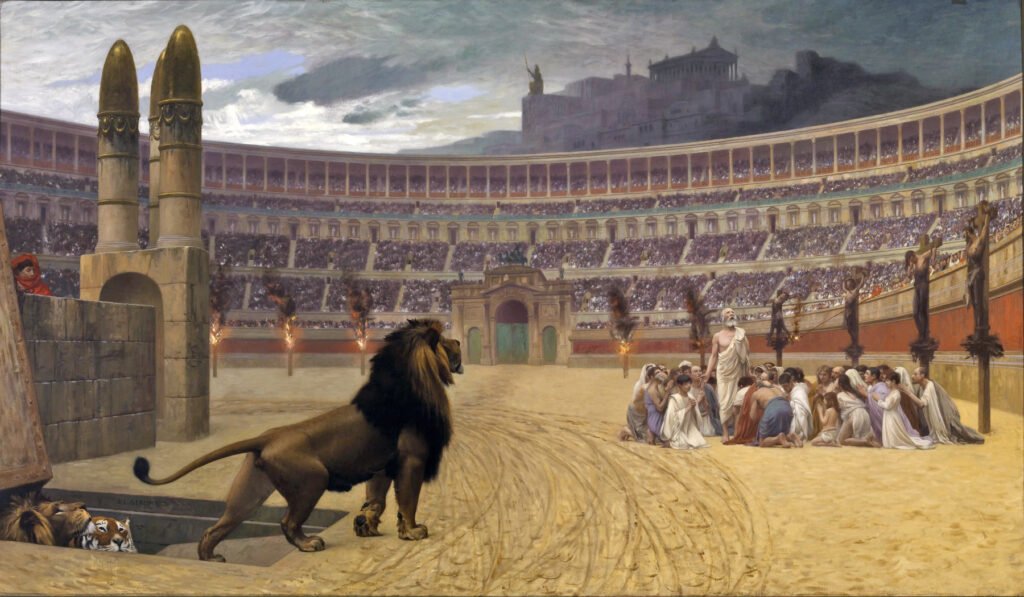
Overview
Religious persecution refers to the systematic mistreatment of individuals or communities specifically because of their religious beliefs or practices, carried out variously by state authorities, dominant religious institutions, or broader social majorities, and documented across virtually every period of recorded human history and every major world region.
Historical Examples
History offers numerous documented examples of religious persecution, including periodic Roman persecution of early Christians, various European persecutions of Jewish communities across many centuries, persecution of religious minorities under numerous different political regimes, and ongoing persecution of various communities in different parts of the contemporary world.
Forms of Persecution
Persecution takes many forms, ranging from formal legal restriction and discriminatory taxation through social exclusion and property confiscation to physical violence, forced displacement, forced conversion, and in the most severe historical cases, organized mass killing targeting specific religious communities.
Perpetrators and Contexts
Persecution has been carried out by established state authorities enforcing official religious policy, by dominant religious institutions seeking to suppress perceived heresy or competing belief, and by social majorities acting with or without formal government sanction against religious minorities within their communities.
Contemporary Documentation
Modern human rights organizations and academic researchers systematically document ongoing religious persecution worldwide, tracking legal restrictions, social hostility, and violent incidents directed at religious communities, providing data that informs international advocacy and policy responses addressing religious freedom violations across different regions.
Role Today
Religious persecution remains a significant and ongoing global concern, addressed through international human rights frameworks, advocacy organizations, and diplomatic efforts, even as substantial religious persecution continues to affect numerous communities across many different countries and political contexts today.
Legal and Institutional Frameworks
International bodies, including the United Nations, have developed formal frameworks addressing religious freedom and persecution, establishing legal standards that, while widely ratified, face significant challenges in enforcement given the sovereignty of individual states over their own internal religious and legal policy.
National governments vary considerably in how they address religious persecution, with some actively protecting religious minority rights through constitutional and legal mechanisms, while others themselves serve as primary sources of restriction or persecution directed against particular religious communities within their own borders.
Psychological and Social Impact
Beyond immediate physical and legal harm, religious persecution often produces lasting psychological and social consequences for affected communities, including displacement, loss of cultural and religious heritage, and intergenerational trauma that can persist well beyond the immediate historical period during which persecution actively occurred.
Majority and Minority Dynamics
While religious persecution often targets minority communities, history also records instances where previously dominant religious groups faced persecution following significant political change, illustrating that vulnerability to persecution can shift considerably as political power and social majority status change over time within a given society.
Scholars studying persecution patterns note that economic competition, political scapegoating, and broader social anxiety during periods of crisis frequently accompany and sometimes intensify religiously framed persecution, suggesting that religious difference alone rarely operates as the sole causal factor driving persecution in most documented historical cases.
Refugee and Migration Patterns
Religious persecution has historically driven substantial migration, with persecuted communities often relocating to regions offering greater tolerance, a pattern visible across numerous historical episodes and continuing to shape contemporary refugee movements affected by ongoing religious persecution in various parts of the world today.
Role of Education and Advocacy
Educational initiatives and advocacy organizations increasingly work to document historical and ongoing religious persecution, aiming to build broader public awareness and support for policy responses, even as such efforts face significant practical and political obstacles in regions where persecution continues with substantial government involvement or tacit approval.
Interfaith cooperation has increasingly become a tool for addressing religious persecution, with leaders across different traditions sometimes jointly advocating for persecuted communities regardless of their specific religious identity, reflecting growing recognition that religious freedom protections benefit all traditions collectively rather than any single community in isolation.
Closing Note
Religious persecution remains a persistent feature of human history and a continuing concern today, demanding sustained attention from scholars, policymakers, and advocates committed to protecting freedom of belief and practice worldwide.
Researchers and advocates alike continue tracking these patterns closely, hoping better documentation can inform more effective protective responses.
Final Thought
Protecting freedom of conscience and belief remains an unfinished project across much of the world, one that will likely continue to demand sustained attention for generations to come.
Its history offers sobering lessons that remain directly relevant to policy and advocacy work today.
Each new report adds further urgency to this ongoing and evolving global challenge.
Few global challenges demand quite so much sustained attention across so many different regions and communities.
Its echo persists across many ongoing advocacy efforts even now.
Historians, advocates, and policymakers alike continue to study its patterns closely.
That scrutiny shows no sign of ending soon, given how pressing the issue remains worldwide.
New reports and studies keep appearing regularly, deepening understanding of the problem considerably further still.
Interest shows no sign of fading anytime soon among advocates for religious freedom worldwide.
It remains a cornerstone topic for scholars of human rights and religious freedom.
It endures as a defining concern of human rights history.
Patterns of religious persecution recur across very different political systems, from ancient empires that demanded ritual loyalty to state cults, to modern authoritarian governments that treat independent religious organization as a threat to centralized political control. Targets have included religious minorities within a dominant tradition, such as heretical Christian sects in medieval Europe, as well as entire faiths treated as foreign or subversive, such as Christians in some periods of Roman and Japanese history or Jews across centuries of European history. Legal mechanisms of persecution have ranged from targeted taxation and exclusion from certain occupations to expulsion, forced conversion, imprisonment, and execution, often justified by accusations that blended religious, political, and economic grievances. International human rights frameworks developed after the Second World War attempt to establish religious freedom as a protected right, though enforcement remains uneven and many governments continue to restrict religious practice through registration requirements, surveillance, or outright bans on minority groups. Scholars studying persecution emphasize that it rarely targets belief alone, since the communities affected are also frequently distinguished by language, ethnicity, or economic position that intersects with their religious identity.
Key facts
- Array
Quick checkWhat range of actions can constitute religious persecution?Show answer
Religious persecution can range from formal legal discrimination and restriction to violence, forced conversion, displacement, and in severe cases, mass killing, depending on the specific historical and political context involved.
Sources
- Array
Editorially reviewed by Specialty Digest Editorial TeamLast reviewed November 4, 2026Researched and drafted with AI assistanceReport an issue