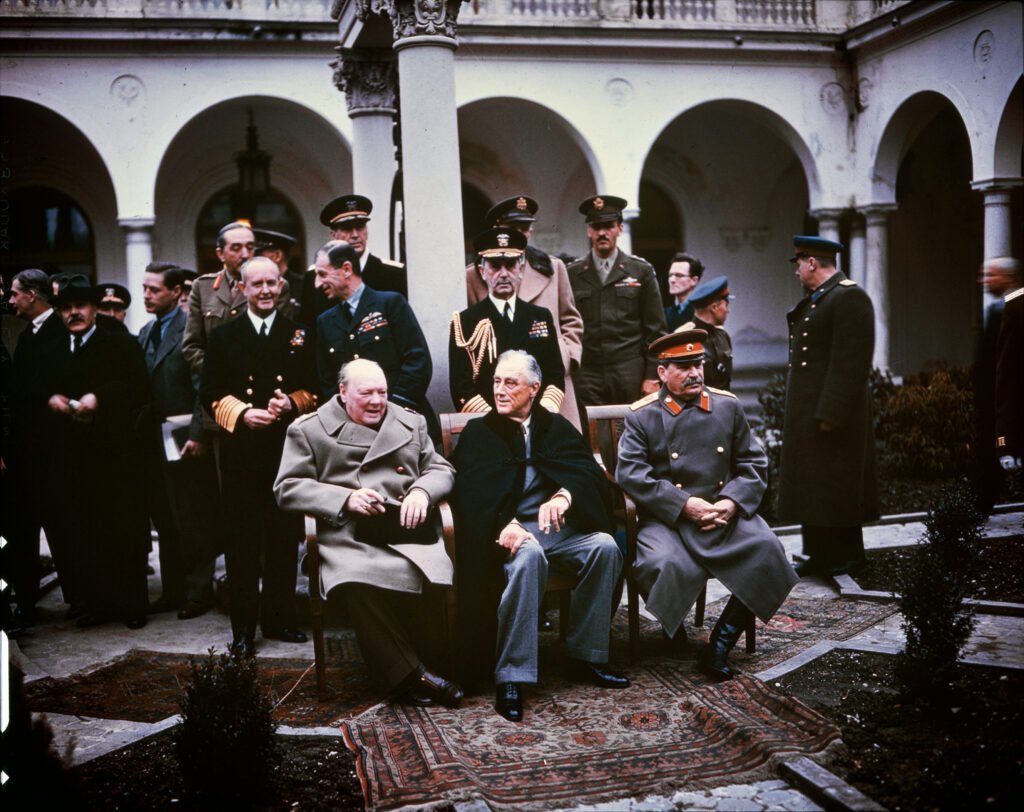
Overview
Grand strategy refers to the long term, integrated use of all the instruments of national power, including military force, economic policy, diplomacy, and information, in pursuit of a states most fundamental interests and security. It operates at a higher level than military strategy alone, treating armed force as one tool among several rather than the primary or only means of achieving national goals.
Key features
A grand strategy typically identifies a states core interests, assesses the threats and opportunities in its environment, and allocates resources across military, economic, and diplomatic tools to advance those interests over an extended period. Because resources are always limited, grand strategy inherently involves prioritization, choosing which interests and regions deserve the greatest commitment of national power.
Historical examples
Historians often point to the containment strategy pursued by the United States during the Cold War as a notable example of grand strategy, combining military alliances, economic aid, and diplomatic pressure over several decades to limit the spread of Soviet influence without direct large scale war between the two superpowers.
Challenges in formulation
Formulating an effective grand strategy is difficult, since it requires accurately anticipating long term threats, balancing competing domestic and foreign priorities, and maintaining enough political consensus to sustain a consistent approach across changes in leadership. Scholars continue to debate whether modern democracies, with their frequent changes in government, are well suited to sustaining coherent grand strategies over many years.
Balancing ends and means
A central challenge in grand strategy is matching ambitions to available resources. States that pursue goals exceeding their economic and military capacity risk strategic overextension, a pattern historians have identified in the decline of several historical great powers that took on more commitments abroad than their domestic economic base could sustainably support over the long run.
Grand strategy in practice
Formulating grand strategy in practice often involves balancing competing priorities, such as deterring multiple potential adversaries simultaneously, maintaining alliances that may have their own competing interests, and allocating finite defense budgets across readiness, modernization, and new capability development. Because these trade offs rarely have a single correct answer, grand strategy debates among policymakers and scholars are often contentious and ongoing rather than settled.
Assessing grand strategy
Evaluating whether a particular grand strategy has succeeded is often difficult in real time, since the benefits of a well designed long term strategy, such as sustained deterrence or gradual expansion of influence, may not become fully apparent for years or decades, while the costs of a poorly designed strategy may also take a long time to manifest fully.
Role of alliances
Alliances form a recurring element of grand strategy, allowing states to pool military and economic resources and extend their influence beyond what their own capabilities alone would support. Maintaining durable alliances requires ongoing diplomatic investment, since allied states often have their own distinct interests that do not always align perfectly with those of their partners, creating constant pressure to manage disagreements without undermining the broader strategic relationship.
Strategic adaptation over time
Grand strategies are rarely static documents but evolve gradually as circumstances change, sometimes through deliberate strategic review and sometimes through incremental adjustment in response to unfolding events. Historians studying successful long term strategies often emphasize this capacity for adaptation, noting that rigid adherence to an outdated strategic framework can be as dangerous as having no coherent strategy at all.
Grand strategy and domestic politics
Sustaining a grand strategy over the long periods it typically requires depends heavily on domestic political support, since shifts in public opinion, economic conditions, or changes in government leadership can all pull resources and attention away from long term strategic commitments that take years or decades to produce visible results.
Grand strategy of smaller states
While grand strategy is often discussed in the context of major powers, smaller and middle sized states also develop their own versions, frequently centered on hedging between larger powers, building regional coalitions, or cultivating niche military and economic capabilities that allow them to maintain meaningful influence and security despite lacking the resources of a great power.
Lasting relevance
As the international system continues to shift toward renewed competition among several major powers, the discipline of grand strategy has attracted renewed attention from policymakers and scholars seeking frameworks capable of guiding national decision making across the many domains that now shape global power and influence.
Measuring success over time
Because grand strategies unfold over years or decades, historians and policymakers often disagree about how to measure their success even long after the fact, since outcomes attributed to a particular strategy might equally reflect unrelated economic trends, the choices of rival powers, or simple chance, making retrospective evaluation of grand strategy an inherently contested exercise.
Closing note
These evaluative challenges are expected to remain a persistent feature of how grand strategy is studied and debated going forward.
Final observation
Policymakers continue to seek frameworks that can meaningfully guide decisions across military, economic, and diplomatic domains simultaneously, even though no single theory of grand strategy has achieved universal acceptance among scholars and practitioners.
This ongoing uncertainty is itself considered a defining feature of the field by many scholars who study it.
Closing thought
Despite this uncertainty, the discipline continues to attract serious scholarly and policy attention precisely because the stakes of getting long term national strategy wrong remain so significant.
It continues to be studied, debated, and refined by scholars and policymakers around the world.
This continues to inform how universities and military academies structure coursework for future diplomats and officers alike.
Key facts
- Array
Quick checkHow does grand strategy differ from military strategy?Show answer
Military strategy concerns the use of armed force to achieve specific objectives, while grand strategy coordinates military power together with economic, diplomatic, and informational tools in pursuit of a states broadest and most enduring national interests.
Sources
- Array
Editorially reviewed by Specialty Digest Editorial TeamLast reviewed November 4, 2026Researched and drafted with AI assistanceReport an issue